

Sheikh Khalifa General Hospital completes advanced shoulder reconstruction for patient with severe bilateral joint disease
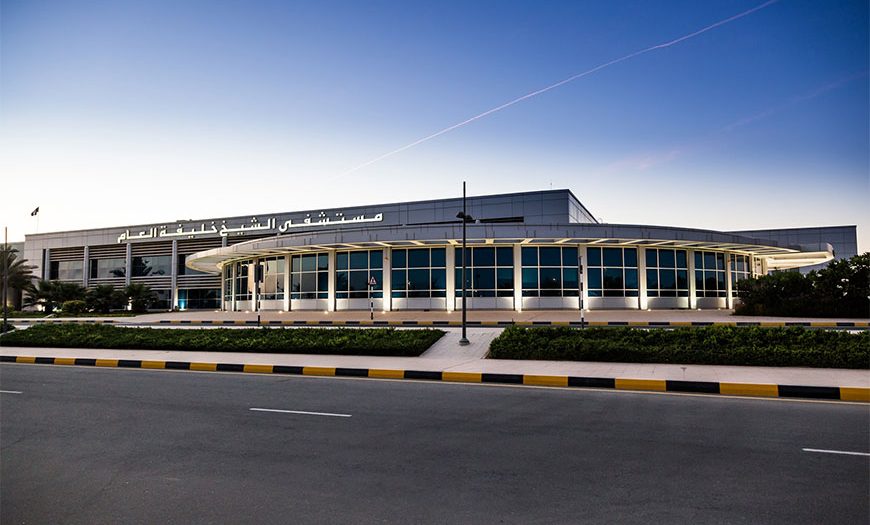
Shoulder replacement surgery is rarely straightforward. When both shoulders are affected by advanced arthritis and rotator cuff failure, the clinical challenge compounds significantly. Sheikh Khalifa General Hospital in Umm Al Quwain has completed the first stage of a staged bilateral shoulder reconstruction for a 67-year-old woman, performing a Reverse Shoulder Arthroplasty on the more severely affected side. The outcome, by all early indicators, is positive.
The patient had suffered from severe bilateral shoulder pain for years. The condition had eroded her ability to sleep, carry out daily tasks, and live independently. After a full clinical and radiological workup, the orthopaedic team at SKGH, which operates under The Medical Office, a subsidiary of PureHealth, decided to address the more functionally limiting shoulder first, with the second to follow.
Dr. Abdulqadir Alzarooni, acting Chief Executive Officer of SKGH, described the case as a strong example of coordinated multidisciplinary care. "This case demonstrates how advanced surgical interventions can help restore function for patients experiencing significant disability," he said. "The successful outcome reflects the expertise of our orthopaedic team and the coordinated care provided throughout the patient's surgical and rehabilitation journey."
How did it work?
The procedure chosen was Reverse Shoulder Arthroplasty, or RSA. Unlike conventional shoulder replacement, RSA is specifically designed for patients whose rotator cuff muscles are severely damaged or no longer functional. In a standard shoulder joint, the rotator cuff plays a central role in movement. When that mechanism fails, a conventional implant often cannot deliver reliable results. RSA addresses this by switching the geometry of the joint, placing the ball component on the socket side and the socket on the upper arm, allowing the deltoid muscle to compensate for the absent rotator cuff.
The surgery was performed by Dr. Amro Mohamed and the orthopaedic team, with support from anaesthesia, theatre staff, physiotherapy, ward nurses, and the broader care team. Following the procedure, the patient showed clear early progress:
- Effective post-operative pain control
- Improved shoulder stability in the early recovery phase
- Initiation of a structured physiotherapy and rehabilitation programme
- Gradual restoration of mobility and upper limb strength
The second shoulder remains to be treated in a future stage, with timing guided by how well the patient continues to recover and what her clinical needs indicate.
Why does it matter?
RSA is not a new procedure globally, but its application in the UAE for complex bilateral cases in older patients speaks to the growing depth of specialist orthopaedic capability within the country's public and semi-public hospital network. For a 67-year-old patient, years of bilateral shoulder pain means years of restricted sleep, limited movement, and lost independence. The surgical and rehabilitation pathway being offered here is the kind of intervention that meaningfully changes a person's remaining quality of life.
That matters beyond the individual case. The UAE has a rapidly ageing population segment, and musculoskeletal disease is among the leading causes of disability in older adults. As the country works to build a healthcare system capable of managing complex chronic and degenerative conditions at scale, cases like this one demonstrate that the clinical infrastructure is developing to meet that need.
The context
SKGH is governed by The Medical Office and sits within the PureHealth group, the largest healthcare operator in the Middle East. PureHealth's network has been expanding its specialist surgical capacity across the UAE in recent years, aligned broadly with federal health objectives around quality outcomes and patient-centred care.
The UAE's broader healthcare agenda, shaped in part by the Abu Dhabi Health Data Law and national digital health investments, is pushing hospitals to deliver measurable clinical outcomes rather than simply volume. A staged, multidisciplinary approach to a complex bilateral case, with structured rehabilitation built in from the start, is exactly the model that health authorities have been encouraging. So this case is also a signal of how hospitals in the network are choosing to practice.
The patient's recovery continues. The second stage of treatment will be planned based on functional progress and clinical review.
Latest @
Blueprint lands in the UAE as longevity moves from policy to product
M42 launches 10,000-patient wearable pilot in Abu Dhabi to reshape chronic disease care
Unilabs Middle East and Takalam link diagnostics to mental health in one app
Al Ghurair enters healthcare with Trellis Health launch in Dubai
💡Did you know?
You can take your DHArab experience to the next level with our Premium Membership.👉 Click here to learn more
🛠️Featured tool
 Easy-Peasy
An all-in-one AI tool offering the ability to build no-code AI Bots, create articles & social media posts, convert text into natural speech in 40+ languages, create and edit images, generate videos, and more.
👉 Click here to learn more
