

Saudi-based SDM to study the eye microbiome in space
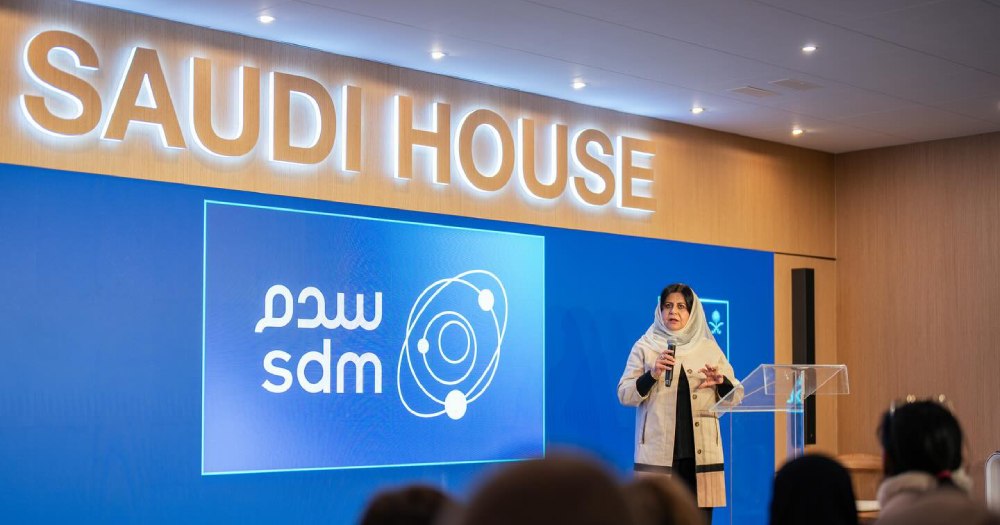
At the World Economic Forum in Davos this year, an unexpected story took center stage. It was not another oil giant or state wealth fund announcement. It was a Saudi health technology startup that married ophthalmology, artificial intelligence and space science. This is not sci-fi. It is real, and it is happening now.
Saudi health tech firm SDM, co-founded by seasoned eye specialist Selwa Al-Hazzaa and her son Naif Al-Obaidallah, is pushing the boundaries of healthcare innovation. Their work ranges from diagnosing eye disease here on Earth to studying the eye's microbiome in orbit. Their mission reads like a manifesto for the future of medicine - bold, human-centric and technically brave.
How does it work?
This startup's approach is as clever as it is complex. Here's how they're making it happen:
- SDM's AI system called SAARIA analyzes retinal images. It helps non-specialist clinicians pick up diseases before they escalate.
- In partnership with Cornell University, the researchers are sending eye microbiome samples to space to observe how they mutate in zero gravity.
- Before anything goes into orbit, simulation labs here on Earth model the conditions and test their theories.
- Beyond eye health, SDM plans to use retinal data to forecast conditions such as hypertension, stroke and Alzheimer's.
In short, it's a loop of data, AI, experimentation and human insight - and then back down to Earth to help patients.
Why does it matter?
This story matters for several reasons. First, eye disease affects millions worldwide and too often goes undetected until it is too late. Dr. Al-Hazzaa, who has spent more than three decades in ophthalmology, puts it bluntly: "Being an ophthalmologist for the last 35 years, there are many diseases, unfortunately, that there is no treatment for."
Second, the startup's work is already saving sight. They used SAARIA to screen tens of thousands of underprivileged patients, especially people with diabetes - a population where eye care access is often sporadic. "Globally, only 55 percent of diabetics are examined; in the Gulf, only 24 percent. Using SAARIA we've saved the sight of 40,000 patients free of charge," Al-Hazzaa said.
Third, this goes beyond health tech innovation to social impact. It shows how tech can serve humanity, not just market forces. The founders see healthcare as a right, not a privilege. "Healthcare is not a privilege; it's a right," said Al-Obaidallah.
The context
To appreciate what SDM is doing, you have to zoom out. Saudi Arabia's Vision 2030 is all about diversification and innovation. Investing in knowledge-based industries like health tech fits squarely within that context.
It's also part of a global pivot in healthcare toward artificial intelligence and precision medicine. Where traditional diagnostics rely on specialists and visit schedules, AI systems like SAARIA work around the clock. That makes care more accessible and proactive.
Finally, there is the gender narrative. Saudi women are playing high-stakes roles in STEM fields. Al-Hazzaa reflects on early skepticism she faced: "Despite all the obstacles, people in the beginning thought I was crazy." Today, she says proudly that the team is 36 percent women - outpacing even Silicon Valley on female involvement.
This blend of grit, tech and social mission is exactly what the global health community needs right now. It is proof that even in a field as rooted in human touch as medicine, the sky is literally not the limit.
Latest @
Abu Dhabi launches first UAE clinical trial for gene therapy treating inherited blindness
Mental health platform reaches 600 users in one day across Middle East
Perplexity Health connects all your medical data in one place
Perplexity partners with b.well to give AI health answers using your real medical records
Fitbit's AI coach gets smarter with medical records and sleep tracking
💡Did you know?
You can take your DHArab experience to the next level with our Premium Membership.👉 Click here to learn more
🛠️Featured tool
 Easy-Peasy
An all-in-one AI tool offering the ability to build no-code AI Bots, create articles & social media posts, convert text into natural speech in 40+ languages, create and edit images, generate videos, and more.
👉 Click here to learn more
