

Oman’s AI eye screening programme cuts waiting times by 87% and flags 12,000 diabetic patients
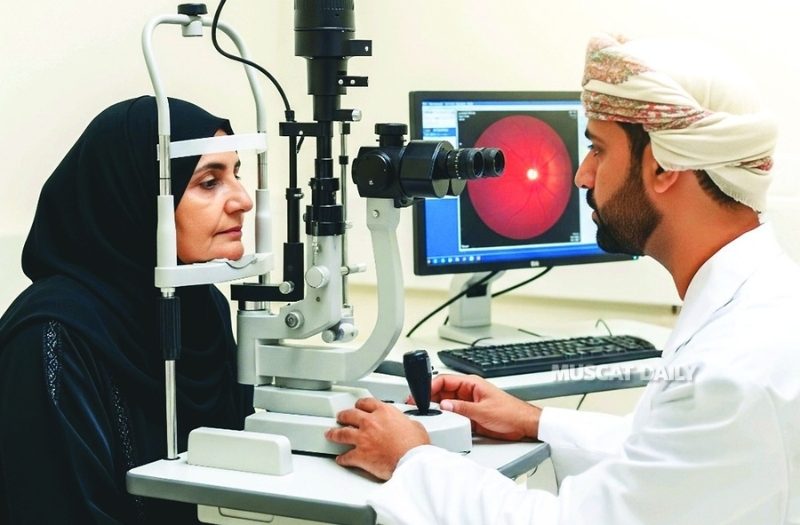
Sixty-two days down to eight. That single figure tells you almost everything you need to know about what artificial intelligence has done for diabetic eye care in Oman. In less than a year, a national screening programme using AI to analyse retinal images has slashed appointment wait times for specialist eye clinics by 87%, while identifying more than 12,000 diabetic patients who need further clinical examination.
The initiative, formally titled the National Project for Diabetic Retinopathy Screening Using Artificial Intelligence Technologies, is run under Oman's Ministry of Health. Since its launch, more than 43,000 patients have been screened. Around 30% were flagged for specialist review, meaning thousands of people who might otherwise have waited months, or never been assessed at all, are now receiving earlier attention.
Anas bin Nasser Al Kimyani, Director of the National Virtual Health Centre at the Ministry of Health, said the programme had already contributed to improving the efficiency of healthcare services for diabetic patients across the sultanate. The numbers back that up. Screening time has dropped from roughly 90 minutes, when examinations required pupil-dilating eye drops, to around 15 minutes. That frees ophthalmologists to concentrate on complex cases, treatment, and surgery rather than routine image review.
How does it work?
The system captures retinal images at health centres, then runs those images through an AI model trained to detect signs of diabetic retinopathy, a condition where high blood sugar damages blood vessels in the retina and, left untreated, can cause permanent vision loss. The AI flags cases that require a specialist's attention and clears those that do not, reducing the volume of referrals that previously overwhelmed specialist clinics.
According to the Ministry of Health, the system has recorded diagnostic accuracy of 91.3% and sensitivity of 85%. Those are clinically meaningful figures. They indicate the tool is reliable enough to support medical staff in making triage decisions, though it is designed to assist rather than replace clinical judgment.
The programme is currently active at 25 health institutions across Oman's governorates, with retinal imaging equipment distributed to improve geographic access. The highest usage has been recorded in Seeb, Bausher, Suhar, and Ibri. Expansion to more health centres, particularly in remote areas, is planned.
Why does it matter?
Around 15% of Oman's adult population has diabetes. That is a significant chronic disease burden, and diabetic retinopathy is one of its most serious long-term consequences. Without routine screening, many patients do not know their vision is at risk until damage is already done. Early detection changes that equation entirely.
The programme also makes a strong economic case. The ministry reports that AI-based screening has reduced operating costs by 43.2% annually compared to previous procedures. That figure does not even account for the downstream savings from avoiding late-stage interventions, which are considerably more expensive than early treatment.
So this is not only a clinical story. It is a health system efficiency story, and the two are pulling in the same direction.
The context
Oman is, according to the Ministry of Health, only the third country in the world to undertake this type of national AI retinopathy screening programme. That is a notable position for a GCC health system to occupy, and it reflects a broader regional push to integrate digital tools into primary and preventive care.
But the ambitions go further. The programme's roadmap includes AI-assisted screening for glaucoma and keratoconus, expanded use of virtual medicine, and specialist follow-up clinics. Perhaps most interesting is the plan to develop a locally trained AI engine built on retinal images collected in Oman. A model trained on a local population dataset could improve diagnostic precision for Omani patients specifically, and it would give the sultanate genuine intellectual ownership of a clinical AI tool rather than reliance on externally developed systems.
For GCC policymakers watching Oman's progress, the lesson is clear: AI in preventive care is not a future consideration. It is already delivering measurable results, and the window for early adoption is now.
Latest @
Blueprint lands in the UAE as longevity moves from policy to product
M42 launches 10,000-patient wearable pilot in Abu Dhabi to reshape chronic disease care
Unilabs Middle East and Takalam link diagnostics to mental health in one app
Al Ghurair enters healthcare with Trellis Health launch in Dubai
💡Did you know?
You can take your DHArab experience to the next level with our Premium Membership.👉 Click here to learn more
🛠️Featured tool
 Easy-Peasy
An all-in-one AI tool offering the ability to build no-code AI Bots, create articles & social media posts, convert text into natural speech in 40+ languages, create and edit images, generate videos, and more.
👉 Click here to learn more
