

Longevium breaks ground on AI longevity lab in Dubai, backed by $7 million raise
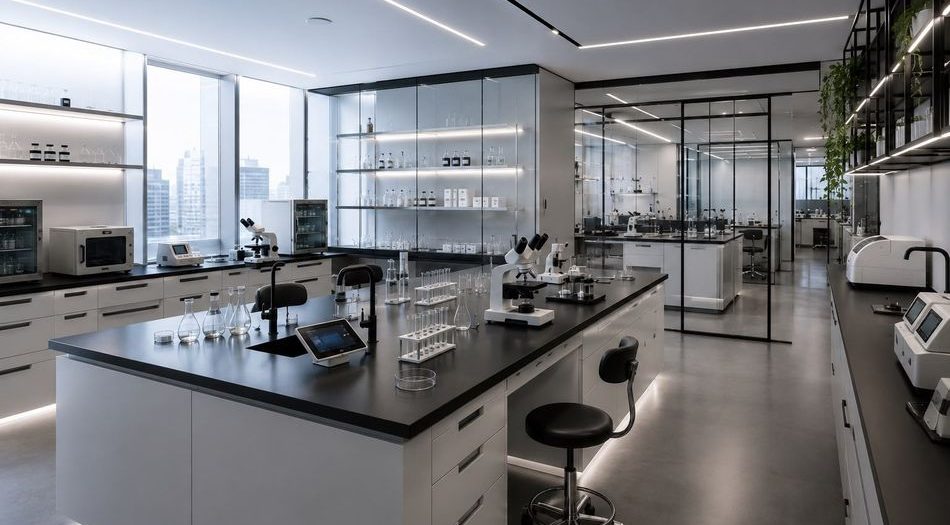
A hundred-and-eighty-year human lifespan. That is the ambition Longevium's founder has put on record. Whether or not that number ever becomes medicine rather than aspiration, the company is placing a serious institutional bet on the science that might get us closer. Longevium has begun construction of a Longevity AI Research Laboratory at Dubai Science Park, backed by a $7 million first investment round, with the facility scheduled to open in Q4 2026.
The company already runs three clinics across Dubai, in Jumeirah 3, Jumeirah Lake Towers, and Jumeirah Village Circle, supported by close to 100 physicians and specialists. That network has treated more than 30,000 patients and gives Longevium something most longevity start-ups lack: a live clinical environment generating real longitudinal data. The new lab is designed to turn that data into validated tools and technologies, not simply publish research.
Dr. Ksenia Butova, Founder and CEO, was direct about the stakes: "Our mission is to make the world's most advanced longevity innovations accessible to more people and help create a future in which healthy human lifespans of up to 200 years may become possible."
How will it work?
The lab will not see patients. It is a research and development facility, positioned between Longevium's clinical operations and the broader scientific community. Technologies already in clinical use, including Doctor Deep, an AI physician assistant, and a biological age app, will form the foundation from which the lab expands. The research agenda spans five distinct areas:
- Digital twins: Patient-specific simulations built using Yamanaka factors, allowing physicians to test medications and treatment protocols on a digital copy before applying them clinically.
- Regenerative medicine and tissue engineering: Advanced cell therapies and next-generation approaches to restoring organ function.
- Robotic diagnostics and wearables: Swallowable capsules for gastrointestinal imaging, AI-powered skin scanners for early melanoma detection, and smart contact lenses that monitor health through tear fluid analysis.
- Noble gas therapy: A structured research program on xenon, argon, helium, and krypton, with xenon currently the most clinically advanced, showing evidence in organ protection and stress-related conditions.
- Biological age platform: Integrating biomarkers, ultrasound, body composition, and wearable data to build a reference AI model for biological age, specifically calibrated to regional populations.
Longevium is actively recruiting scientists and building international research partnerships. The company is also inviting collaboration from research institutions, clinical partners, and investors working in longevity, AI diagnostics, and preventive medicine.
Why does it matter?
Most longevity clinics operate as premium wellness destinations. Longevium is trying to build the back-end infrastructure, the data assets, validated tools, and clinical evidence, that the field currently lacks. The biological age platform is a good example. There is no agreed regional reference dataset for what healthy aging looks like across Gulf populations. If Longevium builds that model and it holds up to clinical scrutiny, it becomes genuinely foundational, not just for the company but for researchers and health systems across the region.
Noble gas therapy is a less familiar addition. Xenon has credible peer-reviewed evidence behind it, particularly in anaesthesiology and neuroprotection. But the broader program is early-stage, and the lab's credibility will depend on how rigorously it separates what is proven from what is still exploratory.
The context
The project fits squarely within Dubai's stated ambitions. The emirate has established the Dubai Longevity Authority and positioned itself as a global centre for longevity research. Saudi Arabia's Vision 2030 places similar emphasis on preventive health and extending healthy life expectancy as a national priority. Across the GCC, governments are moving away from reactive, treatment-focused health models and toward systems that measure and manage health before disease sets in. A facility that develops validated biological age tools and AI diagnostics at scale is exactly the kind of infrastructure that supports that shift. Whether Longevium can deliver on the science, and not just the ambition, is what the next few years will show.
Latest @
Blueprint lands in the UAE as longevity moves from policy to product
M42 launches 10,000-patient wearable pilot in Abu Dhabi to reshape chronic disease care
Unilabs Middle East and Takalam link diagnostics to mental health in one app
Al Ghurair enters healthcare with Trellis Health launch in Dubai
💡Did you know?
You can take your DHArab experience to the next level with our Premium Membership.👉 Click here to learn more
🛠️Featured tool
 Easy-Peasy
An all-in-one AI tool offering the ability to build no-code AI Bots, create articles & social media posts, convert text into natural speech in 40+ languages, create and edit images, generate videos, and more.
👉 Click here to learn more
