

King’s College Hospital Jeddah to become first hospital in EMEA to run InterSystems IntelliCare
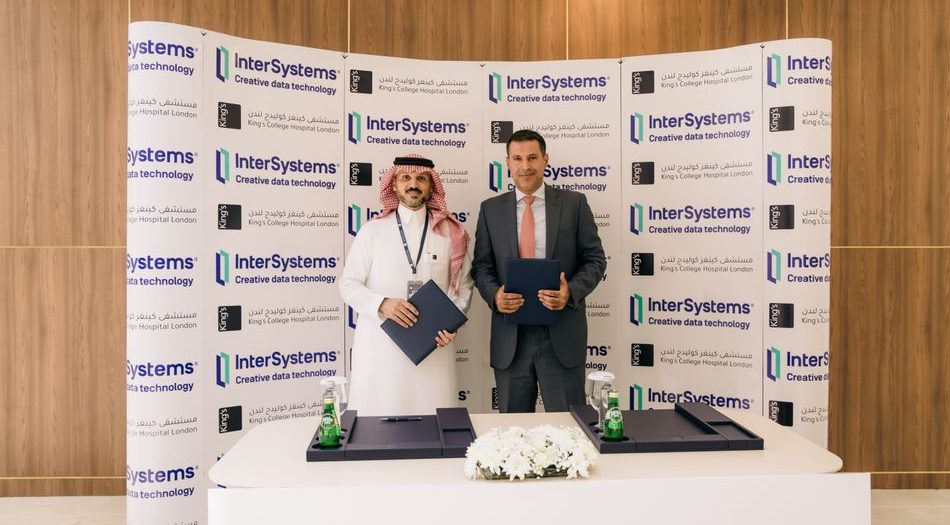
There is a difference between a hospital that uses AI and one that is built around it. King's College Hospital London – Jeddah is positioning itself firmly in the second category. The hospital has signed an agreement with InterSystems to become the first in the EMEA region to go live with InterSystems IntelliCare, a next-generation electronic health record platform with artificial intelligence embedded at its core, not added on top.
King's Jeddah opened in 2025 as an extension of King's College Hospital London, a teaching institution founded in 1840. It operates under the same UK clinical protocols as its London counterpart and has over 130 specialist consultants across 35 clinical specialties and 10 centres of excellence. That's a significant clinical footprint, and it demands a digital infrastructure to match.
The hospital has been running InterSystems TrakCare as its core EHR since opening. The move to IntelliCare is not a switch from a failing system. It's a progression from one that worked. That distinction matters. The clinical and operational teams already understand the InterSystems environment, which means the transition carries less disruption risk and more institutional confidence behind it.
Dr. Ibrahim Alharfi, Chief Executive Officer of King's College Hospital London – Jeddah, put it plainly: "Technology is not the destination; better patient outcomes are. Adopting InterSystems IntelliCare enables our teams to work with greater intelligence, reduce avoidable delays, and keep the clinician's attention where it belongs: on the patient in front of them."
How will it work?
IntelliCare is built on the TrakCare foundation but designed to embed AI directly into clinical workflows rather than sitting alongside them. For King's Jeddah, the platform will introduce several key capabilities:
- Ambient clinical documentation: AI listens to clinical conversations and converts them into structured records automatically, cutting the time clinicians spend typing.
- Built-in AI workflow intelligence: Intelligence is present at every step, from ordering and prescribing to reviewing results, without requiring separate integrations.
- Clinician-centred design: The system is built to minimise the friction technology creates during patient encounters.
- Enhanced interoperability: Full support for HL7 FHIR and SMART on FHIR standards, connecting the hospital within Saudi Arabia's broader health data ecosystem.
Diaa Kamal, Chief Information Officer at King's Jeddah, described the platform as one where "AI surfaces the right information at the right moment, documentation happens naturally, and workflows adapt to the clinician rather than the other way around."
Why does it matter?
The EMEA-first status is notable, but the more significant point is what this reflects about Saudi Arabia's trajectory in healthcare technology. The Kingdom's Vision 2030 health agenda has consistently pushed institutions to raise care quality while reducing inefficiencies. AI-embedded clinical systems are a direct answer to both goals.
Ambient documentation alone addresses one of the most persistent complaints from clinicians globally: that they spend more time with screens than with patients. If IntelliCare delivers on that promise at King's Jeddah, it will carry weight far beyond one hospital's deployment.
Ali Abi Raad, Managing Director of InterSystems Middle East, India and South Africa, said King's Jeddah is "perfectly positioned to realise the full potential of IntelliCare," pointing to the hospital's existing foundation on TrakCare as the basis for that confidence.
The context
Saudi Arabia has invested heavily in health digitisation over the past several years, with the Ministry of Health pushing EHR adoption across public and private sectors alike. But the conversation is shifting. Basic digitisation is largely done. The question now is what healthcare institutions do with the data they are collecting and how intelligently their systems can act on it.
King's Jeddah's decision to adopt an AI-native EHR places it at the front of that conversation in the region. And because it sits within a globally recognised clinical brand, with strong academic oversight and measurable outcome standards, what happens there will be watched closely by peers across the GCC. This is the kind of deployment that tends to set direction for others.
Latest @
Blueprint lands in the UAE as longevity moves from policy to product
M42 launches 10,000-patient wearable pilot in Abu Dhabi to reshape chronic disease care
Unilabs Middle East and Takalam link diagnostics to mental health in one app
Al Ghurair enters healthcare with Trellis Health launch in Dubai
💡Did you know?
You can take your DHArab experience to the next level with our Premium Membership.👉 Click here to learn more
🛠️Featured tool
 Easy-Peasy
An all-in-one AI tool offering the ability to build no-code AI Bots, create articles & social media posts, convert text into natural speech in 40+ languages, create and edit images, generate videos, and more.
👉 Click here to learn more
