

J&J wins FDA clearance for OTTAVA, the first robotic surgical system built into the OR table
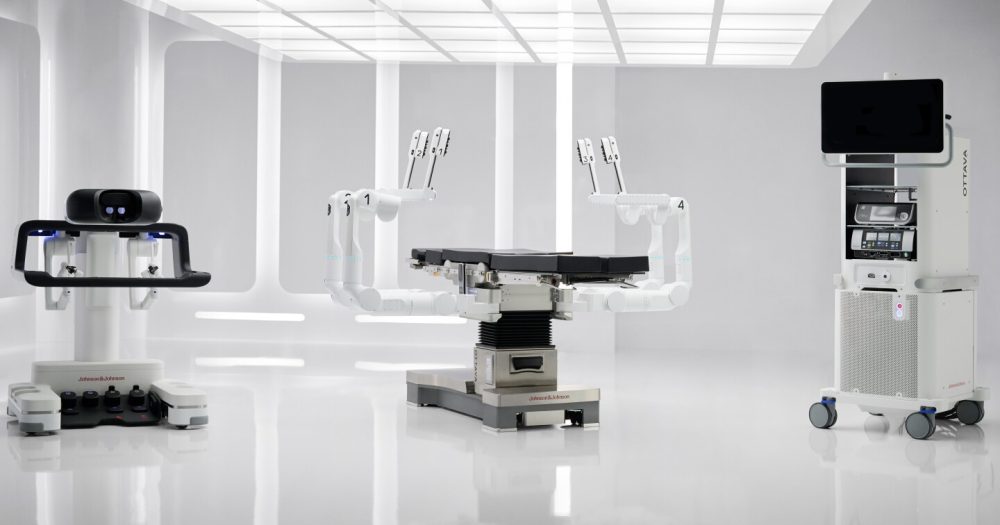
Surgical robots have looked roughly the same for 25 years. Johnson & Johnson is betting that changes now. On July 22, 2026, the company announced that the U.S. Food and Drug Administration granted De Novo authorization for the OTTAVA Robotic Surgical System, clearing it for ten general surgery procedures including gastric bypass, cholecystectomy, gastrectomy, hiatal hernia repair, and appendectomy.
What separates OTTAVA from existing systems is where the arms are mounted. Instead of a freestanding cart or ceiling boom, the four robotic arms are integrated directly into the operating table. J&J says this reduces the system's physical footprint by 30 to 50 percent compared to traditional platforms, freeing up space for surgical teams to move and work more efficiently.
A U.S. clinical trial for inguinal hernia procedures is ongoing. J&J plans a phased commercial launch with select U.S. customers first, with additional indications and international markets to follow.
How does it work?
OTTAVA's architecture is built around the OR table itself. Software coordinates all four arms simultaneously, enabling pre-programmed procedural positions that reduce manual setup time. A feature called Twin Motion synchronises table and arm movement together, so surgeons can reposition patients mid-procedure without detaching and re-docking the robot. The system also connects to Polyphonic, J&J's digital platform, which brings training content, performance data, and surgical insights into a single interface.
- Table-integrated arms occupying 30 to 50% less floor space than cart-based systems
- Automated procedural poses to speed up setup and breakdown
- Twin Motion for intraoperative patient repositioning without re-docking
- Redesigned instruments including a two-in-one needle driver and monopolar curved scissors
- Polyphonic digital platform for data, learning, and performance tracking
Why does it matter?
Robotic surgery adoption is accelerating across the GCC. Saudi Arabia's Vision 2030 health targets and the UAE's push to build world-class surgical infrastructure are driving hospital investment in advanced OR technology. But space constraints, workflow complexity, and training gaps remain real barriers. A system designed to shrink OR footprint and automate setup addresses those problems directly. So does its open digital ecosystem, which fits neatly into the region's broader interest in data-driven hospital management.
The context
J&J enters a market long dominated by Intuitive Surgical's da Vinci platform. But the surgical robotics space is getting crowded fast, with Medtronic's Hugo and CMR Surgical's Versius also competing for hospital contracts globally. J&J's table-integration approach is genuinely different from anything currently approved, and its century-long presence in surgical instruments gives it credibility with OR teams. Regional distributors and hospital procurement teams across the GCC will be watching the U.S. rollout closely before J&J pursues regulatory clearance in other jurisdictions.
Latest @
Blueprint lands in the UAE as longevity moves from policy to product
M42 launches 10,000-patient wearable pilot in Abu Dhabi to reshape chronic disease care
Unilabs Middle East and Takalam link diagnostics to mental health in one app
Al Ghurair enters healthcare with Trellis Health launch in Dubai
💡Did you know?
You can take your DHArab experience to the next level with our Premium Membership.👉 Click here to learn more
🛠️Featured tool
 Easy-Peasy
An all-in-one AI tool offering the ability to build no-code AI Bots, create articles & social media posts, convert text into natural speech in 40+ languages, create and edit images, generate videos, and more.
👉 Click here to learn more
