

Epic’s Prescription Marketplace puts pharmacy cash prices on the doctor’s screen
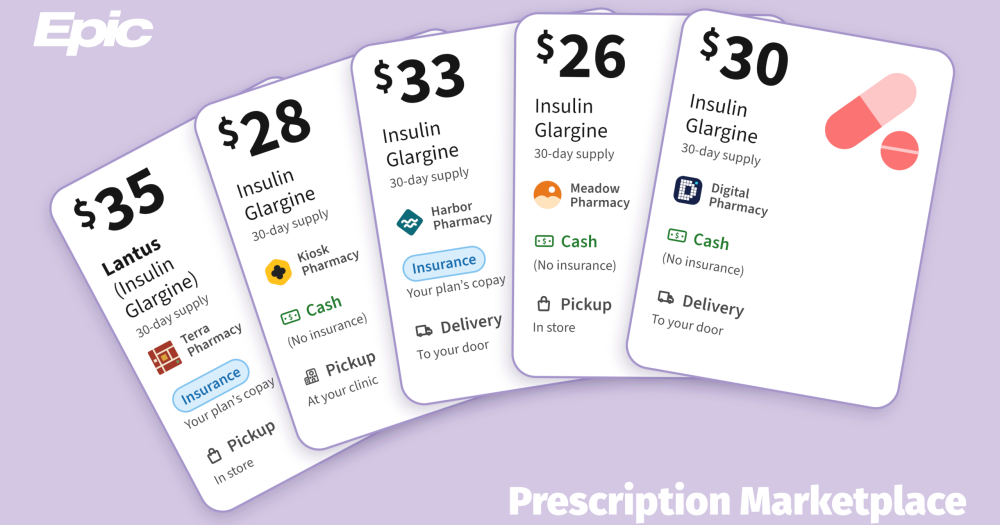
Sometimes the cheapest way to buy a prescription is to ignore your insurance. That is the idea behind Prescription Marketplace, a new feature from Epic Systems that will show clinicians and patients what a drug costs at different pharmacies, with and without insurance, before the prescription leaves the exam room.
The problem it targets is large. More than 40% of American adults say they have not taken medication as prescribed because of cost. Epic plans to release the feature in summer 2027.
How does it work?
Pharmacies of any size will be able to share their cash prices with health systems that use Epic. Cash price means what a pharmacy charges a person paying without insurance. Prescription Marketplace will display those figures next to what the patient would pay through their insurance plan. Depending on the drug, the plan and the pharmacy, cash can come out cheaper.
The feature builds on Epic's Real-Time Prescription Benefit tool, which already shows physicians the patient's insurance cost and lists generic alternatives. Epic says that tool helped patients save more than $250 million in 2025.
Several pharmacies have worked on the design. Amazon Pharmacy has been involved since early 2025. Mark Cuban Cost Plus Drugs, Costco and Eli Lilly's LillyDirect are also taking part.
Cuban gave a blunt example. If insurance says a prescription costs $500 but the same drug sells for $100 through his pharmacy, he said, the patient should know that before leaving the doctor's office. Amazon's Tanvi Patel added that patients should be able to choose between insurance and cash, and between home delivery and pickup at an Amazon Pharmacy kiosk where available.
Why does it matter?
Price surprises usually arrive at the pharmacy counter, when the patient is already holding the prescription. Some walk away. Costco's Ricky Li said clear pricing at the point of prescribing can reduce that abandonment and close care gaps.
Moving the comparison into the clinician's workflow changes who has the information, and when. The doctor can adjust the prescription, and the patient can pick a pharmacy, in the same conversation. That is a practical gain, not a theoretical one.
The context
For GCC readers, the interest lies less in American drug pricing than in the mechanism. Epic is one of the most widely used electronic health record platforms in the world, and its systems are already present in parts of the Gulf. Price transparency built into the record, rather than bolted on through a separate app, is the kind of integration regional digital health programs keep calling for.
Saudi Arabia's Vision 2030 health transformation and the UAE's unified medical records and e-prescription efforts both depend on connected data. Pharmacy pricing is a natural next layer, particularly as insured populations grow and out-of-pocket costs draw more scrutiny. The Gulf's pharmacy market works differently, with different insurance structures and pricing rules. So the American model will not transfer directly.
Still, the principle travels. When cost information sits where the prescribing decision happens, adherence has a better chance. Epic, Amazon, Costco and Eli Lilly will discuss medication affordability at the Open@Epic conference in Verona, Wisconsin on October 21. Health ministries and hospital groups in the region will want to see what they say, and how the 2027 rollout performs.
Latest @
Epic's Prescription Marketplace puts pharmacy cash prices on the doctor's screen
Your medical device may soon talk back
The AMA wants every health AI agent to answer four questions
Oracle and AstraZeneca bet that the next clinical trial patient is already in your hospital system
Blueprint lands in the UAE as longevity moves from policy to product
💡Did you know?
You can take your DHArab experience to the next level with our Premium Membership.👉 Click here to learn more
🛠️Featured tool
 Easy-Peasy
An all-in-one AI tool offering the ability to build no-code AI Bots, create articles & social media posts, convert text into natural speech in 40+ languages, create and edit images, generate videos, and more.
👉 Click here to learn more
