

Epic launches one-click diagnostic image sharing across health systems
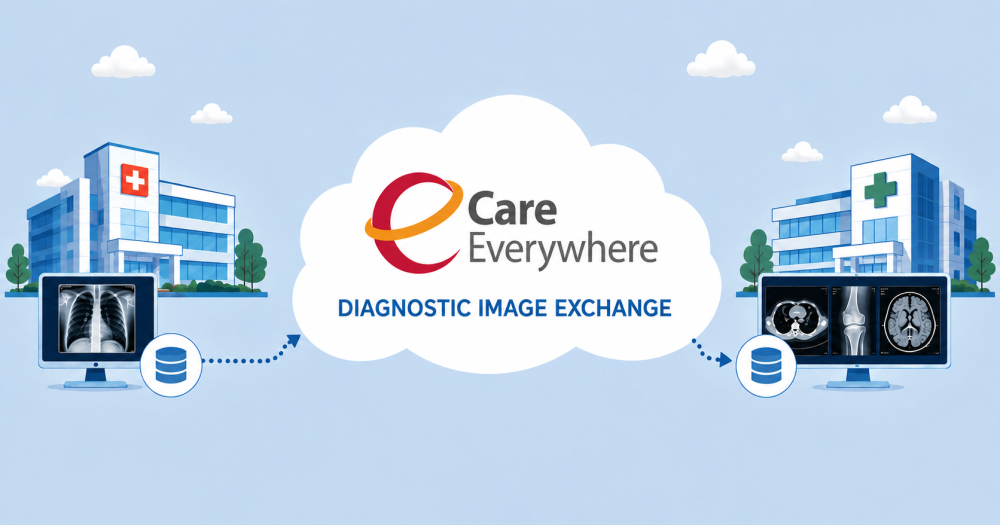
Millions of patients still walk into hospital appointments carrying a plastic CD containing their own medical scans. In 2026, that is a remarkable failure of health infrastructure. Epic is now moving to fix it.
The US-based electronic health record giant has released Care Everywhere Diagnostic Image Exchange, a feature that allows clinicians using Epic to retrieve full diagnostic-quality images from other health systems with a single click. That means CTs, MRIs, X-rays, and similar scans can travel between institutions without manual requests, without discs, and without patients having to act as their own medical couriers.
The release, dated August 2026, is available across the Epic community immediately.
How does it work?
Diagnostic images are typically stored in separate image archiving systems, outside the electronic health record itself. Until now, those systems did not share a common technical standard, which made cross-institution image exchange slow, manual, and often impossible. Clinicians could access written radiology reports and lower-resolution reference images through Epic's existing Care Everywhere network, but the full diagnostic files stayed locked in their originating system.
Epic has changed that by building on open image exchange standards and routing them through its existing interoperability pipelines. When a clinician identifies a relevant prior scan at another organisation, they can now retrieve the full diagnostic image directly from that organisation's archive. One click. No phone calls, no courier, no disc.
The system also connects to Epic's existing duplicate-order detection tools. Those checks already flag when a patient has had a scan performed elsewhere, preventing more than 21,000 repeat scans every year across the Epic network. Now, when a duplicate is flagged, the clinician can actually pull the original image rather than simply knowing it exists somewhere.
Why does it matter?
The clinical case is straightforward. Patients sometimes undergo repeat scans not because their condition requires it, but because their clinician cannot access what was already done at another facility. That delays diagnosis, adds unnecessary radiation exposure, and drives up costs. Faster image access means faster decisions, and faster decisions mean earlier treatment.
But the administrative dimension matters just as much. Manual image retrieval is a burden that sits across radiology departments, medical records teams, and front-line clinicians alike. Eliminating that friction has real workforce implications, particularly in health systems already stretched thin.
Epic's director of interoperability, Matt Doyle, also used the announcement to push for broader adoption of open image-sharing standards through TEFCA, the federally sponsored interoperability framework in the United States. If TEFCA adopts these standards, any health system in the country could eventually participate in diagnostic image exchange, not just Epic users. That is a significant policy ambition sitting behind what looks, on the surface, like a product update.
The context
For health systems across the GCC, this development is worth watching closely. The region is investing heavily in health data interoperability as part of broader digital transformation agendas. Saudi Arabia's Vision 2030 health pillar, the UAE's unified health data initiatives, and similar programmes across the Gulf all share a common goal: connected care that follows the patient, not the institution.
The challenge Epic is solving in the US, fragmented image storage, manual retrieval, and patients acting as their own records carriers, is not unique to North America. Any health system operating across multiple facilities or referral networks faces the same problem. The technical approach Epic has taken, building on open standards rather than proprietary pipelines, is exactly the kind of architecture that regional health authorities should be examining as they design their own interoperability frameworks.
Epic's move also signals something broader about where the health technology sector is heading. The push for open standards in image exchange, combined with real-time prior authorisation checks and AI-supported clinical visits announced alongside this release, points to an industry that is finally prioritising connectivity over competition. That shift, if it holds, will matter everywhere.
Latest @
Blueprint lands in the UAE as longevity moves from policy to product
M42 launches 10,000-patient wearable pilot in Abu Dhabi to reshape chronic disease care
Unilabs Middle East and Takalam link diagnostics to mental health in one app
Al Ghurair enters healthcare with Trellis Health launch in Dubai
💡Did you know?
You can take your DHArab experience to the next level with our Premium Membership.👉 Click here to learn more
🛠️Featured tool
 Easy-Peasy
An all-in-one AI tool offering the ability to build no-code AI Bots, create articles & social media posts, convert text into natural speech in 40+ languages, create and edit images, generate videos, and more.
👉 Click here to learn more
