

Dyson’s CameraJet toothbrush uses AI to find and flush plaque between your teeth
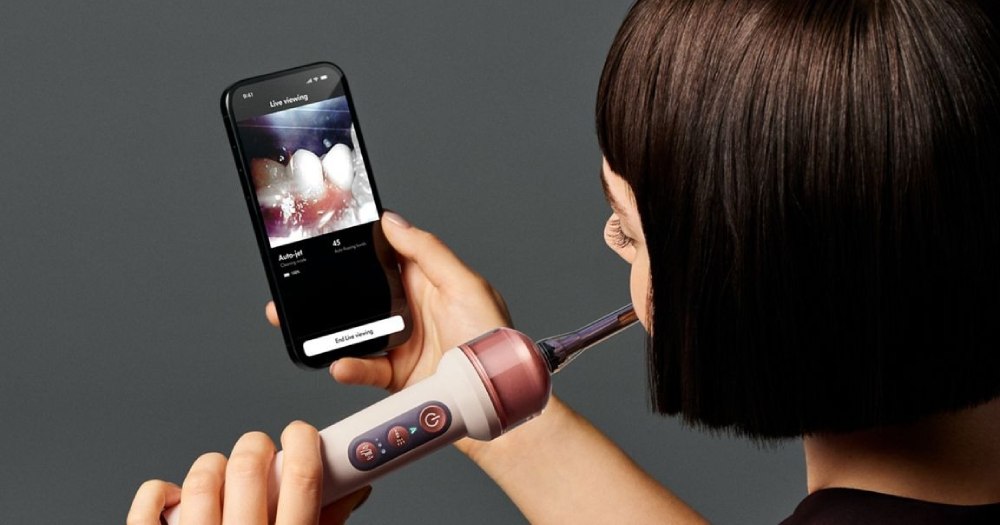
Most people know they should floss. Almost none of them do. Dyson is betting that a toothbrush with a built-in camera and a targeted mouthrinse jet can fix that, without asking people to change their habits at all.
Revealed in Paris on September 1, the Dyson CameraJet is the company's most complex consumer health device to date. It took six years to develop, runs on 16 million lines of code, and was trained on 470,000 dental images. The pitch is simple: brush normally, and the device does the rest.
The timing is notable. The WHO's 2025 Global Oral Health Status Report estimates that nearly 3.7 billion people are affected by oral diseases worldwide. Poor oral health is increasingly linked to systemic conditions including heart disease and Alzheimer's. So this isn't just a premium gadget. It sits at the intersection of consumer technology and preventive health, a space that Gulf health authorities and Vision 2030 planners are actively trying to grow.
How does it work?
A 100,000-pixel macro lens camera scans 28 images per second, powered by Dyson's proprietary Gap Optical Targeting algorithm. Within 100 milliseconds of detecting a gap between teeth, the device fires a conical jet of mouthrinse directly at that spot. Unlike traditional water flossers that use a narrow needle-type stream, Dyson's conical jet has a broader profile that sweeps plaque away rather than punching through it. A 12.5ml anti-gravity tank delivers consistent pressure in any orientation, including horizontal, which matters when cleaning the back of the teeth. The docking station refills the tank in three seconds and charges the device between uses.
- Gap Optical Targeting scans 28 frames per second and fires within 100ms of detecting a gap
- Conical jet removes plaque more gently on gums and enamel than needle-type alternatives
- Variable sonic oscillation prevents bristle stalling in hard-to-reach areas
- Anti-gravity tank delivers uninterrupted jets in any orientation
- RFID-enabled brush heads track usage and alert users when replacement is due
Why does it matter?
Nine in ten people do not floss regularly. The average brushing session lasts 45 seconds, well below the two-minute guideline. The CameraJet doesn't ask users to add a step. It folds flossing and mouth rinsing into the brushing routine itself. That's a meaningful design decision, and it's backed by Dyson's five-year collaboration with the National University of Singapore's Faculty of Dentistry to develop a proxy plaque for testing.
For health systems across the GCC, where non-communicable disease prevention is a policy priority, devices that improve oral health compliance at the individual level carry real public health relevance. Preventive care costs significantly less than treatment.
The context
Dyson has been expanding its health and personal care portfolio steadily, but the CameraJet is a different kind of product. It combines medical-grade imaging logic with a consumer daily-use device. That positions it somewhere between a clinical tool and a toothbrush, and that's new territory.
In the Gulf, where digital health adoption is accelerating under frameworks like Saudi Vision 2030 and the UAE's National Strategy for Healthcare, there is growing appetite for connected personal health devices. The CameraJet, with its WiFi connectivity and live-streaming capability, fits that direction. Pricing and regional availability have not yet been announced.
Latest @
Blueprint lands in the UAE as longevity moves from policy to product
M42 launches 10,000-patient wearable pilot in Abu Dhabi to reshape chronic disease care
Unilabs Middle East and Takalam link diagnostics to mental health in one app
Al Ghurair enters healthcare with Trellis Health launch in Dubai
💡Did you know?
You can take your DHArab experience to the next level with our Premium Membership.👉 Click here to learn more
🛠️Featured tool
 Easy-Peasy
An all-in-one AI tool offering the ability to build no-code AI Bots, create articles & social media posts, convert text into natural speech in 40+ languages, create and edit images, generate videos, and more.
👉 Click here to learn more
