

Dubai hospital becomes first in the Gulf to use advanced 3-in-1 heart artery imaging system
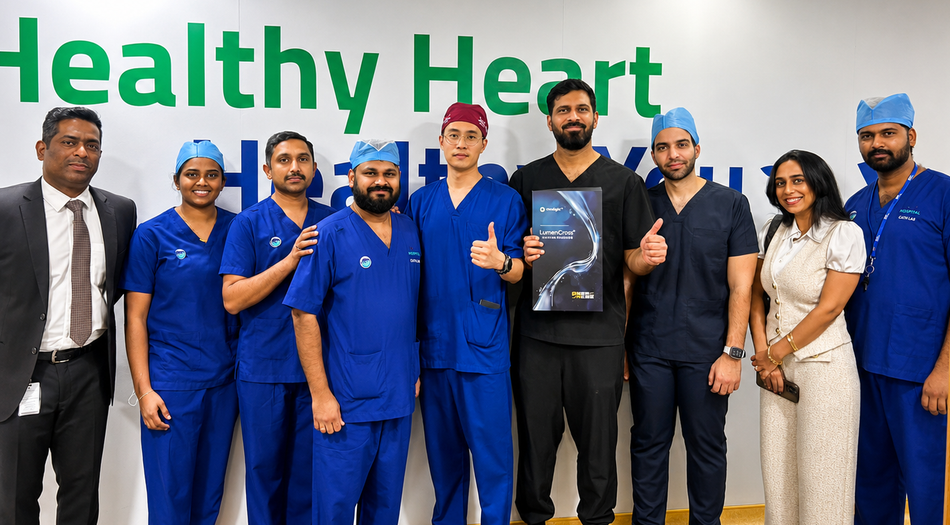
A hospital in Dubai has become the first in the Gulf region to use a next-generation imaging system that gives cardiologists a detailed, real-time view from inside heart arteries. Aster Hospital Mankhool used the Cornaris P80/P80-E Optical Coherence Tomography (OCT) platform, made by medical technology company Vivolight, during a complex heart procedure in early June 2025.
The system combines three imaging modes into one device, allowing doctors to scan different lengths of artery at varying speeds depending on what the procedure requires. It uses near-infrared light to produce high-resolution cross-sectional images of artery walls, something standard X-ray-based angiography simply cannot do.
The first patient treated with the system was a 52-year-old Dubai resident with diabetes, high blood pressure, and high cholesterol who arrived with worsening chest pain and was diagnosed with acute coronary syndrome. The case involved a complex blockage at a junction in the left anterior descending artery, one of the most critical vessels in the heart. Doctors used the OCT images to guide precise stent placement and balloon treatment, restoring normal blood flow. The patient was discharged the next day and has been symptom-free since.
How does it work?
Standard coronary angiography shows the shape of a blood vessel from the outside using X-ray dye images. It tells you where a blockage is, but not much about what it is made of or how it is affecting the artery wall. OCT goes further by sending a thin imaging probe inside the artery itself.
The Cornaris P80/P80-E offers three distinct scanning modes:
- Full View Mode: scans up to 80mm of artery in 2 seconds, useful for getting a broad picture of a long vessel segment
- High-Definition Mode: covers 55mm in 2.75 seconds, trading speed for finer image detail
- Super-Fast Mode: scans 40mm in just 1 second, useful when speed is critical
Together, these modes let cardiologists assess the size, location, and composition of a blockage, including calcium deposits, measure how the artery is responding, and then confirm the result of treatment, all without switching devices. The procedure it supports, percutaneous coronary intervention (PCI), treats blocked arteries using balloons and stents inserted through a small incision, with no need for open-heart surgery.
Why does it matter?
Cardiovascular disease is a serious public health issue across the Gulf. It accounts for around 40% of deaths in the UAE and between 33% and 38% across the wider GCC region. Better imaging tools directly affect how well cardiologists can treat the condition.
The clinical case for OCT-guided procedures is growing. Published research cited by Aster reports that compared to standard angiography-guided procedures, OCT-guided interventions are associated with:
- 39% to 46% reductions in cardiac mortality
- 48% to 64% fewer stent-related complications
Those are significant numbers. Stent complications, including stent thrombosis and restenosis (where a treated artery narrows again), are among the most serious risks of coronary intervention. More precise imaging at the time of the procedure means doctors can place stents more accurately and check immediately whether the result is good enough.
Dr. Naveed Ahmed, Head of Cardiac Services at Aster Hospitals and Clinics UAE, said the system changes what is possible during complex cases. "Instead of relying only on traditional images, we can now understand the structure and composition of the blockage, assess the surrounding artery environment in greater detail, and perform functional assessment of the treated vessel," he said.
The context
The Cornaris P80/P80-E is already in use at more than 300 hospitals in China, where Vivolight is based. The company has expanded internationally, with regulatory clearance in the United States and deployments in Indonesia, Chile, Armenia, Hong Kong, and Macao. The Gulf is its latest market.
OCT imaging for coronary procedures is not new. It has been available in various forms for over a decade, and larger cardiology centers in Europe and the US have used it in complex cases for years. What is changing is the technology's reach and capability. Newer platforms like this one combine multiple functions into a single system, reducing the need to switch equipment mid-procedure and cutting down on the time a patient spends on the table.
Aster Hospital Mankhool was ranked fourth in the UAE in Newsweek's World's Best Hospitals 2026 list. The hospital is part of Aster DM Healthcare, which operates 16 hospitals, 128 clinics, and 360 pharmacies across the GCC and Jordan. The group was founded in 1987 by Dr. Azad Moopen.
For hospitals in the Gulf looking to attract complex cardiology cases and reduce the need for patients to travel abroad for advanced treatment, investing in tools like this one is part of a broader push to raise the standard of local care. The UAE has made becoming a globally competitive healthcare destination a national priority, and this kind of adoption, being first in the region with a validated technology, fits directly into that goal.
Latest @
Blueprint lands in the UAE as longevity moves from policy to product
M42 launches 10,000-patient wearable pilot in Abu Dhabi to reshape chronic disease care
Unilabs Middle East and Takalam link diagnostics to mental health in one app
Al Ghurair enters healthcare with Trellis Health launch in Dubai
💡Did you know?
You can take your DHArab experience to the next level with our Premium Membership.👉 Click here to learn more
🛠️Featured tool
 Easy-Peasy
An all-in-one AI tool offering the ability to build no-code AI Bots, create articles & social media posts, convert text into natural speech in 40+ languages, create and edit images, generate videos, and more.
👉 Click here to learn more
