

Dexcom G8 announced, and it’s half the size of G7
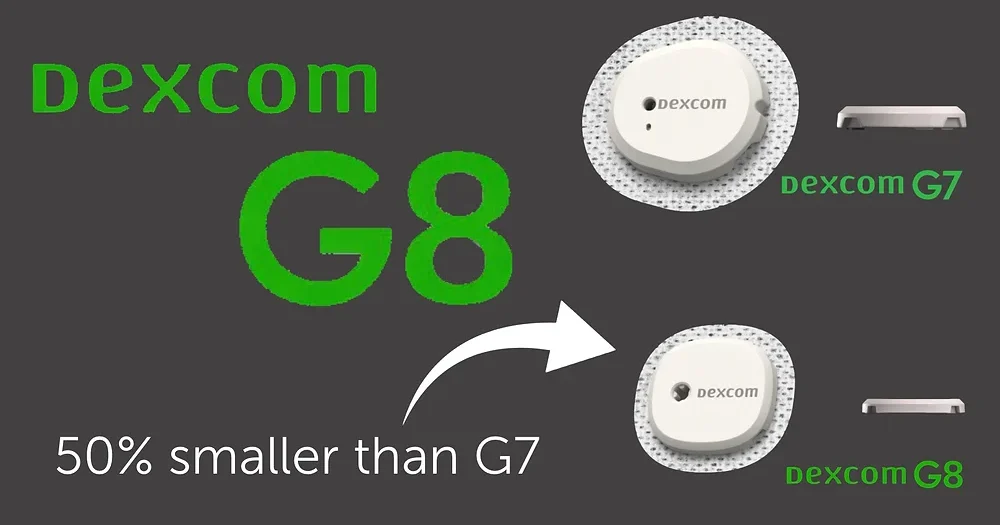
Dexcom has given the type 1 diabetes community its first proper look at the Dexcom G8, and there is plenty here to get excited about. At its 2026 Investor Day, the company revealed a next-generation sensor that is expected to be 50% smaller than the Dexcom G7.
For anyone who has ever tried to hide, protect, tape, rescue, bump, scrape or explain a CGM stuck to their body, "half the size" is not a small thing. Smaller devices usually mean more comfort, more clothing options, fewer doorframe betrayals, and a little less diabetes tech real estate on the body.
What's new?
The headline features of the G8 include several significant improvements:
- 50% smaller form factor: The G8 has a smaller, more rounded-square design. Dexcom presented it side by side with G7, making the size difference very clear.
- Improved glucose performance: Dexcom says G8 is designed to deliver a "step change improvement in glucose performance," with significant accuracy improvements and fewer outlier readings.
- Self-adapting sensor: The G8 is both factory calibrated and self-adapting. Updated electronics and algorithm innovation enable the sensor to adapt in real time, which Dexcom expects will improve consistency throughout wear.
The company also teased future sensors that could monitor more than glucose, including ketones and potassium. For people with type 1 diabetes, ketone monitoring could be particularly valuable during illness, pump failure, or persistent highs.
Why does it matter?
The accuracy improvements address a real pain point for users. Outlier readings are often the ones that cause the most stress: the sudden "that can't be right" low, the confusing spike, or the number that sends you rummaging for a fingerprick meter at 2am.
But there's a big question mark here. Dexcom G7 was smaller and faster to warm up than G6, but some users have reported frustration with connectivity, brief sensor issues, and signal loss. The question is fair: if G7 already had connectivity complaints, can Dexcom really make G8 50% smaller and make it more reliable?
A smaller device can make antenna design and Bluetooth performance more challenging. A tiny sensor is lovely, but a tiny sensor that constantly drops out is just a high-tech freckle. Dexcom has had years of real-world G7 feedback, and connectivity problems create support calls, replacement requests, and competitor opportunities.
The context
Dexcom faces increasing competition in the continuous glucose monitoring space. Abbott has already been developing a dual glucose-ketone sensor, described as a first-of-its-kind system that could launch as early as this year. Abbott also appears further along in building pump partnerships around this technology, with Tandem, Beta Bionics and Ypsomed/CamDiab all reportedly working toward future integration.
The timeline for G8 is still distant. Dexcom expects the sensor to launch in late 2027 or early 2028 in first major markets. For Australia, history suggests a longer wait. Dexcom G7 launched internationally in late 2022 but didn't become available in Australia until September 2024, with NDSS subsidy following in March 2025.
If G8 follows a similar pattern, an Australian launch could land sometime in 2029, with NDSS access potentially coming later. This gives Dexcom time to address connectivity concerns, but also gives competitors more runway to establish their own next-generation products.
The move toward multi-analyte sensing represents a broader shift in the industry. CGMs may not stay "CGMs" forever, as companies explore monitoring multiple biomarkers in a single device.
Latest @
Blueprint lands in the UAE as longevity moves from policy to product
M42 launches 10,000-patient wearable pilot in Abu Dhabi to reshape chronic disease care
Unilabs Middle East and Takalam link diagnostics to mental health in one app
Al Ghurair enters healthcare with Trellis Health launch in Dubai
💡Did you know?
You can take your DHArab experience to the next level with our Premium Membership.👉 Click here to learn more
🛠️Featured tool
 Easy-Peasy
An all-in-one AI tool offering the ability to build no-code AI Bots, create articles & social media posts, convert text into natural speech in 40+ languages, create and edit images, generate videos, and more.
👉 Click here to learn more
