

Cleveland Clinic Abu Dhabi implants the city’s first remote heart failure monitor
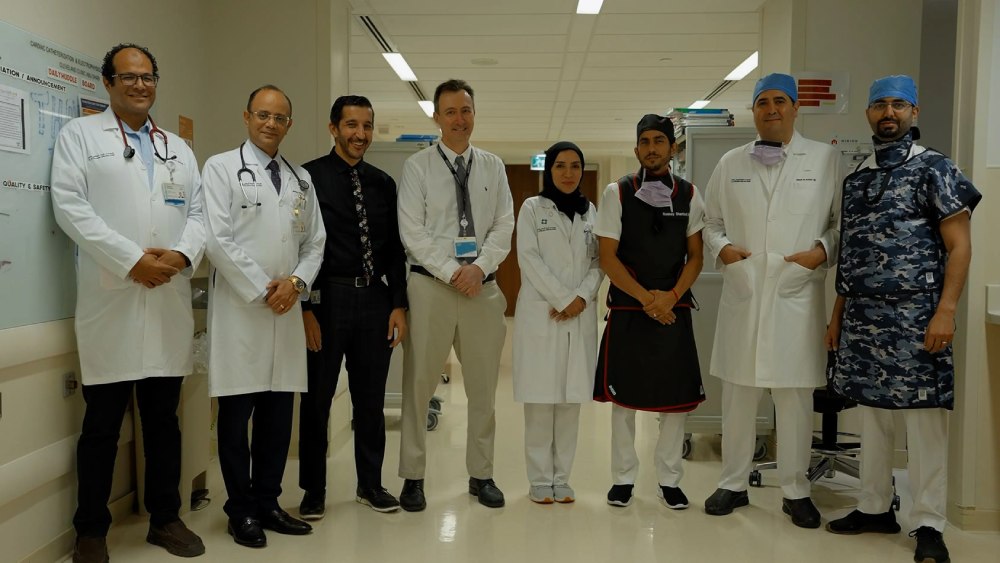
A hospital in Abu Dhabi has quietly changed how heart failure is managed in the UAE. Cleveland Clinic Abu Dhabi says it is the first hospital in the emirate to implant a wireless pulmonary artery pressure sensor, a device that continuously tracks a key indicator of heart health and sends that data straight to the clinical team, no matter where the patient is.
The technology is already in use in two Emirati patients, aged 62 and 79, both of whom had been admitted to hospital repeatedly because of worsening heart failure. For people managing a chronic condition like this, those repeated hospitalizations are not just physically draining. They are also a sign that the current monitoring approach is not catching problems early enough.
This implant is designed to close that gap. Instead of waiting for symptoms like breathlessness or fluid buildup to force a trip to the emergency room, doctors can now spot warning signs in the data and adjust treatment before the patient feels worse.
How does it work?
The procedure takes place in Cleveland Clinic Abu Dhabi's cardiac catheterization laboratory and lasts one to two hours. Patients are given local anesthesia and mild sedation. The sensor itself is tiny and wireless, and it sits in the pulmonary artery, the blood vessel that carries blood from the heart to the lungs.
Once implanted, the device measures arterial blood pressure continuously and sends that information securely to the care team. Elevated pulmonary artery pressure is one of the earliest signs that the heart is struggling, often appearing well before a patient notices any symptoms. Doctors can then adjust medications or intervene quickly, without waiting for the next scheduled appointment.
Recovery is fast. Most patients are monitored for between four and 24 hours after the procedure, and some go home the same day. Normal activity typically resumes within one to two days.
The device is not for everyone. It is intended for patients who:
- Have moderate to severe heart failure symptoms
- Are already receiving guideline-directed medical therapy
- Have been hospitalized at least once for heart failure in the past 12 months
Why does it matter?
Heart failure is a chronic, progressive condition that affects millions of people worldwide. The standard approach to managing it has long relied on patients reporting symptoms, routine check-ups, and reactive treatment when things go wrong. That model has a fundamental flaw: by the time symptoms are bad enough to notice, the patient may already need hospitalization.
Remote monitoring flips that model. Doctors get a continuous stream of physiological data and can act on it in near real time. For patients who live far from the hospital, or who struggle to attend frequent appointments, this kind of monitoring can be the difference between a medication adjustment at home and an emergency admission.
Dr. Nadya Almatrooshi, a cardiovascular medicine physician at the hospital, noted that patients using this type of monitoring often report better symptom control, improved exercise tolerance, and greater confidence managing their condition day to day.
The context
Cleveland Clinic Abu Dhabi already holds a Center of Excellence designation for adult cardiac surgery from the Department of Health Abu Dhabi, and in 2025 it earned the same recognition for cardiac catheterization procedures from the American College of Cardiology. Newsweek ranked it the top hospital in the Middle East for cardiology in its 2026 Best Specialized Hospitals list.
The broader trend here is the shift toward remote and predictive care across cardiology. Implantable monitoring devices have been used in the US and Europe for years, with clinical data showing they can significantly reduce heart failure hospitalizations. Bringing this technology to Abu Dhabi puts the UAE in step with leading cardiac centers globally, and signals a wider push in the region to move chronic disease management out of the hospital and into patients' everyday lives.
For the two patients already living with the implant, that shift is already real.
Latest @
Blueprint lands in the UAE as longevity moves from policy to product
M42 launches 10,000-patient wearable pilot in Abu Dhabi to reshape chronic disease care
Unilabs Middle East and Takalam link diagnostics to mental health in one app
Al Ghurair enters healthcare with Trellis Health launch in Dubai
💡Did you know?
You can take your DHArab experience to the next level with our Premium Membership.👉 Click here to learn more
🛠️Featured tool
 Easy-Peasy
An all-in-one AI tool offering the ability to build no-code AI Bots, create articles & social media posts, convert text into natural speech in 40+ languages, create and edit images, generate videos, and more.
👉 Click here to learn more
