

Cleveland Clinic Abu Dhabi brings robotic bronchoscopy to the Middle East for the first time
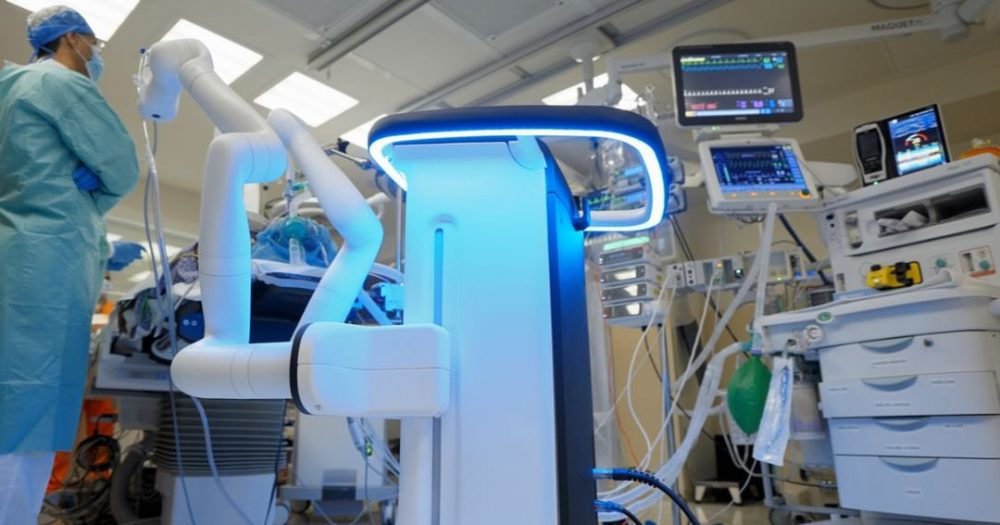
Lung cancer is most treatable when caught early. The problem has always been getting there. Tiny nodules buried deep in the lungs, often measuring just a few millimetres, have historically been either monitored with watchful waiting or reached through surgery. Cleveland Clinic Abu Dhabi has changed that equation by introducing robotically-assisted bronchoscopy to the Middle East, a first for the region.
The technology allows physicians to access and biopsy small lung nodules in the peripheral areas of the lung, the deepest and most difficult sections to reach, without open surgery or major incisions. For patients, that means a faster diagnosis, less physical trauma, and a far shorter recovery time.
How does it work?
Robotic bronchoscopy uses a catheter system guided by a robotic arm and real-time imaging to travel through the airways and reach nodules that a standard bronchoscope simply cannot get to. The physician controls the system with precision, steering through narrow bronchial passages to the exact location of a suspicious nodule.
Once there, a tissue sample is taken for analysis. The whole procedure is minimally invasive. There are no large incisions, no general surgical risk, and patients typically go home the same day or shortly after. So compared to a surgical biopsy, the difference in patient experience is significant.
Why does it matter?
Early-stage lung cancer, when the tumour is still small and has not spread, carries a much higher survival rate than late-stage diagnoses. But early-stage nodules are precisely the ones that have been hardest to biopsy accurately. That diagnostic gap has real consequences: some patients face delayed diagnoses, others undergo more invasive procedures than necessary.
This technology addresses both problems. It gives pulmonologists and oncologists a reliable way to confirm or rule out malignancy in small, deep nodules at the point when a confirmed diagnosis matters most. And it does so without the recovery burden of open surgery.
For a region where non-communicable disease rates are high and health systems are actively working to shift toward earlier detection, that clinical advantage is worth paying attention to.
The context
This introduction fits a clear pattern across the UAE and the broader GCC. Under Abu Dhabi's health strategy and Saudi Arabia's Vision 2030, governments across the region have committed to reducing cancer mortality through prevention, screening, and early intervention. Bringing advanced diagnostic tools to the region, rather than requiring patients to travel abroad, is a direct expression of that ambition.
Cleveland Clinic Abu Dhabi has been central to the UAE's effort to build a world-class clinical infrastructure locally. Adding the region's first robotic bronchoscopy programme is consistent with that role.
Still, the real measure of success will be access. The technology exists. The question now is how many patients across the region can actually benefit from it, and how quickly screening programmes can identify the candidates who need it most.
Latest @
Blueprint lands in the UAE as longevity moves from policy to product
M42 launches 10,000-patient wearable pilot in Abu Dhabi to reshape chronic disease care
Unilabs Middle East and Takalam link diagnostics to mental health in one app
Al Ghurair enters healthcare with Trellis Health launch in Dubai
💡Did you know?
You can take your DHArab experience to the next level with our Premium Membership.👉 Click here to learn more
🛠️Featured tool
 Easy-Peasy
An all-in-one AI tool offering the ability to build no-code AI Bots, create articles & social media posts, convert text into natural speech in 40+ languages, create and edit images, generate videos, and more.
👉 Click here to learn more
