

Burjeel Holdings installs AI-powered cath labs across two GCC hospitals
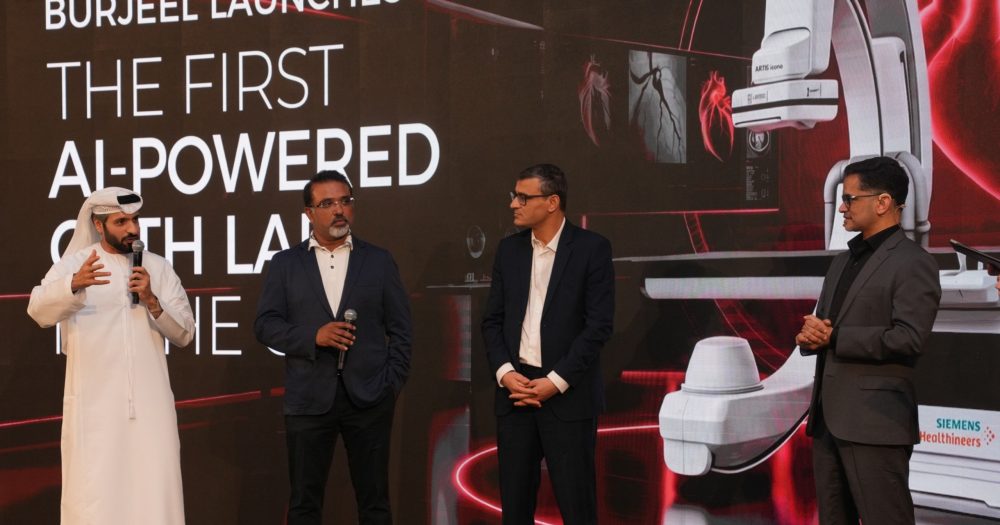
A cardiologist's ability to treat a blocked artery depends, in large part, on how clearly they can see it. That sounds obvious. But in complex interventions, where anatomy is difficult and every millimetre matters, the difference between adequate imaging and excellent imaging is the difference between a good outcome and a complicated one. Burjeel Holdings is betting on the latter.
The Abu Dhabi-based healthcare group has installed what it describes as the GCC's first AI-powered catheterisation laboratories at Burjeel Hospital Abu Dhabi and Burjeel Specialty Hospital in Sharjah. The technology at the centre of both facilities is Siemens Healthineers' ARTIS icono.vision platform, a system that combines high-definition imaging, real-time procedural guidance, advanced 3D visualisation, and automated workflows into a single operating environment.
At Burjeel Hospital Abu Dhabi, the installation has doubled the hospital's cath lab capacity. That matters in a city where demand for specialised cardiovascular care is growing steadily and where the population skews toward risk factors, including diabetes and hypertension, that drive complex cardiac cases.
How does it work?
The core of the platform is a feature called OPTIQ AI. It builds on earlier imaging adjustment technology but adds a layer of artificial intelligence that analyses live images in real time. The system automatically reduces background noise across different 2D imaging modes and body areas, maintaining image quality even at very low radiation doses. This supports what clinicians call the ALARA principle, keeping radiation exposure as low as reasonably achievable without sacrificing the clarity needed to perform the procedure safely.
The labs are designed as multidisciplinary facilities, supporting teams across a wide range of specialties. Procedures the system can support include:
- Complex coronary interventions and chronic total occlusion procedures
- Structural heart interventions and peripheral vascular therapies
- Embolization and interventional oncology treatments
- Advanced aortic repairs
- Neurointerventional procedures and pain management
The platform also provides full 200-degree rotational 3D imaging, rapid 3D acquisitions, and system positioning precision of better than 0.5 mm. That level of mechanical accuracy gives physicians greater flexibility when they need to find a specific angle during a demanding case.
Why does it matter?
Dr. Georgie Thomas, Consultant Interventional Cardiologist and Head of Department at Burjeel Hospital Abu Dhabi, put it plainly: "In complex interventions, having a clear and accurate view of the anatomy throughout the procedure is critical. The new system gives us enhanced imaging and guidance when navigating challenging cases, while also helping us manage radiation and contrast use."
For patients, better imaging means more precise diagnosis, fewer repeat procedures, and a higher chance that a complex case can be handled locally rather than referred abroad. For the clinical team, real-time guidance during demanding interventions reduces the cognitive load at precisely the moments when it matters most.
Burjeel Hospital Abu Dhabi has also recently received AHA Chest Pain accreditation, which strengthens its position in managing patients presenting with acute coronary symptoms. The new cath lab fits into a broader cardiac programme that runs from prevention and early diagnosis through to cardiac surgery, rehabilitation, and long-term management.
The context
This investment sits squarely within the direction the UAE's health sector has been taking for the past several years. Abu Dhabi's Department of Health has consistently pushed providers to build local capacity for complex tertiary care, reducing the need for medical travel and positioning the emirate as a regional centre of clinical excellence. The UAE's broader ambitions, articulated through national health strategies and the UAE Vision 2031 framework, call for technology adoption in healthcare as both a quality measure and an economic one.
Across the GCC, cardiovascular disease remains the leading cause of death. So the pressure on health systems to expand interventional capacity is not an abstract policy goal. It's a clinical reality that facilities like these are designed to meet. Burjeel's expansion into Sharjah also signals something worth watching: the geographic spread of tertiary-level cardiac infrastructure beyond the two main UAE hubs. That broadens access, and access, in cardiovascular medicine, saves lives.
Latest @
DarDoc launches AI intelligence layer that reads a patient's full history before the doctor walks in
Abu Dhabi brings advanced heart surgery home with two new cardiac programmes at Al Ain medical city
Saudi health-tech firm SDM wins KPMG's 2026 Global Tech Innovator competition
UAE health minister leads US institutional tour to build future medicine partnerships
Egypt presses Orange Group to join digital health expansion as tech investment deepens
💡Did you know?
You can take your DHArab experience to the next level with our Premium Membership.👉 Click here to learn more
🛠️Featured tool
 Easy-Peasy
An all-in-one AI tool offering the ability to build no-code AI Bots, create articles & social media posts, convert text into natural speech in 40+ languages, create and edit images, generate videos, and more.
👉 Click here to learn more
