

Apple Vision Pro used in live hip surgery for the first time
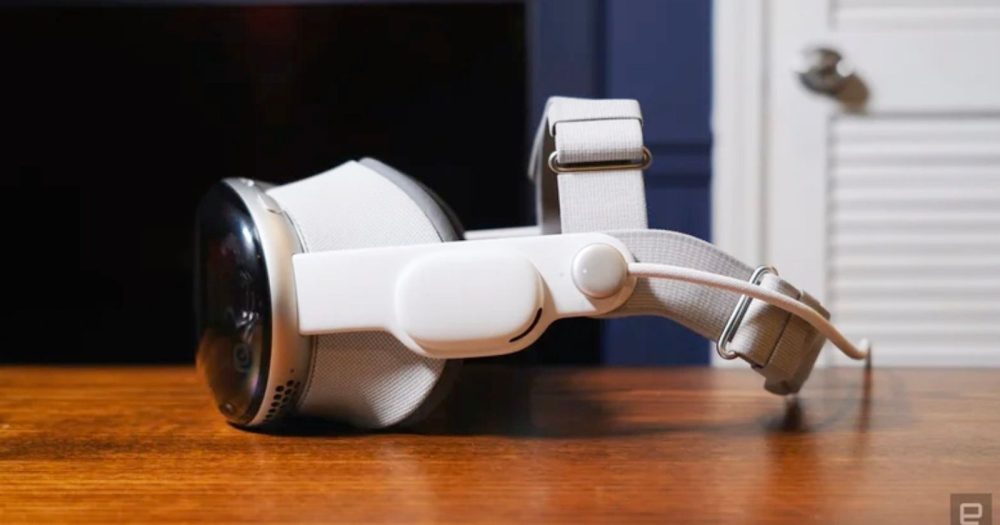
The Apple Vision Pro has never been a consumer product, not really. It was always too expensive, too niche, too strange to wear on a Tuesday afternoon. But a hip arthroscopy performed at Duke Health this week suggests the headset may have finally found the environment it was built for.
Medical technology company Stryker announced that its SportSuite Vision app, running on the Apple Vision Pro, was used during a live orthopedic procedure at Duke Health. It is the first time the software has been deployed in an actual clinical setting. Stryker received De Novo authorization from the FDA for the application on July 17, a regulatory pathway used for novel, low-to-moderate risk devices that have no existing approved equivalent.
Dr. Chad Mather III, the orthopedic surgeon who conducted the procedure, was direct about the benefit. "Using spatial computing enabled me to customize the placement of key clinical information to fit my workflow and access it within the sterile field," he said. "This helped create a more comfortable, streamlined OR setup while keeping the information I needed in view." That is not a trivial outcome. Surgeons working in sterile environments typically cannot touch screens or shuffle through printed materials mid-procedure. Having imaging data and planning tools floating in their field of vision, without breaking sterility, is a meaningful operational gain.
How did it work?
The mixed reality format of the Vision Pro allowed Dr. Mather to remain fully present with the patient while simultaneously accessing a suite of digital tools. During the hip arthroscopy, the headset gave him real-time access to:
- Stryker's orthopedic surgery planning tools
- Arthroscopic images from the procedure itself
- CT imaging for anatomical reference
The surgeon could position each of these visual elements in his field of view according to his own workflow preferences. So rather than glancing at a separate monitor or asking a nurse to pull up an image, the data was simply there, overlaid onto his working environment.
Why does it matter?
This is the kind of use case that justifies the Vision Pro's existence in a way that no productivity app or 3D film ever could. The device costs thousands of dollars and requires significant investment to develop software for. That price point rules out most consumer scenarios. But in a surgical context, where the cost of error is measured in patient outcomes and where even small efficiency gains carry real clinical weight, the economics look different.
And the FDA authorization matters. De Novo clearance is not a rubber stamp. It signals that regulators are prepared to engage seriously with spatial computing as a category in medical devices, which opens the door for other developers and other specialties.
The context
Across the GCC, health systems are moving fast. Saudi Arabia's Vision 2030 has placed healthcare modernization at the center of national strategy, and the UAE has made digital health infrastructure a stated priority. Institutions in the region are actively watching what gets FDA clearance because American regulatory approval often sets the benchmark for procurement decisions here.
Still, it would be a mistake to overread this moment. Apple reportedly reduced its Vision Pro engineering team significantly last month, raising questions about the long-term product roadmap. And a single successful procedure, however promising, is not a clinical body of evidence. But if spatial computing in surgery continues along this line, the Gulf's major hospital networks and medtech investors should be paying close attention. The operating room may be where this technology finally earns its place.
Latest @
Blueprint lands in the UAE as longevity moves from policy to product
M42 launches 10,000-patient wearable pilot in Abu Dhabi to reshape chronic disease care
Unilabs Middle East and Takalam link diagnostics to mental health in one app
Al Ghurair enters healthcare with Trellis Health launch in Dubai
💡Did you know?
You can take your DHArab experience to the next level with our Premium Membership.👉 Click here to learn more
🛠️Featured tool
 Easy-Peasy
An all-in-one AI tool offering the ability to build no-code AI Bots, create articles & social media posts, convert text into natural speech in 40+ languages, create and edit images, generate videos, and more.
👉 Click here to learn more
