

American Hospital Dubai acquires da Vinci 5, adding force feedback surgery to its robotic arsenal
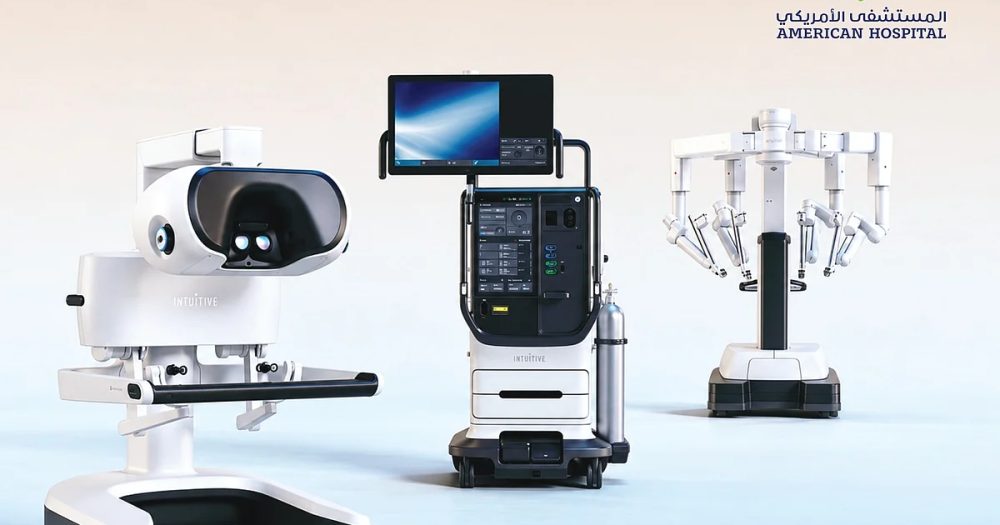
For the first time in the Middle East, surgeons will be able to physically feel the pressure they apply to tissue during a robotic procedure. That capability, known as Force Feedback technology, is the headline feature of the da Vinci 5, the latest robotic surgical system from California-based Intuitive. And it is coming to Dubai.
American Hospital Dubai has signed an agreement with Al Naghi Medical, a UAE-based medical devices distributor, to acquire the da Vinci 5 system. The deal adds a third da Vinci platform to the hospital's existing fleet, which already includes the da Vinci Xi and the da Vinci SP (Single Port), the first single-port robotic system in the Middle East. Together, the three systems give American Hospital Dubai one of the broadest robotic surgery portfolios in the region.
Sherif Beshara, group CEO of American Hospital Dubai, framed the acquisition in strategic terms. "The acquisition of the da Vinci 5 system reflects our strategic vision to remain a regional leader in robotic surgery while expanding our capabilities to perform increasingly complex and delicate procedures with the highest levels of precision and safety," he said. Mona Qaisi of Al Naghi Medical described the deal as part of a "shared mission to advance robotic surgery in the Middle East."
How does it work?
The da Vinci 5 is built on the same robotic-assisted, minimally invasive architecture as its predecessors, but with over 150 technical enhancements. The most significant is Force Feedback, which allows a surgeon at the console to sense the resistance and pressure being applied to tissue in real time. Previously, robotic surgery relied entirely on visual cues for tissue handling. This addition changes that.
Beyond Force Feedback, the system brings:
- Ultra-realistic 3D imaging at higher resolution than previous generations
- 10,000 times greater computing power compared to earlier da Vinci systems
- A redesigned surgeon console built for greater physical comfort during long procedures
- Improved precision that the manufacturer says reduces tissue trauma and supports faster patient recovery
Why does it matter?
Robotic surgery is not new in the UAE, but access to the most advanced systems has historically lagged behind North America and parts of Europe. Having Force Feedback technology available in Dubai means regional patients and surgeons no longer need to travel elsewhere for procedures that require that level of tactile precision. It also means American Hospital Dubai can take on a wider range of complex, minimally invasive cases across multiple specialties.
There is a training dimension here too. With three da Vinci systems in operation, the hospital is better placed to run structured robotic surgery education programmes, which matters in a region that is actively working to grow its base of locally trained surgical talent.
The context
This acquisition fits neatly into the UAE's broader push to position itself as a medical hub. The country's national health strategy and the wider framework of UAE Vision 2031 both place significant emphasis on adopting advanced medical technology and reducing reliance on medical tourism abroad. Investments like this one are part of that effort.
So is the regional timing. Saudi Arabia's Vision 2030 has accelerated demand for advanced surgical infrastructure across the GCC, and competition among regional hospitals to attract both patients and top surgical talent is intensifying. American Hospital Dubai's move to consolidate three da Vinci systems under one roof is, at least in part, a response to that pressure. It signals that the hospital is not standing still while the region's healthcare market grows around it.
Latest @
Blueprint lands in the UAE as longevity moves from policy to product
M42 launches 10,000-patient wearable pilot in Abu Dhabi to reshape chronic disease care
Unilabs Middle East and Takalam link diagnostics to mental health in one app
Al Ghurair enters healthcare with Trellis Health launch in Dubai
💡Did you know?
You can take your DHArab experience to the next level with our Premium Membership.👉 Click here to learn more
🛠️Featured tool
 Easy-Peasy
An all-in-one AI tool offering the ability to build no-code AI Bots, create articles & social media posts, convert text into natural speech in 40+ languages, create and edit images, generate videos, and more.
👉 Click here to learn more
