

Abu Dhabi’s SAKINA partners with US neuroscience firm PeakLogic to advance brain health diagnostics
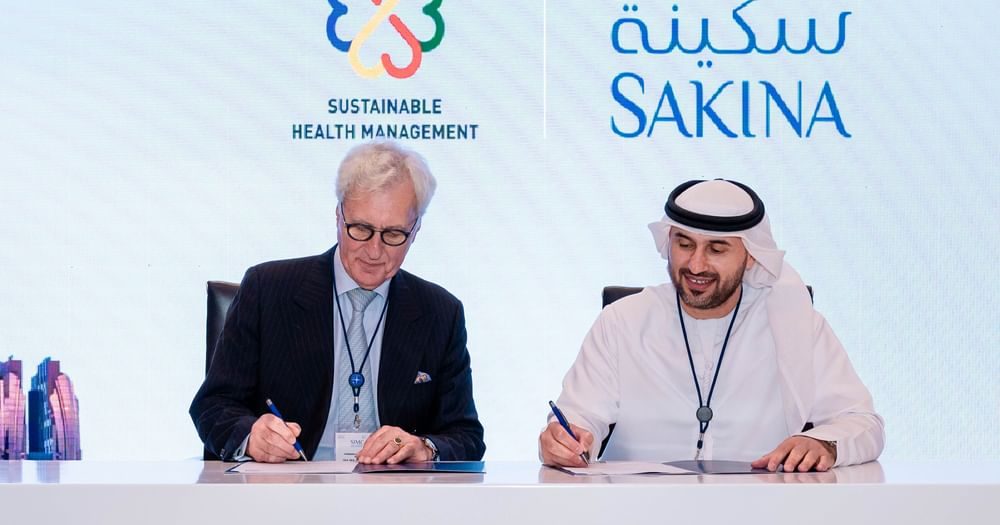
Mental health care in the Gulf has long struggled with a diagnostic gap. Clinicians rely heavily on symptom-based assessments, which are subjective by nature, and access to objective neurological measurement tools has remained limited across the region. That may be about to change. SAKINA, the mental health network operating under SEHA, itself a subsidiary of Abu Dhabi's PureHealth, has signed a Memorandum of Understanding with PeakLogic, a US-based medical technology company specialising in neuroscience-driven psychiatry. The agreement puts advanced brain diagnostics on the table for UAE patients.
SAKINA is the largest dedicated mental health network in Abu Dhabi, with a footprint that spans inpatient, outpatient, and community-based care. PeakLogic, for its part, has built its reputation around quantitative electroencephalography, known as qEEG, and precision psychiatry, an approach that uses measurable brain data to guide treatment decisions rather than relying solely on clinical observation.
How will it work?
Under the MOU, the two organisations will jointly explore how PeakLogic's neuroscience tools can be integrated into SAKINA's clinical workflows. The focus areas include:
- Quantitative EEG assessment to objectively measure brain activity patterns linked to psychiatric conditions
- Precision psychiatry protocols that match patients to treatments based on neurological data
- Shared research initiatives examining brain health outcomes across the UAE patient population
- Training and knowledge transfer to build local clinical capacity in neuropsychiatric diagnostics
No deployment timeline has been confirmed publicly, but the MOU framework suggests pilot programmes within SAKINA's existing facilities are a logical next step. The partnership is exploratory at this stage, though both parties have framed it with clear clinical intent.
Why does it matter?
The UAE has made mental health a stated national priority. Still, the gap between policy ambition and clinical infrastructure is real. One of the persistent challenges is that psychiatric diagnosis remains largely observational. A patient presenting with depression, for example, might receive different diagnoses from different clinicians depending on how symptoms are reported and interpreted. qEEG technology offers something different: a biological signal that can be measured, tracked, and compared over time. That kind of objectivity has significant implications for treatment accuracy, medication selection, and monitoring patient progress.
And there is a broader population health argument here. With stress, burnout, and anxiety consistently ranking among the top health concerns in GCC workforce surveys, having sharper diagnostic tools is not just a clinical upgrade. It's a public health investment.
The context
This partnership fits neatly into the UAE's wider health strategy. PureHealth, as the largest integrated healthcare platform in the region, has been systematically expanding its clinical capabilities through international partnerships. SEHA's SAKINA network is a key part of that, and agreements like this one reflect Abu Dhabi's intent to position itself as a regional reference point for specialised care, not just primary services.
Globally, precision psychiatry is gaining traction as the mental health sector tries to move beyond trial-and-error prescribing. The UAE now has an opportunity to adopt these approaches early, build local clinical evidence, and shape how brain health care is delivered across the GCC.
Latest @
Blueprint lands in the UAE as longevity moves from policy to product
M42 launches 10,000-patient wearable pilot in Abu Dhabi to reshape chronic disease care
Unilabs Middle East and Takalam link diagnostics to mental health in one app
Al Ghurair enters healthcare with Trellis Health launch in Dubai
💡Did you know?
You can take your DHArab experience to the next level with our Premium Membership.👉 Click here to learn more
🛠️Featured tool
 Easy-Peasy
An all-in-one AI tool offering the ability to build no-code AI Bots, create articles & social media posts, convert text into natural speech in 40+ languages, create and edit images, generate videos, and more.
👉 Click here to learn more
