

Abu Dhabi deploys smart ambulances built for its most complex medical cases
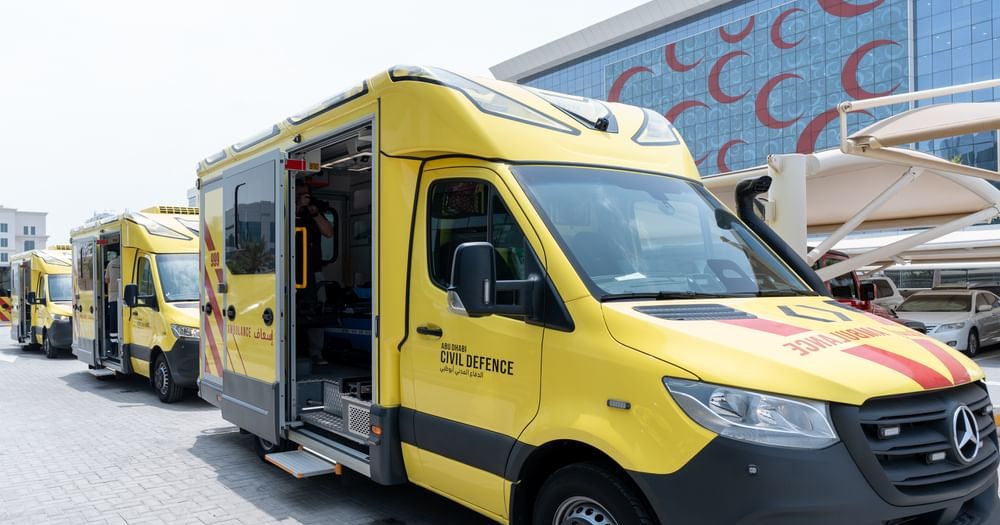
Most ambulances stabilise. These ones treat. The Department of Health – Abu Dhabi (DoH) and the Abu Dhabi Civil Defence Authority (ADCDA) have jointly launched a new generation of specialised smart ambulances, and the ambition behind them is clear: close the gap between emergency response and definitive clinical care, before the patient ever reaches a hospital.
The initiative targets patients with complex medical needs, where every minute of advanced intervention withheld is a minute of avoidable deterioration. That's a meaningful shift in how Abu Dhabi is thinking about pre-hospital care, and it fits squarely within the emirate's broader push to build a health system that performs at the point of need, not just within facility walls.
How does it work?
The new ambulances are equipped to handle high-acuity cases from the first moments of emergency response. While full technical specifications are still being detailed publicly, the fleet is designed to support conditions requiring advanced monitoring, intervention, and clinical decision-making on the move. Key reported capabilities include:
- Advanced life support equipment tailored for complex and critical conditions
- Integrated smart systems to support real-time clinical monitoring during transport
- Specialist-level configuration that goes beyond standard emergency medical service vehicles
- Coordination capability between the ambulance crew and receiving hospital teams
The joint deployment between DoH and ADCDA also signals stronger institutional coordination between the health regulatory body and the civil defence infrastructure, which manages emergency response across the emirate.
Why does it matter?
In emergency medicine, the concept of the "golden hour" is well established. What is less often discussed is how much of that window is consumed by transport with limited clinical capability. For stroke, cardiac arrest, major trauma, or severe respiratory failure, the difference between an ambulance that monitors and one that actively treats can determine both survival and long-term outcome.
Abu Dhabi has invested heavily in hospital infrastructure over the past decade. But pre-hospital care has historically been harder to upgrade at scale. This fleet suggests the emirate is now treating the space between emergency call and hospital admission as a clinical environment in its own right, not just a logistical corridor.
For clinicians, that matters. For policymakers designing health outcomes frameworks, it matters too. And for insurers and health economists watching the cost of delayed intervention, it is a model worth tracking.
The context
This launch sits within a wider pattern across the GCC, where health authorities are investing in emergency systems as part of national modernisation agendas. In Saudi Arabia, Vision 2030 has included emergency care network development as part of its health transformation programme. The UAE's own health targets, set under various national and emirate-level strategies, include measurable improvements in emergency response times and outcomes.
Abu Dhabi, as the UAE's capital and largest emirate by area, has particular geographic incentive to get pre-hospital care right. So this fleet is both a clinical statement and a strategic one. And if the outcomes data follows, it could set a benchmark that other GCC health authorities will be watching closely.
Latest @
Blueprint lands in the UAE as longevity moves from policy to product
M42 launches 10,000-patient wearable pilot in Abu Dhabi to reshape chronic disease care
Unilabs Middle East and Takalam link diagnostics to mental health in one app
Al Ghurair enters healthcare with Trellis Health launch in Dubai
💡Did you know?
You can take your DHArab experience to the next level with our Premium Membership.👉 Click here to learn more
🛠️Featured tool
 Easy-Peasy
An all-in-one AI tool offering the ability to build no-code AI Bots, create articles & social media posts, convert text into natural speech in 40+ languages, create and edit images, generate videos, and more.
👉 Click here to learn more
