

Abu Dhabi bets on biological age tech to reshape preventive health
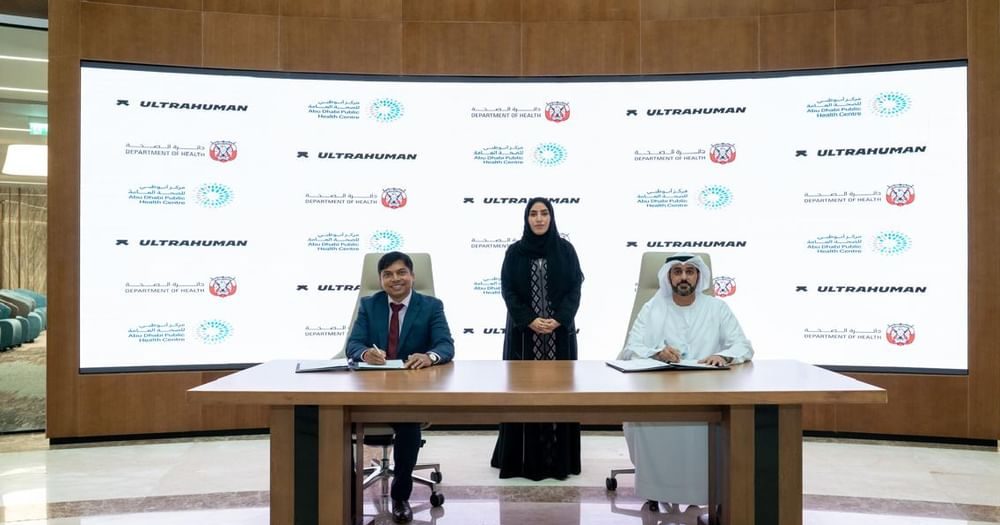
Your birth certificate says one thing. Your biology may say something else entirely. The Abu Dhabi Public Health Centre (ADPHC), operating under the Department of Health Abu Dhabi, has signed a Memorandum of Understanding with Ultrahuman Healthcare SP LLC to develop a Biological Health Age model, a system designed to measure the true physiological age of an individual, not just the years they have lived. It is a quiet but significant move in Abu Dhabi's push to shift healthcare from treating illness to preventing it.
Ultrahuman is a global health technology company best known for its continuous glucose monitoring tools and wearable ring device. The company already collects granular biometric data across large user populations. Pairing that capability with ADPHC's public health infrastructure and clinical reach gives this project real weight. This is not a pilot app or a wellness experiment. Both parties are committing to clinical validation, which means the model will need to prove it works before it gets deployed at scale.
How will it work?
The Biological Health Age model will pull together multiple data streams to produce a single, interpretable score that reflects a person's physiological condition. According to the agreement, the model will combine:
- Clinical biomarkers from blood and metabolic testing
- Continuous biometric data collected via wearable devices
- Lifestyle and behavioural inputs tracked over time
- Population-level health data from Abu Dhabi's existing public health records
The clinical validation process will be conducted in Abu Dhabi, which means the model will be tested and refined against a real Gulf population, not adapted from data collected elsewhere. That distinction matters more than it might seem.
Why does it matter?
Most preventive health tools available today were built on Western population datasets. Genetic variation, dietary patterns, metabolic profiles, and disease prevalence differ significantly across ethnic groups. A Biological Health Age model trained and validated on Abu Dhabi's diverse, multicultural population could produce far more accurate results for people across the GCC than anything currently on the market.
But the practical stakes go beyond accuracy. If a clinician can tell a 42-year-old patient that their biological age is 51, that information changes the conversation. It creates urgency. It makes abstract risk visible. And it gives individuals something concrete to work toward reducing. That is the kind of tool that can shift population health behaviour at scale, which is exactly what Abu Dhabi's long-term health strategy requires.
The context
This partnership fits directly into Abu Dhabi's broader agenda on preventive care and data-driven health. The emirate has spent years building the infrastructure for this kind of initiative, from population health registries to digital patient records to national screening programmes. ADPHC has been central to that work.
Across the UAE and wider GCC, governments are under pressure to reduce the burden of non-communicable diseases, including diabetes, cardiovascular disease, and obesity, all of which are closely linked to accelerated biological ageing. Saudi Arabia's Vision 2030 has made similar commitments to preventive health and health data investment. So this Abu Dhabi initiative is arriving at a moment when regional appetite for this kind of science is high. The question now is whether the clinical validation delivers results that hold up.
Latest @
Blueprint lands in the UAE as longevity moves from policy to product
M42 launches 10,000-patient wearable pilot in Abu Dhabi to reshape chronic disease care
Unilabs Middle East and Takalam link diagnostics to mental health in one app
Al Ghurair enters healthcare with Trellis Health launch in Dubai
💡Did you know?
You can take your DHArab experience to the next level with our Premium Membership.👉 Click here to learn more
🛠️Featured tool
 Easy-Peasy
An all-in-one AI tool offering the ability to build no-code AI Bots, create articles & social media posts, convert text into natural speech in 40+ languages, create and edit images, generate videos, and more.
👉 Click here to learn more
