

Abu Dhabi and San Diego’s Sanford Burnham Prebys join forces on drug discovery
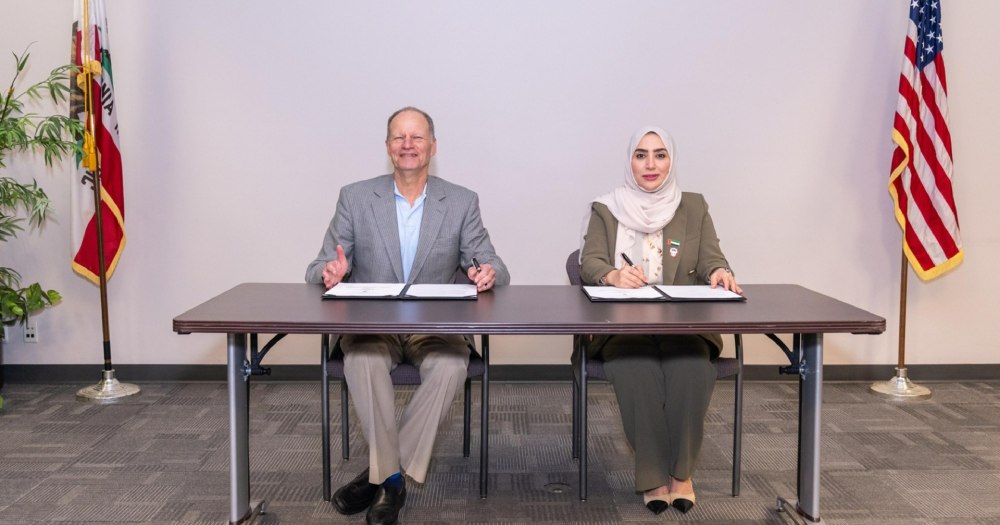
Abu Dhabi is not waiting for the world to develop better medicines and then import them. The Department of Health Abu Dhabi (DoH) has signed a Memorandum of Understanding with Sanford Burnham Prebys Medical Discovery Institute, a biomedical research institute based in San Diego, California, to co-develop new therapeutics using Abu Dhabi's own clinical data, genomics infrastructure, and patient population as the foundation for early-stage drug research.
The agreement was signed in the United States during the Abu Dhabi Healthcare and Life Sciences delegation's strategic visit, with H.E. Dr. Noura Khamis Al Ghaithi, Undersecretary of the DoH, and David A. Brenner, President and CEO of Sanford Burnham Prebys, both signing for their respective organisations. The timing is significant. The announcement came alongside Abu Dhabi's participation at BIO International Convention 2026, where the emirate presented its life sciences ecosystem to a global audience of biotechnology investors, researchers, and industry leaders.
H.E. Dr. Al Ghaithi described the rationale directly: "The future of healthcare will be shaped by our ability to connect scientific discovery with real-world implementation." That framing reflects a broader strategic ambition. Abu Dhabi is not positioning itself as a market for finished pharmaceutical products alone. It wants a seat at the table where those products are conceived, tested, and validated.
How will it work?
The collaboration brings together Sanford Burnham Prebys' drug discovery and therapeutics capabilities with what Abu Dhabi has built on the data and infrastructure side. Under the agreement, both parties will work across several areas:
- Target identification and translational validation, moving therapeutic candidates from early discovery through preclinical development
- Access to Abu Dhabi's population-scale genomics programmes, longitudinal health data, and biobanking assets to support first-in-human and early-phase clinical studies
- Joint training initiatives, researcher exchange programmes, and links to Sanford Burnham Prebys' Graduate School of Biomedical Sciences
- Exploration of a strategic Sanford Burnham Prebys presence within Abu Dhabi's innovation infrastructure, including the Biosciences Park, the Genome Oasis, and the HELM Cluster
That last point carries real weight. A physical anchor for Sanford Burnham Prebys in Abu Dhabi would represent a concrete commitment, not just a research agreement on paper.
Why does it matter?
Drug discovery is slow, expensive, and heavily concentrated in a handful of cities, Boston, San Diego, London, Basel. Most countries in the Arab world have traditionally participated at the end of that process, purchasing approved drugs rather than contributing to their development. This partnership is an attempt to change that position, at least for Abu Dhabi.
The emirate's genomics infrastructure is a genuine asset here. Population-scale data from a genetically diverse community, combined with longitudinal health records and biobanking capacity, is exactly what early-phase drug developers need. It's rare. And Abu Dhabi has been building it deliberately for years. So this is not a symbolic agreement. It connects an internationally credible research institution to infrastructure that most research partnerships cannot access.
For healthcare professionals in the region, this also signals a likely expansion in clinical trial activity. Early-phase studies and first-in-human trials require clinical teams, regulatory engagement, and patient recruitment. Those capabilities will need to grow alongside the research pipeline.
The context
This agreement fits within Abu Dhabi's Health, Endurance, Longevity and Medicine Cluster, known as HELM, which is supported by the Abu Dhabi Investment Office. HELM is designed to connect research, investment, commercialisation, and clinical implementation within one ecosystem rather than letting each element develop in isolation. The DoH delegation to the United States included representatives from ADIO, M42, Hub71, NYU Abu Dhabi, Masdar City, Khalifa University, PureHealth, Mubadala Bio, and others, a list that reflects the cross-sector coordination Abu Dhabi is applying to its life sciences ambitions.
Across the Gulf, Saudi Arabia's Vision 2030 has placed similar emphasis on building domestic biotech and pharmaceutical capacity. The competition to attract research institutions, clinical infrastructure investment, and scientific talent is real. But Abu Dhabi's combination of genomics data assets, sovereign investment backing, and regulatory leadership through the DoH gives it a distinctive position. This partnership with Sanford Burnham Prebys is one more piece of that architecture taking shape.
Latest @
Blueprint lands in the UAE as longevity moves from policy to product
M42 launches 10,000-patient wearable pilot in Abu Dhabi to reshape chronic disease care
Unilabs Middle East and Takalam link diagnostics to mental health in one app
Al Ghurair enters healthcare with Trellis Health launch in Dubai
💡Did you know?
You can take your DHArab experience to the next level with our Premium Membership.👉 Click here to learn more
🛠️Featured tool
 Easy-Peasy
An all-in-one AI tool offering the ability to build no-code AI Bots, create articles & social media posts, convert text into natural speech in 40+ languages, create and edit images, generate videos, and more.
👉 Click here to learn more
