

Samsung’s new AI health chatbot tries to make sense of your body data
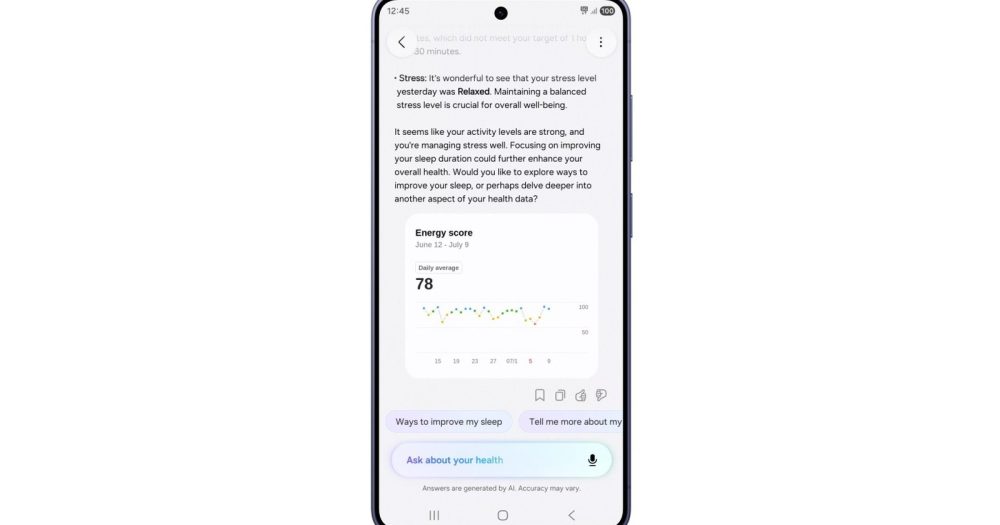
Samsung is rolling out an AI-powered health chatbot called Health Assistant, and the timing is deliberate. The company launched it just before its Galaxy Unpacked event on Wednesday, where new smartwatches are widely expected to appear. The chatbot is built directly into Samsung Health and is now live in beta for eligible US users.
The core idea is straightforward: most people collect a lot of health data but don't know what to do with it. Health Assistant is meant to close that gap. It answers questions about your personal health data and offers lifestyle suggestions that Samsung says have been reviewed by physicians and certified health coaches.
The tool is opt-in, and it can pull information from a Galaxy Watch, a Galaxy Ring, and your phone. It won't diagnose conditions or recommend treatments, but it will try to help you spot patterns you might otherwise miss.
How does it work?
Health Assistant is built around what Samsung calls five core pillars of wellness: sleep, activity, nutrition, mindfulness, and vitals. The chatbot can explain how each of these areas affects the others, so you're not just looking at data points in isolation.
What makes this different from similar tools at Whoop or Fitbit is the connection to the wider Samsung ecosystem. Health Assistant ties into Samsung's personalized data engine, which means it can draw on information beyond fitness metrics:
- If you turned your smart lights off late at night, it might flag a possible impact on your sleep quality.
- Down the line, it could suggest a breathing exercise before a work meeting pulled from your calendar.
- It can cross-reference sleep, activity, and vitals data to surface patterns a user might not notice.
Samsung also told Bloomberg that new health features include overnight monitoring of heart rate and blood oxygen, with alerts if something shifts significantly. Apple Watch has offered something similar for a couple of years now. Users will also get access to an Energy Score, a Heart Health Score, and a Fitness Index based on activity data, heart rate, and oxygen consumption.
Why does it matter?
The pitch here isn't just a smarter fitness tracker. Samsung is positioning Health Assistant as something closer to a continuous wellness companion, one that connects your physical data with the rest of your daily life. That's a meaningful step up from apps that simply log your steps or heart rate and leave you to interpret the numbers yourself.
The physician-to-patient angle is also worth watching. Samsung is developing a platform that could let doctors access smartwatch data, including blood pressure readings, between clinic visits. That kind of remote monitoring has been a long-term goal for health tech companies, and it got a boost when Samsung acquired Xealth, a company that connects wearable data with clinical records.
The context
Every major player in consumer health tech is chasing the same idea right now: turn passive data collection into something actually useful. Apple, Google, and a range of startups are all building AI layers on top of wearable data. Samsung's advantage, if it can execute, is the size of its ecosystem. The company sells phones, tablets, watches, rings, earbuds, and smart home devices at scale, which gives Health Assistant more data points to work with than most rivals.
The beta launch ahead of Galaxy Unpacked also signals that Samsung wants health features to be a central part of how it sells its next generation of devices. Whether Health Assistant delivers on that promise in practice is something users in the US will start finding out this week.
Latest @
75,000 samples in: inside Abu Dhabi's AI wastewater early-warning system
Dubai-founded Enhance raises $18.2 million to push deeper into US gym market
Saudi health minister signs MoU with Portugal in push to build global health partnerships
Neuratia Labs names ten fellows for its first global neuroscience research program
💡Did you know?
You can take your DHArab experience to the next level with our Premium Membership.👉 Click here to learn more
🛠️Featured tool
 Easy-Peasy
An all-in-one AI tool offering the ability to build no-code AI Bots, create articles & social media posts, convert text into natural speech in 40+ languages, create and edit images, generate videos, and more.
👉 Click here to learn more
