

Google kills Fitbit app in favor of AI-powered health coaching push
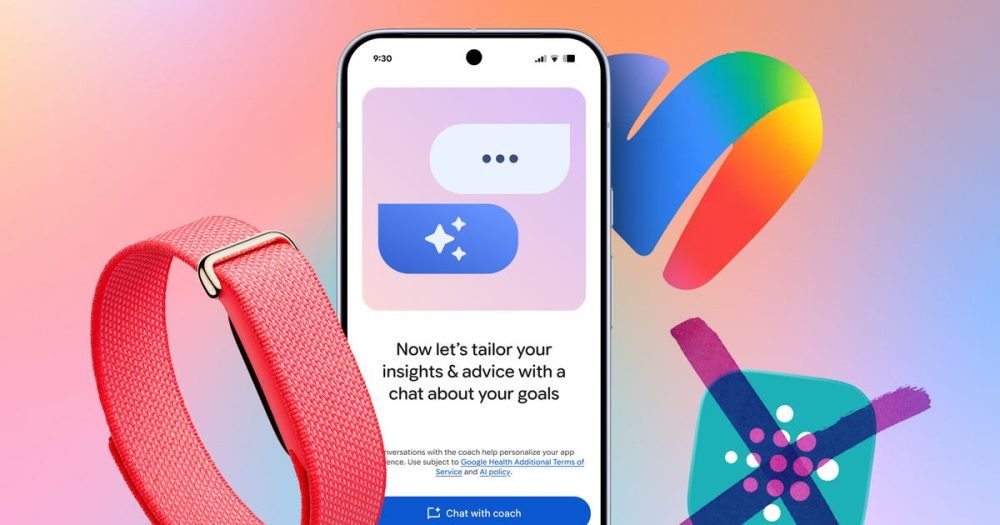
Google is making big changes to its health strategy. Three announcements on Thursday show the company is moving away from hardware-focused fitness tracking toward AI-powered coaching and personalized guidance.
The changes include a new $100 screenless fitness tracker, a complete rebrand of the Fitbit app, and an AI health coach that's now available to all premium subscribers. For longtime Fitbit users, these changes represent the biggest shake-up in years.
What's the news?
Google announced three major updates to its health platform:
- Fitbit Air tracker: A $100 screenless fitness band that focuses purely on data collection, with no display or notifications
- Google Health Coach: An AI-powered fitness assistant built on Gemini that creates personalized workout and recovery plans
- App rebrand: The Fitbit app automatically becomes the Google Health app starting May 19, with all user data transferred over
The Fitbit Air is available for preorder Thursday and hits stores May 26. It works with both iOS and Android devices and comes with three months of Google Health Premium service ($10 monthly or $100 yearly). A Stephen Curry special edition costs $130.
The AI health coach can now process uploaded medical records, PDFs and photos to make its recommendations more targeted. It's rolling out to all Google Health Premium subscribers on compatible Fitbit devices.
Why does it matter?
This represents a fundamental shift in how Google approaches health technology. Instead of competing on hardware features like screen quality or battery life, the company is betting that AI-powered insights will be the main reason people choose their products.
The move puts Google in direct competition with companies like Whoop, Garmin and Oura, which already offer AI coaching features. But Google believes its Gemini AI foundation gives it a significant advantage in understanding and interpreting health data.
For existing Fitbit users, the app rebrand is probably the biggest change. The new Google Health app organizes everything into four main sections: Today, Fitness, Sleep and Health. It's designed to focus more on recovery and training plans rather than simple step counting.
The context
Google bought Fitbit in 2020 for $2.1 billion, and these changes show how that acquisition is finally reshaping the company's health strategy. The fitness tracking market has become increasingly crowded, with Apple dominating through the Apple Watch and newer players like Whoop gaining ground with subscription-based coaching models.
The screenless tracker approach isn't new. Whoop has built a successful business around bands that prioritize data collection over flashy displays. Google is clearly trying to capture some of that market while using its AI capabilities as a differentiator.
Privacy remains a key concern. When Google acquired Fitbit, it promised to keep health data separate from its advertising business. The company repeated that commitment Thursday, but as more sensitive medical information flows into Google's ecosystem, that separation will face continued scrutiny from regulators and users.
The changes also signal that Google sees health coaching subscriptions as a major revenue opportunity. At $100 per year, Google Health Premium could generate significant recurring income if the company can convince users that AI-powered insights are worth paying for.
Latest @
Apple Vision Pro used in live hip surgery for the first time
75,000 samples in: inside Abu Dhabi's AI wastewater early-warning system
Dubai-founded Enhance raises $18.2 million to push deeper into US gym market
Saudi health minister signs MoU with Portugal in push to build global health partnerships
💡Did you know?
You can take your DHArab experience to the next level with our Premium Membership.👉 Click here to learn more
🛠️Featured tool
 Easy-Peasy
An all-in-one AI tool offering the ability to build no-code AI Bots, create articles & social media posts, convert text into natural speech in 40+ languages, create and edit images, generate videos, and more.
👉 Click here to learn more
