

PureHealth and WHOOP bet that your wrist can help manage blood pressure
Most people with high blood pressure feel fine. That is the problem. Hypertension rarely announces itself, and a reading taken twice a year in a clinic says little about what happens the other 363 days. PureHealth thinks a wearable might fill that gap.
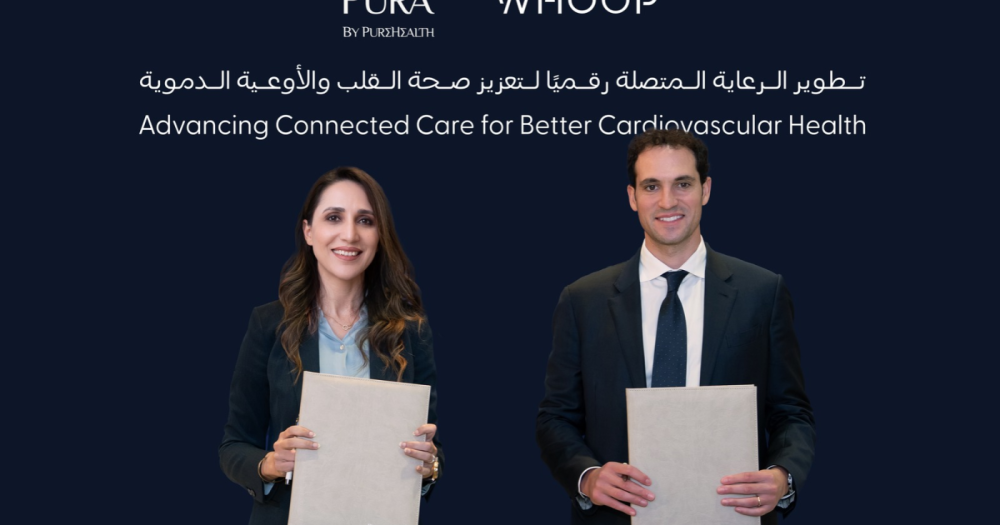
The largest healthcare group in the Middle East has partnered with WHOOP, the human performance brand, to explore a new hypertension care programme. The announcement came from Abu Dhabi on 26 November 2026. The idea is to connect everyday health monitoring with personalised medical guidance, so that data collected on the wrist sits alongside a patient's medical information instead of apart from it.
How will it work?
The details are still being worked out, and the word "explore" matters here. This is a collaboration at an early stage, not a finished product. But the basic model is clear enough.
WHOOP devices track signals such as sleep, recovery, heart rate and activity around the clock. PureHealth brings clinical records, physicians and care pathways. The programme would combine the two, so a doctor could see how a patient's daily habits and physiology move over time, and adjust advice accordingly.
In practice, that could mean guidance that changes as the data changes. A patient whose sleep deteriorates or whose resting heart rate climbs might get earlier attention, rather than waiting for the next scheduled appointment. How the data will be validated, who reviews it and how patient consent is handled are questions the partners will need to answer as the work develops.
Why does it matter?
Hypertension is one of the most common drivers of heart disease and stroke, and the Gulf is not exempt. Rates of obesity, diabetes and sedentary living across the GCC all feed into cardiovascular risk. Managing a condition that has no obvious symptoms depends on steady monitoring and steady behaviour change. Clinics are poor at both.
Wearables are good at the first. They are less proven at turning numbers into medical decisions. That is where a large provider matters. Consumer devices produce plenty of data, but data without clinical interpretation can leave users either falsely reassured or needlessly anxious. Pairing it with physician oversight is the more credible route.
There is also a business point. Preventive care is cheaper than treating a stroke, and insurers and governments across the region know it. A programme that keeps patients engaged between visits could reduce complications and costs alike.
The context
The partnership fits the direction of regional health policy. The UAE has pushed digital health records, telemedicine and AI-supported care for several years, and Abu Dhabi in particular has made preventive and personalised medicine a stated priority. Saudi Arabia's Vision 2030 sets similar goals, with a strong emphasis on shifting the system from treatment to prevention.
PureHealth, which has grown quickly through acquisitions and partnerships, is positioning itself as a link between clinical care and consumer technology. WHOOP, for its part, has spent years moving from athletic performance toward wider health use.
Still, the test will come after the announcement. Regulators, clinicians and patients will want evidence that wrist-based insights improve blood pressure control, not just engagement. If the pilot can show that, other GCC providers will take notice. If it cannot, it will join a long list of promising wearable projects that never reached the clinic.
Latest @
PureHealth and WHOOP bet that your wrist can help manage blood pressure
TruDoc hands the CEO role to its in-house clinician, Dr. Tarek Turk
GE HealthCare bets that simpler CT will matter as much as sharper CT
A new MRI-guided cancer centre brings adaptive radiotherapy to Sharjah
UAE's MoHAP bets that the next health fix will come from its own corridors
💡Did you know?
You can take your DHArab experience to the next level with our Premium Membership.👉 Click here to learn more
🛠️Featured tool
 Easy-Peasy
An all-in-one AI tool offering the ability to build no-code AI Bots, create articles & social media posts, convert text into natural speech in 40+ languages, create and edit images, generate videos, and more.
👉 Click here to learn more
