

Cambridge Health Group and Heriot-Watt University join forces on rehabilitation research
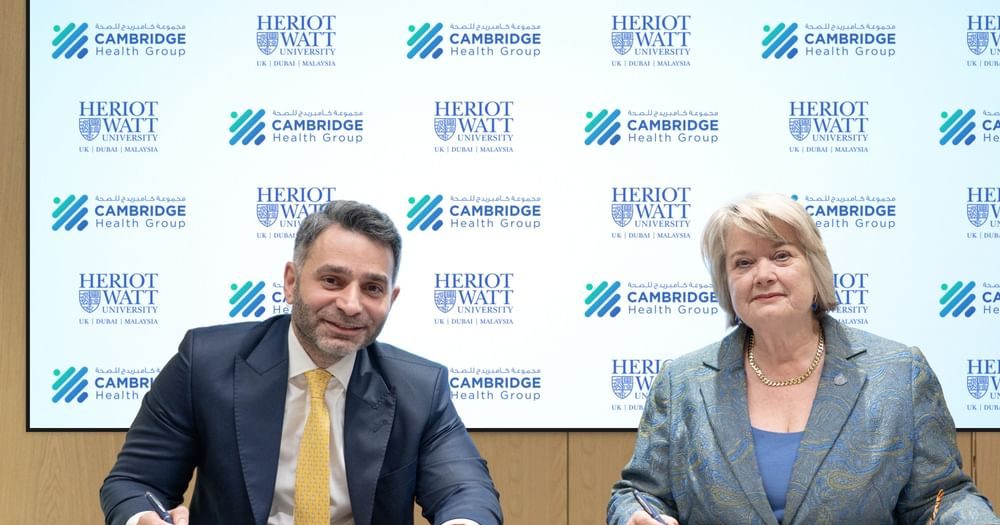
Rehabilitation rarely makes headlines, yet it decides whether patients go home or stay in care. A new three-year partnership between Cambridge Health Group (CHG), a subsidiary of Amanat Holdings PJSC, and Heriot-Watt University is a bet that better research can change those outcomes.
The two organisations have signed a Memorandum of Understanding to advance academic research in rehabilitation, long-term care and specialised care. The agreement pairs CHG's clinical expertise in long-term and specialised care with the university's research strength. That is the core of the deal: practitioners who see patients every day working with academics who can test, measure and publish.
An MoU is a framework, not a finished study. The announcement does not list specific projects, budgets or results, so it is too early to judge what the collaboration will produce. But the focus areas are clear, and they are ones where evidence is often thinner than clinicians would like.
How will it work?
The partnership runs for three years and centres on shared academic research. In practice, that usually means joint studies, access to clinical settings for researchers, and a route for findings to return to the bedside. CHG supplies the patients, the care pathways and the day-to-day clinical insight. Heriot-Watt supplies research methods, analytical capacity and academic rigour.
The three areas named in the agreement are:
- Rehabilitation, from recovery after illness or injury to restoring function
- Long-term care, including support for patients with chronic and complex needs
- Specialised care, where treatment pathways are narrower and data is harder to collect
Details of individual projects have yet to be announced.
Why does it matter?
Long-term and rehabilitative care is where healthcare systems feel demographic pressure first. Populations are ageing, chronic disease is common, and more people survive serious illness and need support afterwards. The GCC is no exception. Diabetes, cardiovascular disease and road trauma all create demand for sustained rehabilitation.
And yet these services often run on practice habits rather than local evidence. Research carried out in the UAE, on UAE patients, would help providers decide which interventions work, for whom, and at what cost. For policymakers, that kind of data is hard to replace. For private operators, it supports better care models and clearer conversations with insurers.
The context
The deal fits a wider regional push. Across the Gulf, national strategies, including Saudi Vision 2030 and the UAE's health agenda, call for stronger private-sector participation, higher-quality care and a research base that does not depend entirely on imported findings. Linking operators with universities is one of the quicker ways to build that base.
It also reflects how Gulf healthcare groups are changing. Amanat Holdings is an investor in healthcare and education, so a partnership between a care provider and a university sits naturally within its portfolio. Similar tie-ups between hospitals and academic institutions are becoming more common in the region.
Still, the real test comes later. Success will be measured in published studies, adopted protocols and patients who recover better. If the partnership delivers even a few of those, it will have given the UAE's long-term care sector something it needs: evidence it can call its own.
Latest @
Abu Dhabi freezes a nerve to calm MS spasticity, a first for the UAE
Cambridge Health Group and Heriot-Watt University join forces on rehabilitation research
Khalifa University and Sanofi turn to the genome to understand asthma and COPD in the Gulf
Abu Dhabi puts an AI assistant inside every physician's patient record
ADCAN Pharma and M42 sign MoU to build up UAE drug manufacturing and clinical research
💡Did you know?
You can take your DHArab experience to the next level with our Premium Membership.👉 Click here to learn more
🛠️Featured tool
 Easy-Peasy
An all-in-one AI tool offering the ability to build no-code AI Bots, create articles & social media posts, convert text into natural speech in 40+ languages, create and edit images, generate videos, and more.
👉 Click here to learn more
