

Vodafone Qatar and Digital Delmar team up to build connected healthcare
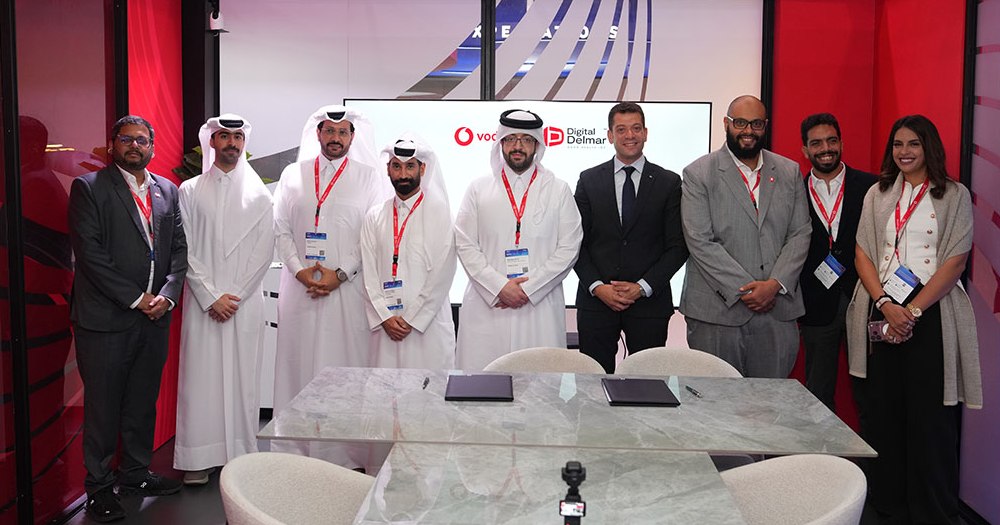
Hospitals rarely fail because of a lack of doctors alone. They struggle when information cannot move quickly between patients, clinicians and systems. That is the gap a new Qatari partnership wants to close, and it starts with a telecom network.
Vodafone Qatar P.Q.S.C. and Digital Delmar, a company specialising in digital healthcare solutions, telemedicine and health-sector artificial intelligence, have signed a Memorandum of Understanding (MoU). The agreement was signed in Doha on 9 November, on the sidelines of the second edition of MWC Doha 2026, and was reported by the Qatar News Agency (QNA).
The stated aim is to explore opportunities for developing smart, connected healthcare solutions. It is an exploratory deal, not a product launch. But the pairing is telling.
How will it work?
Few details have been published, and an MoU is a statement of intent rather than a contract for delivery. What the announcement does say is that the two companies will look at ways to work together. The division of labour is easy to picture. Vodafone Qatar brings connectivity and network infrastructure. Digital Delmar brings clinical software, telemedicine platforms and AI tools built for the health sector.
Combined, those strengths could support services such as remote consultations, continuous patient monitoring and data-driven diagnostics. Each depends on fast, reliable connections. Without them, a video visit freezes and a monitoring alert arrives late.
Why does it matter?
Telecom operators are moving into healthcare across the Gulf, and this deal fits that pattern. Health systems in the region are under steady pressure from rising rates of chronic disease, growing populations and demand for care that reaches people wherever they live. Connected services offer a way to stretch scarce specialist time further.
There is also a business angle. For operators, health is a new source of revenue beyond mobile subscriptions. For digital health firms, a telecom partner offers reach and technical credibility that a small company would struggle to build alone.
Still, the real test is adoption. Clinicians need tools that fit their workflow, and patients need to trust that their data is protected. Partnerships that ignore either point tend to stall.
The context
Qatar has spent years building its digital health ambitions into national strategy, in line with Qatar National Vision 2030 and its focus on a healthy population and a knowledge-based economy. Across the GCC, similar goals drive spending. Saudi Arabia's Vision 2030 includes a large digital health programme, and the UAE has made telehealth and AI in medicine a policy priority in Dubai and Abu Dhabi.
MWC Doha itself reflects that regional push. Now in its second edition, the event gathers operators, technology vendors and government bodies, and deals like this one are a typical result. Many such agreements stay at the talking stage, so the next step to watch is whether a pilot follows.
If it does, healthcare leaders in the Gulf will have another working example of how telecom and clinical expertise can share the load.
Latest @
Abu Dhabi freezes a nerve to calm MS spasticity, a first for the UAE
Cambridge Health Group and Heriot-Watt University join forces on rehabilitation research
Khalifa University and Sanofi turn to the genome to understand asthma and COPD in the Gulf
Abu Dhabi puts an AI assistant inside every physician's patient record
ADCAN Pharma and M42 sign MoU to build up UAE drug manufacturing and clinical research
💡Did you know?
You can take your DHArab experience to the next level with our Premium Membership.👉 Click here to learn more
🛠️Featured tool
 Easy-Peasy
An all-in-one AI tool offering the ability to build no-code AI Bots, create articles & social media posts, convert text into natural speech in 40+ languages, create and edit images, generate videos, and more.
👉 Click here to learn more
