

Qatar builds the Middle East’s first atlas of DNA variants that control gene activity
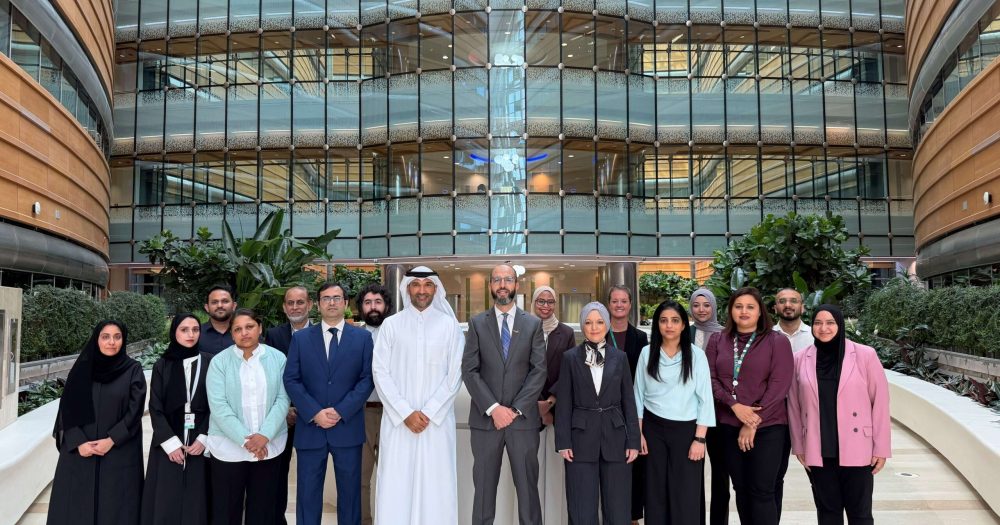
Most of the human genome does not code for proteins, and that is where much of the mystery sits. Sequencing a patient is now routine. Knowing what a variant actually does is not. For Arab populations, that gap has been wider than almost anywhere else, and a new study from Qatar goes a long way toward closing it.
Researchers at Sidra Medicine, a member of Qatar Foundation, have published the Middle East's first population-scale atlas showing how genetic variation regulates gene activity in blood. The work appeared in Nature Genetics under the title "A catalogue of transcriptome genetic regulation in a consanguineous Middle Eastern biobank." It identifies nearly 30,000 causal regulatory effects and ties them to 20 clinical traits and disease pathways, including immune and metabolic function.
The team was led by Prof. Younes Mokrab, with Dr. Haroon Naeem as first author. They used data from nearly 2,000 Qatar Biobank participants.
How does it work?
The idea is simple to state. The genome is the blueprint, and the blood transcriptome shows which parts of that blueprint are being used. The team combined whole-genome sequencing, whole-blood transcriptomics and detailed clinical records for each participant.
They then went beyond ordinary association studies. Advanced computational methods let them separate variants that merely sit near a gene from those that cause changes in how it is transcribed. That distinction matters, because association alone rarely tells a clinician or a drug developer what to act on.
The study also looked at consanguinity, which is common in the region. Inheriting two copies of the same variant is best known as a driver of rare recessive diseases. The researchers showed it can also push specific genes to unusually high or low activity when the variants involved are regulatory. So the biological reach of consanguinity is wider than protein-altering mutations alone.
Why does it matter?
The practical gains are concrete. Better annotation of non-coding variants should raise the yield of genetic diagnosis, which is a persistent frustration when test results come back unclear. The data also support ancestry-aware polygenic scores, which estimate risk for complex diseases more accurately than scores built mainly on European cohorts.
There is a drug development angle too. Linking variants to their target genes helps prioritize biomarkers and therapeutic targets that are grounded in disease biology, which can improve the odds of clinical trial success.
Prof. Khalid Fakhro, Chief Research Officer at Sidra Medicine, put it plainly: precision medicine depends on population-matched reference databases. This study adds an RNA layer to the DNA resources Qatar has built over the years.
The context
Global genomics has long drawn its reference data from a narrow slice of humanity. Arab and Middle Eastern genomes remain thin in those databases, which means tools trained elsewhere can misjudge risk here. National programs across the GCC, from Qatar's genome efforts to Saudi Arabia's work under Vision 2030 and the UAE's genomics initiatives, are trying to correct that imbalance. Qatar's contribution is notable for pairing the data with a population where consanguinity is high.
The study drew on Qatar Biobank and the Qatar Genome Program, now part of the Qatar Precision Health Institute, with support from Sidra Medicine and the Qatar National Research Fund. The dataset is being enriched with more omics layers from the biobank and from disease cohorts at Sidra. The stated aim is to feed AI and machine learning models for disease prediction and treatment discovery.
That ambition is realistic only if the underlying data are good, and regionally representative data are exactly what has been missing. For health ministries and investors weighing genomic medicine, the message is that the reference infrastructure is starting to exist. The full paper is available in Nature Genetics.
Latest @
Qatar builds the Middle East's first atlas of DNA variants that control gene activity
Cleveland Clinic Abu Dhabi lets doctors watch the gut react to food
Reem Hospital and Yas Clinic Khalifa City join forces in Abu Dhabi
The UAE is about to run its first gene-editing trial for a cholesterol disorder
Schneider Electric and PureHealth bet that greener hospitals will also run better
💡Did you know?
You can take your DHArab experience to the next level with our Premium Membership.👉 Click here to learn more
🛠️Featured tool
 Easy-Peasy
An all-in-one AI tool offering the ability to build no-code AI Bots, create articles & social media posts, convert text into natural speech in 40+ languages, create and edit images, generate videos, and more.
👉 Click here to learn more
