

Reem Hospital and Yas Clinic Khalifa City join forces in Abu Dhabi
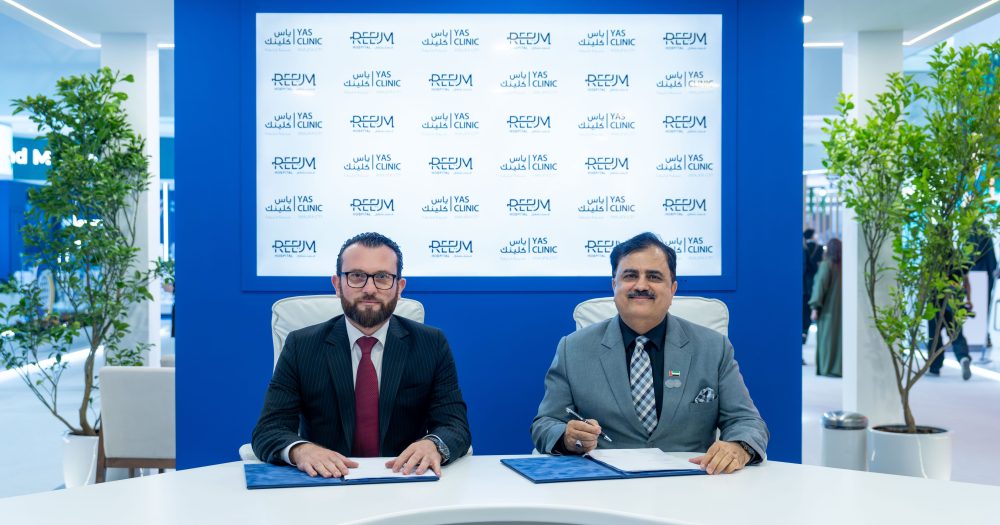
Partnerships between healthcare providers rarely make headlines. They should. The agreement signed by Reem Hospital and Yas Clinic Khalifa City at the Future Health Summit in Abu Dhabi is a small step, but it reflects how care in the Gulf is being organised: less in isolation, more through shared expertise.
The Memorandum of Understanding sets a framework for cooperation across four areas: specialised clinical services, physician expertise, medical innovation and professional development. It is a framework, not a finished programme. The detailed terms, timelines and financial arrangements have not been made public, so the real test lies in what the two organisations build on it.
How will it work?
The MoU is built around the four areas of cooperation, and each one points to a practical benefit.
- Specialised clinical services: patients at either site may gain easier access to services the other provider is better equipped to deliver.
- Physician expertise: doctors can share knowledge and experience across both organisations.
- Medical innovation: the partners can explore new approaches to care together.
- Professional development: training and learning opportunities can be offered to clinical teams on both sides.
In practice, this kind of agreement usually starts with referral pathways and joint training sessions, then grows if the early results are good. That is a reasonable expectation here, though neither party has confirmed a rollout schedule.
Why does it matter?
For patients, the gain is continuity. A clinic in a residential community such as Khalifa City can be the first point of contact, while a hospital provides deeper specialist capacity. When the two work under a formal arrangement, the handover between them should be smoother and faster.
For clinicians, the value is in the exchange. Smaller facilities often struggle to keep teams current across every specialty. Shared development programmes help close that gap without every provider building everything alone.
And for the sector, it is a signal. Private providers in Abu Dhabi are choosing collaboration over going it alone, which is what policymakers have been encouraging for years.
The context
The setting matters. The Future Health Summit is one of several forums in the UAE where providers, regulators and investors line up announcements around the national health agenda. Abu Dhabi has pushed hard to raise care standards, widen specialist access and bring innovation into everyday practice, and the Department of Health has made integrated care a clear priority.
The same thinking runs across the GCC. Saudi Arabia's Vision 2030 health transformation programme rests on connected, patient-centred care, and other member states are moving in a similar direction. Partnerships like this one are how that policy reaches the ground, one agreement and one referral at a time.
Still, an MoU is an intention, not an outcome. The measure of success will be simple: shorter waits, better coordination and trained staff who stay. If Reem Hospital and Yas Clinic Khalifa City can show that, others in the emirate will likely follow.
Latest @
Qatar builds the Middle East's first atlas of DNA variants that control gene activity
Cleveland Clinic Abu Dhabi lets doctors watch the gut react to food
Reem Hospital and Yas Clinic Khalifa City join forces in Abu Dhabi
The UAE is about to run its first gene-editing trial for a cholesterol disorder
Schneider Electric and PureHealth bet that greener hospitals will also run better
💡Did you know?
You can take your DHArab experience to the next level with our Premium Membership.👉 Click here to learn more
🛠️Featured tool
 Easy-Peasy
An all-in-one AI tool offering the ability to build no-code AI Bots, create articles & social media posts, convert text into natural speech in 40+ languages, create and edit images, generate videos, and more.
👉 Click here to learn more
