

The technology to replace animal testing is ready. The harder problem is changing minds
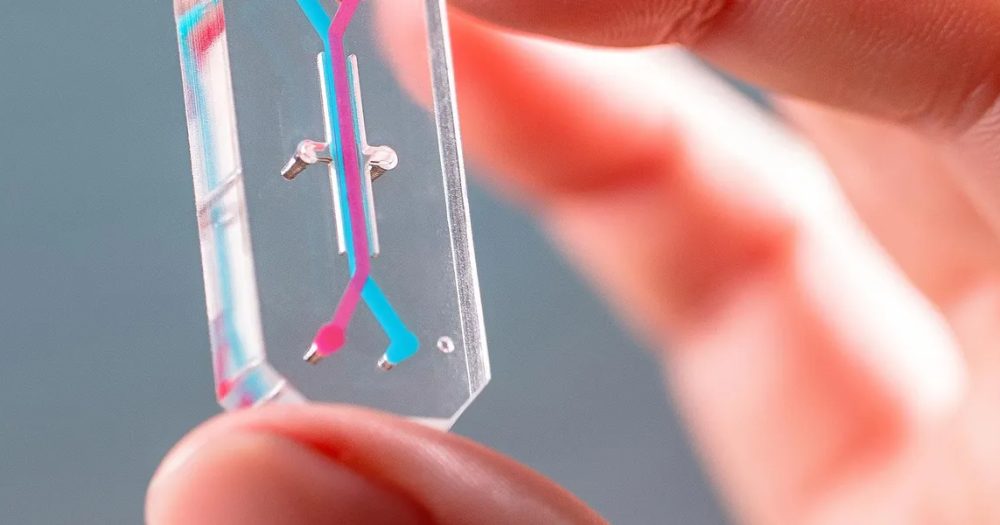
When the U.S. Food and Drug Administration told a pharmaceutical company it could not proceed to clinical trials because it had submitted animal data instead of organ-on-a-chip data, something significant had shifted. Not long ago, that request would have been unthinkable. For most of the history of modern drug development, animal models were not just acceptable — they were the standard. That standard is now being challenged, and the implications for global medicine, including across the Gulf, are considerable.
The story begins, in a meaningful way, with a paper submitted to the journal Science in 2010 by Donald Ingber and colleagues at Harvard University's Wyss Institute. Their device was smaller than a USB stick: a clear polymer slab with narrow channels lined with the cells that line a lung's air sacs and blood vessels. When air was pumped through hollow chambers beside those channels, the device expanded and contracted. It breathed. When exposed to bacteria and inflammatory proteins, it reacted as a living lung would. Science had initially rejected the paper and asked the team to also run tests in mice. They did. The paper was eventually published, and has since been cited nearly 5,400 times.
That early hesitation from one of science's most prestigious journals tells you something about how deeply animal models are embedded in biomedical research. But the field has moved. Quickly.
How does it work?
The class of technologies now challenging animal testing goes by the collective name NAMs — new approach methodologies, novel alternative methods, or nonanimal methods, depending on who you ask. These include:
- Organ-on-a-chip systems: microfluidic devices lined with human cells that mimic the mechanical and biological functions of specific organs, including lungs, hearts, kidneys, brains, and even placentas
- Organoids: three-dimensional tissue cultures that more closely replicate the structure and function of human organs than flat cell cultures do
- Multi-organ systems: platforms that link as many as ten organ chips together, modelling interactions across human physiology in ways a single mouse or monkey cannot
- Computational simulations: digital models of organs and biological systems that generate predictive data without any biological material
- AI-driven analysis tools: systems that process data from other NAMs, identify patterns, and guide future experiments in an iterative loop
German biotech company TissUse, for example, builds organ-on-a-chip systems used by pharmaceutical companies for research. Its Humimic platform cultures human tissues in microfluidic chips and models how organs interact with each other and with drugs. That is the company whose client was turned away by the FDA for not having organ chip data — a reversal that would have seemed implausible a decade ago.
Why does it matter?
The standard argument for NAMs is ethical. Millions of animals are used in biomedical research each year, and that number has long troubled both scientists and the public. But the scientific argument may be even stronger. An estimated 92 percent of drugs that enter U.S. clinical trials never reach the market. Many fail because they are ineffective or unsafe in ways that animal experiments did not predict. Failure rates are particularly high for drugs targeting cancer, heart disease, and neurological conditions.
That is not entirely the fault of animals as models. Flawed study design and the complexity of disease also play roles. But the gap between mouse biology and human biology is real, and it costs the pharmaceutical industry billions of dollars every year. Some researchers have argued that if aspirin or acetaminophen were discovered today, under current testing requirements, they might never make it to market.
The passage of the FDA Modernization Act 2.0 in late 2022 was a turning point. For the first time, U.S. law explicitly authorised the use of NAMs in preclinical studies required before human trials. Previous regulations had effectively mandated animal testing. The door is now open.
The context
For health policymakers in the Gulf, this shift carries real relevance. Saudi Arabia's Vision 2030 has placed life sciences and pharmaceutical manufacturing among its strategic economic priorities, with NEOM's biotech ambitions and the growing Saudi pharmaceutical sector seeking to reduce import dependency. The UAE has similarly invested in research infrastructure, with institutions like the Mohammed Bin Rashid University of Medicine and Health Sciences expanding their biomedical research capacity.
As GCC governments work to attract pharmaceutical investment and build local R&D capability, the regulatory environment they create will matter. Jurisdictions that adopt NAM-friendly frameworks early will be better positioned to attract companies operating at the frontier of drug development. And given that many NAMs generate more human-relevant data than animal models, there is also a direct patient benefit: drugs that are safer and more effective before they reach a clinical trial.
Still, Thomas Hartung, director of the Center for Alternatives to Animal Testing at Johns Hopkins University, is clear-eyed about what the real challenge is. 'This transition process is much more complicated than you would think,' he says. 'It is more about change management than it is about the technology.' Validating NAMs, standardising protocols, training a new generation of researchers, and updating institutional cultures built over decades — that is the work ahead. The science is largely there. The harder engineering problem, it turns out, is human behaviour.
Latest @
The technology to replace animal testing is ready. The harder problem is changing minds
AI-powered breast cancer risk tool reaches U.S. women through Everlywell partnership
Utah approves AI system to prescribe acne treatments without prior doctor sign-off
DarDoc launches AI intelligence layer that reads a patient's full history before the doctor walks in
Abu Dhabi brings advanced heart surgery home with two new cardiac programmes at Al Ain medical city
💡Did you know?
You can take your DHArab experience to the next level with our Premium Membership.👉 Click here to learn more
🛠️Featured tool
 Easy-Peasy
An all-in-one AI tool offering the ability to build no-code AI Bots, create articles & social media posts, convert text into natural speech in 40+ languages, create and edit images, generate videos, and more.
👉 Click here to learn more
