

Egypt eyes national digital health platform to unify patient records and AI services
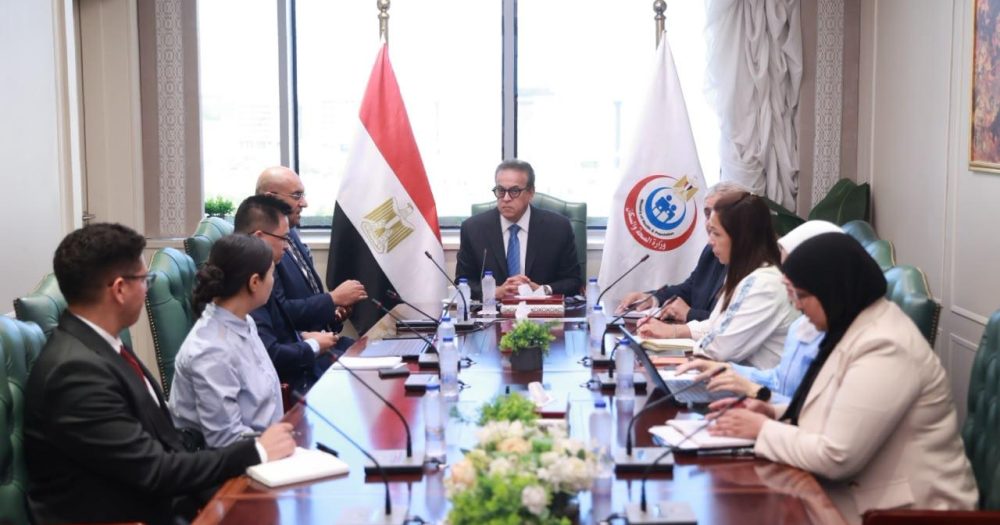
China's digital health model is on Cairo's radar. Egypt's Ministry of Health and Population has confirmed it is exploring plans for a national digital healthcare platform, following a series of discussions between Health Minister Khaled Abdel Ghaffar and representatives from Chinese technology firms MTS and Inspur. The proposed system would connect health facilities across the country, centralize patient medical histories, and integrate artificial intelligence and telemedicine capabilities into a single national infrastructure.
This is still at proposal stage, but the ambition is clear. Egypt is signaling that it wants to move beyond fragmented, paper-heavy healthcare delivery and build something more coordinated at scale. The involvement of Inspur, one of China's largest cloud computing and AI firms, and MTS, a technology services provider with experience in health digitization, suggests the ministry is looking at proven international models rather than starting from scratch.
How will it work?
Based on what the ministry has outlined, the platform is designed to do several things at once. The core functions would include:
- Connecting hospitals, clinics, and other health facilities through a shared digital network
- Creating integrated electronic health records that follow patients across facilities
- Embedding AI tools to support diagnostics, treatment recommendations, and administrative efficiency
- Offering telemedicine services to extend access, particularly in underserved or remote areas
Minister Abdel Ghaffar reviewed China's own experience in health digitization before these meetings, which suggests the ministry is treating Beijing's infrastructure build-out as a reference point. China has spent the past decade connecting over a billion patients to centralized digital records, and Inspur has been a key technical partner in that effort.
Why does it matter?
Egypt has a population of over 100 million people and a health system under significant pressure. Doctor-to-patient ratios in rural governorates are stretched, referral pathways are inconsistent, and duplicate testing is common because records rarely follow patients between facilities. A unified platform would address all of these issues directly, at least in theory.
The AI and telemedicine components also matter for equity. If deployed correctly, they could extend specialist access to patients in Upper Egypt or the Delta who currently have to travel to Cairo for consultations. That's a real and measurable benefit, not just a headline.
But digital health infrastructure is only as good as its implementation. Interoperability, data privacy, and clinician adoption are where similar projects have stalled elsewhere in the region.
The context
Egypt is not operating in isolation here. Across the GCC and broader Arab world, health digitization has become a policy priority. Saudi Arabia's Vision 2030 has made digital health a core pillar of its healthcare reform agenda. The UAE has its unified health platform, Malaffi, connecting Abu Dhabi's hospitals and clinics. Qatar and Bahrain have their own electronic health record initiatives well advanced.
Egypt, with its far larger population and more complex public health infrastructure, faces a bigger challenge. But it also has an opportunity to build something with genuine regional significance. If this platform moves from proposal to execution, it will be one of the largest health digitization projects in the Arab world by population coverage. The conversations with MTS and Inspur are a starting point. What happens next will depend on funding, political will, and how seriously the ministry treats the harder questions around data governance and system integration.
Latest @
Fawry and DMS link payment terminals directly to hospital management systems in Egypt
Egypt eyes national digital health platform to unify patient records and AI services
M42 taps Oracle to unify clinical and genomic data across its global network
Kanaf Centre adopts forensic imaging system to strengthen child protection in the UAE
💡Did you know?
You can take your DHArab experience to the next level with our Premium Membership.👉 Click here to learn more
🛠️Featured tool
 Easy-Peasy
An all-in-one AI tool offering the ability to build no-code AI Bots, create articles & social media posts, convert text into natural speech in 40+ languages, create and edit images, generate videos, and more.
👉 Click here to learn more
