

Apple Watch Series 12 brings clinical-grade heart sensing and AI health insights to the wrist
Apple has quietly been building a case that your watch knows more about your health than your annual check-up. With the Apple Watch Series 12 and Ultra 4, that argument gets considerably stronger.
Announced September 9, the new lineup introduces what Apple calls the Health Sensing System, a combination of redesigned optical and electrical heart sensors that measure heart rate every five seconds, all day. In a study of over 1,000 participants, Apple says its heart rate accuracy outperformed all leading wearables tested. That's a significant claim, and one the company is backing with peer-reviewed methodology.
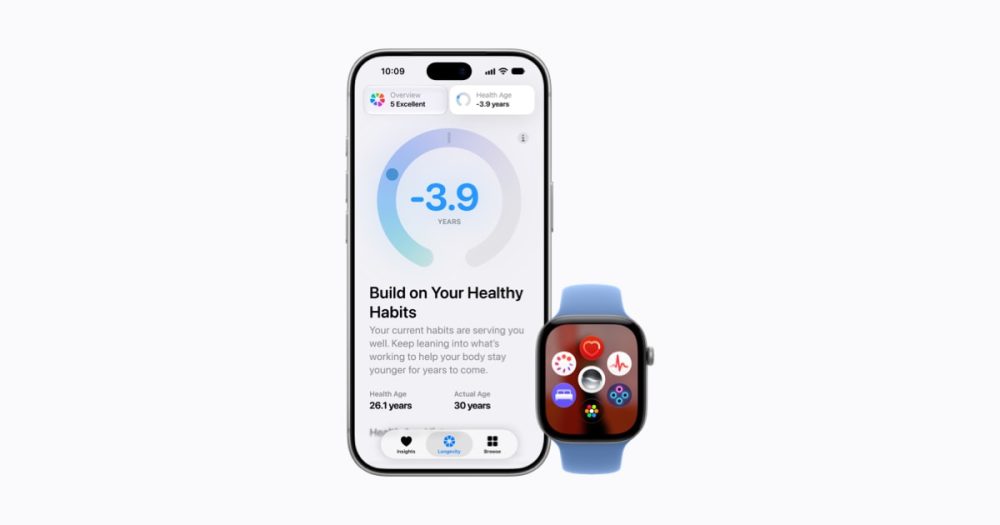
The updated Health app, arriving later this year for iPhone and iPad, uses Apple Intelligence to translate that raw biometric data into plain-language guidance. Think less data dump, more conversation with a knowledgeable friend.
How does it work?
The Health Sensing System measures heart rate variability (HRV) up to every five minutes, 24 times more frequently than before. Two HRV variants are now tracked separately: Recovery HRV for daily stress and recovery signals, and Overall HRV for longer-term cardiovascular health trends.
A new Readiness score, ranging from 0 to 10, pulls together a user's recent activity, sleep, and vitals into a single daily recommendation: Recover, Pace Yourself, Ready, or Go For It. The score updates throughout the day as new data arrives. The algorithm was developed in collaboration with physicians and exercise scientists using data from the Apple Heart and Movement Study.
The redesigned Health app adds two new tabs:
- Insights: A dynamic daily summary across heart health, sleep, readiness, fitness, and cycle tracking, with personalized recommendations based on the user's own data patterns
- Longevity: A longitudinal view covering heart health, sleep, mental wellbeing, movement, metabolic health, and hearing over time
Why does it matter?
For healthcare professionals and policymakers across the GCC, this is worth watching closely. Saudi Arabia's Vision 2030 has placed preventive health at the center of its National Transformation Program, and the UAE's National Agenda targets significant reductions in chronic disease burden. Consumer wearables that generate clinically meaningful data, and present it clearly to users, could become a real asset in population health strategies.
The privacy architecture matters too. Apple continues to process sensitive health data on-device, which aligns with the strict data sovereignty requirements that GCC regulators are increasingly enforcing.
The context
Apple is not alone in this space. Competitors including Samsung, Garmin, and a growing field of health-focused startups are all chasing the same goal: turning passive wearable data into actionable health intelligence. But Apple's combination of hardware accuracy, AI processing, and a closed ecosystem gives it a structural advantage in delivering consistent, reliable outputs.
So as GCC health systems look to digital tools to reduce the pressure on hospital infrastructure, and as employers across the region explore corporate wellness programs, platforms like this will likely feature more prominently in procurement and policy conversations. Apple Watch Series 12 and Ultra 4 are available now.
Latest @
Apple Watch Series 12 brings clinical-grade heart sensing and AI health insights to the wrist
King's College Hospital Jeddah to become first hospital in EMEA to run InterSystems IntelliCare
Abu Dhabi University opens reproductive research lab in partnership with FertiClinic
MBZUAI launches deep phenotyping study to map health and disease in the UAE population
💡Did you know?
You can take your DHArab experience to the next level with our Premium Membership.👉 Click here to learn more
🛠️Featured tool
 Easy-Peasy
An all-in-one AI tool offering the ability to build no-code AI Bots, create articles & social media posts, convert text into natural speech in 40+ languages, create and edit images, generate videos, and more.
👉 Click here to learn more
