

Sheikh Shakhbout Medical City crosses 1,260 robotic surgeries, with volumes up 42% in early 2026
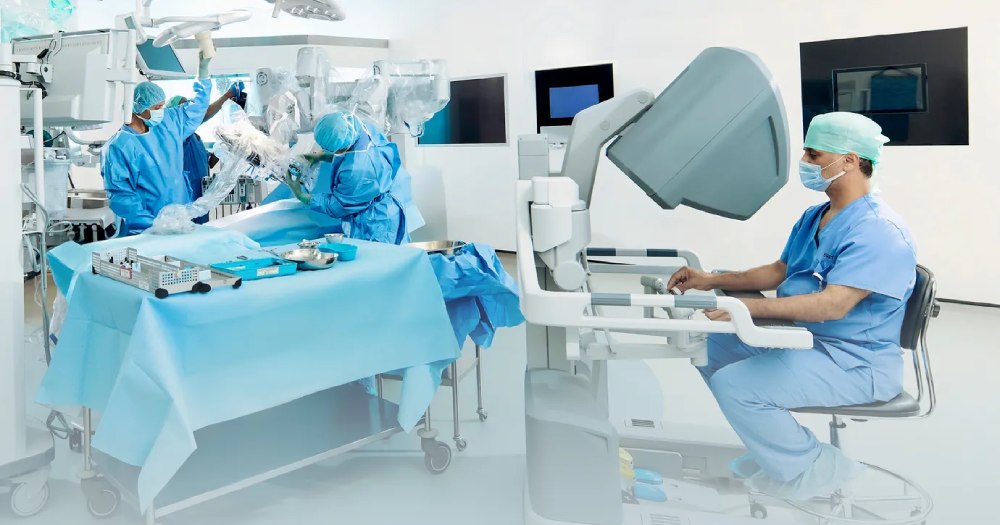
A programme that started with four procedures and a single robotic platform in 2020 now delivers more than 500 robotic-assisted surgeries a year. That's the story at Sheikh Shakhbout Medical City in Abu Dhabi, and the growth curve is getting steeper, not flatter.
What's the news?
Sheikh Shakhbout Medical City (SSMC), a subsidiary of PureHealth and one of the UAE's principal hospitals for complex and serious care, has reported significant expansion in its robotic surgery programme. The hospital has now performed over 1,260 robotic-assisted procedures since 2020, with volumes rising 42 per cent in the first half of 2026 compared to the same period in 2025. In Q1, procedures climbed from 87 to 131. In Q2, from 119 to 161. The programme now spans six surgical specialties:
- Thoracic surgery
- Urology
- Oncology
- Orthopaedics
- Neurosurgery
- General surgery
The hospital operates four robotic systems for general surgery, two platforms dedicated to orthopaedic procedures, and one neurosurgical platform acquired in 2026. All bariatric and thoracic surgeons are trained in robotic techniques, as are 80 per cent of general surgeons. Recent cases include single-port robotic thoracic sympathectomy for hyperhidrosis and emergency robotic urology surgery.
Why does it matter?
Robotic-assisted surgery reduces physical trauma during procedures, shortens hospital stays, and tends to support faster recovery, particularly in high-complexity cases. But the clinical benefits are only part of the picture. What SSMC is building is institutional depth: a programme with enough volume, specialist coverage, and training infrastructure to function as a regional reference point, not just a local service.
That training dimension matters. Through the SSMC Training Academy, the hospital is running education and knowledge-sharing programmes for healthcare professionals across the UAE and the wider region. So the impact of what's being built here doesn't stop at the hospital's doors.
Dr Marwan Al Kaabi, Chief Executive Officer of SSMC, put it directly: "Robotic-assisted surgery has become an integral part of how we approach some of the most complex procedures, enabling greater precision while supporting minimally invasive treatment pathways for our patients."
The context
This is happening against a clear policy backdrop. Abu Dhabi has invested heavily in building advanced clinical capacity within the emirate, reducing the need for patients to travel abroad for specialist care. SSMC is central to that effort. As a PureHealth asset, it also sits within the largest healthcare group in the Middle East, which gives it access to capital, technology partnerships, and scale that most regional hospitals don't have.
Across the GCC, robotic surgery adoption has been uneven. Some centres have platforms but lack the procedure volumes or trained surgeons to use them effectively. SSMC's 42 per cent volume growth in six months suggests it is past that early adoption phase. And with a dedicated training academy now in place, it's positioning itself to lift standards across the region, not just within its own walls. That's a meaningful shift for complex surgical care in the Arab world.
Latest @
King's College Hospital Jeddah to become first hospital in EMEA to run InterSystems IntelliCare
Abu Dhabi University opens reproductive research lab in partnership with FertiClinic
MBZUAI launches deep phenotyping study to map health and disease in the UAE population
Sheikh Shakhbout Medical City crosses 1,260 robotic surgeries, with volumes up 42% in early 2026
Salesforce targets reactive operations in life sciences with three AI-powered tools
💡Did you know?
You can take your DHArab experience to the next level with our Premium Membership.👉 Click here to learn more
🛠️Featured tool
 Easy-Peasy
An all-in-one AI tool offering the ability to build no-code AI Bots, create articles & social media posts, convert text into natural speech in 40+ languages, create and edit images, generate videos, and more.
👉 Click here to learn more
