

HealthEx connects personal medical records to Meta’s AI agent Muse
Most people using AI for their health are doing so blind. No records, no history, no personal context. So when HealthEx announced this week that it has built a direct connector between its medical records platform and Muse, Meta's new personal AI agent, it pointed at something real: the gap between what AI agents promise and what they can actually do when they know nothing about the person they're helping.
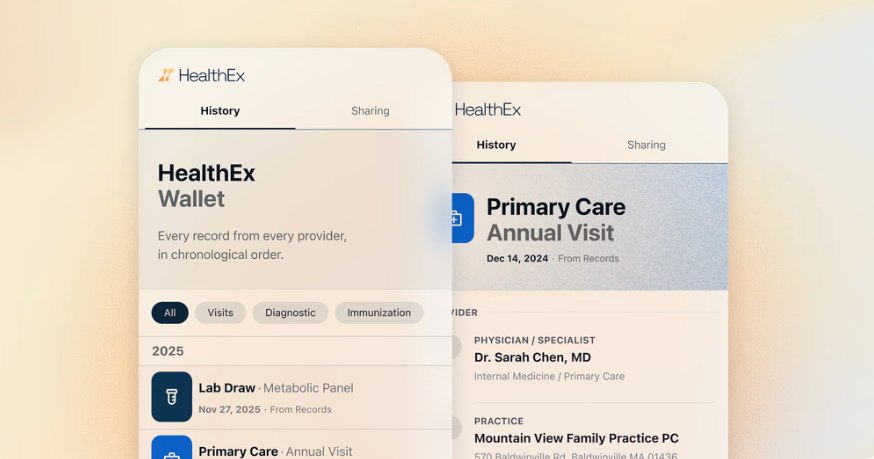
HealthEx is a platform that lets individuals access their own medical records and share them, on their terms, with health apps, AI tools, providers, and insurance plans. The new Muse connector means that for the first time, a person's AI agent can draw on their actual clinical history, visit notes, referrals, prescriptions, and test results, rather than relying on whatever a user happens to type in.
Priyanka Agarwal, a former UCSF internist and co-founder and CEO of HealthEx, put it plainly: "So much of what falls through the cracks in medicine is routine, like a follow-up a doctor asked for that was never scheduled. Individuals have always carried that burden." With Muse connected to HealthEx, those loose ends become visible and actionable for the individual.
How does it work?
A person verifies their identity through HealthEx, which then automatically locates their medical records across clinics, hospitals, labs, and specialists. Nothing is retrieved or passed to Muse without explicit consent. Through HealthEx Wallet, the platform's web app, users can see all their records in one place, manage every active connection, and spot gaps in their history. Connecting to Muse requires a single approval. No portal logins, no technical setup.
Once connected, a person's Muse can:
- Draw on shared health history to give personalised responses rather than generic health information
- Surface unfinished tasks already in the records, such as an unscheduled referral or a prescription running low
- Draft visit summaries and prepare questions worth raising with a doctor
- Check in before taking any action on a person's behalf, such as setting a reminder or drafting a message
- Be disconnected at any time, with every permission tracked and auditable
HealthEx operates as an Individual Access Services provider under the Trusted Exchange Framework and Common Agreement, known as TEFCA, which sets the legal and technical standards for secure health data exchange in the United States.
Why does it matter?
The fragmentation of medical records is a genuine problem, and not a small one. Most Americans have health histories spread across dozens of care sites accumulated over a lifetime. That fragmentation means patients arrive at new appointments without context, and it means AI tools built to help with health decisions are working from almost nothing. A personal AI that doesn't know your diagnoses, your current medications, or what your doctor said at your last visit is limited in what it can actually do for you. This integration is a direct response to that limitation.
But the consent architecture matters just as much as the technical connection. HealthEx has built a model where the individual, not the platform, not the AI company, decides what is shared and when it stops. That design choice has implications beyond the US market.
The context
Across the Gulf, health authorities are working through similar questions. Saudi Arabia's Vision 2030 health transformation and the UAE's national health data strategy both identify patient-centred data access as a priority. The challenge of fragmented records is not uniquely American. Patients in the GCC also accumulate history across private clinics, government hospitals, and specialist centres, often with no unified view of their own health. Platforms like Malaffi in Abu Dhabi and Nabidh in Dubai are building the infrastructure for unified health records, but the question of how individuals access and direct their own data, especially as AI agents become more capable, is still being worked out regionally. The HealthEx and Muse model offers one reference point for how that can be done with consent at the centre.
Muse is currently available in the United States on iOS and Android and at muse.ai. HealthEx Wallet is available at healthex.io.
Latest @
King's College Hospital Jeddah to become first hospital in EMEA to run InterSystems IntelliCare
Abu Dhabi University opens reproductive research lab in partnership with FertiClinic
MBZUAI launches deep phenotyping study to map health and disease in the UAE population
Sheikh Shakhbout Medical City crosses 1,260 robotic surgeries, with volumes up 42% in early 2026
Salesforce targets reactive operations in life sciences with three AI-powered tools
💡Did you know?
You can take your DHArab experience to the next level with our Premium Membership.👉 Click here to learn more
🛠️Featured tool
 Easy-Peasy
An all-in-one AI tool offering the ability to build no-code AI Bots, create articles & social media posts, convert text into natural speech in 40+ languages, create and edit images, generate videos, and more.
👉 Click here to learn more
