

75,000 samples in: inside Abu Dhabi’s AI wastewater early-warning system
Before a disease outbreak becomes visible in a clinic or an emergency room, it often leaves traces somewhere else entirely: in the sewage system. Abu Dhabi is betting on that insight. A platform called RASID, developed by health and science company M42 in partnership with the Abu Dhabi Quality and Conformity Council (ADQCC), has been running since 2022 and has now processed more than 75,000 wastewater samples from across the UAE. That's a significant body of data, and the authorities are using it to spot public health risks before they surface in hospitals.
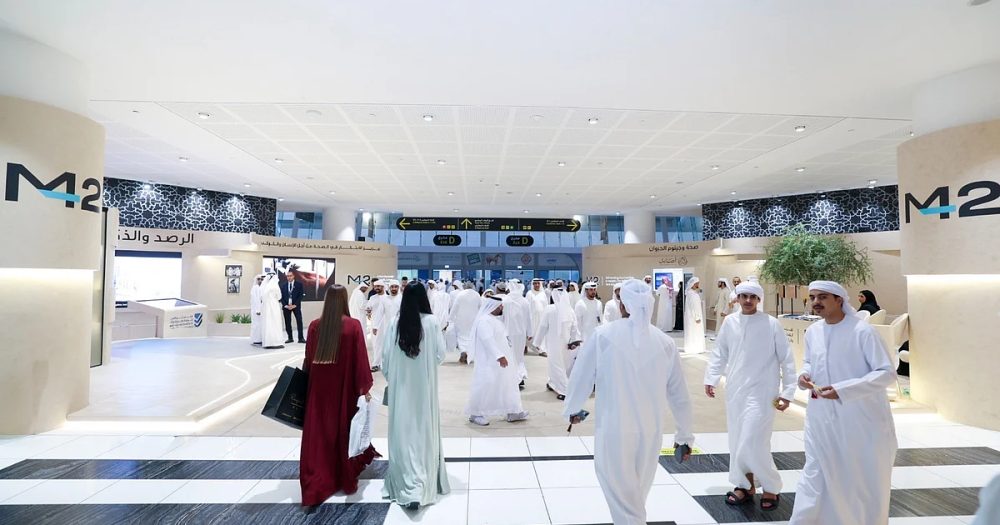
The platform made its first public appearance at the Abu Dhabi International Hunting and Equestrian Exhibition (ADIHEX) 2026, running at ADNEC Centre Abu Dhabi until September 6. It is one of several health and science projects M42 is presenting at the event, alongside work in genomics, digital health, and specialist clinical care.
How does it work?
RASID draws on wastewater collected from 100 testing sites across Abu Dhabi. Each sample is analysed across more than 400 chemical and biological indicators, covering everything from infectious disease markers to environmental contaminants. The results feed into AI models that generate risk scores for identified threats. Predictive analytics then forecast where those risks might be heading and help trace their possible sources.
The key difference from traditional environmental monitoring is scale and continuity. Rather than relying on spot readings, RASID tracks wastewater at a population level, continuously. So instead of waiting for patients to present symptoms, authorities can act on patterns that are already emerging in the data.
Dimitris Moulavasilis, Group CEO of M42, put it plainly: "By interpreting these signals, we can generate actionable intelligence that supports earlier, more informed decision making." Abdulla Hassan Al Muaini, Executive Director of the Central Testing Laboratory at ADQCC, described the programme as combining complementary expertise across environmental monitoring, science, and technology.
Why does it matter?
Wastewater surveillance is not new. During COVID-19, health agencies around the world used it to track the spread of the virus in communities before case numbers caught up. But RASID is applying that logic more broadly, and on a scale that appears to be among the largest of its kind in the region. The dataset it has accumulated since 2022 gives it something most comparable systems lack: longitudinal depth.
That matters because patterns in population health take time to become meaningful. A single reading tells you little. Thousands of readings, tracked across dozens of sites over several years, start to tell you something real about how a community's health is shifting, and where resources might need to go next.
The context
This kind of infrastructure fits directly into Abu Dhabi's broader public health ambitions. The emirate has invested heavily in predictive and preventive health systems, and RASID is a practical example of what that looks like at a population scale. It also reflects a wider GCC push to use data, not just clinical capacity, as the foundation of health planning.
For policymakers watching this space, the questions worth asking now are about what happens next: how RASID's findings are being used in real resource allocation decisions, and whether the model is being considered for expansion to other emirates or neighbouring countries. The dataset exists. The harder work is in how it gets applied.
Latest @
75,000 samples in: inside Abu Dhabi's AI wastewater early-warning system
Dubai-founded Enhance raises $18.2 million to push deeper into US gym market
Saudi health minister signs MoU with Portugal in push to build global health partnerships
Neuratia Labs names ten fellows for its first global neuroscience research program
💡Did you know?
You can take your DHArab experience to the next level with our Premium Membership.👉 Click here to learn more
🛠️Featured tool
 Easy-Peasy
An all-in-one AI tool offering the ability to build no-code AI Bots, create articles & social media posts, convert text into natural speech in 40+ languages, create and edit images, generate videos, and more.
👉 Click here to learn more
