

Neuratia Labs names ten fellows for its first global neuroscience research program
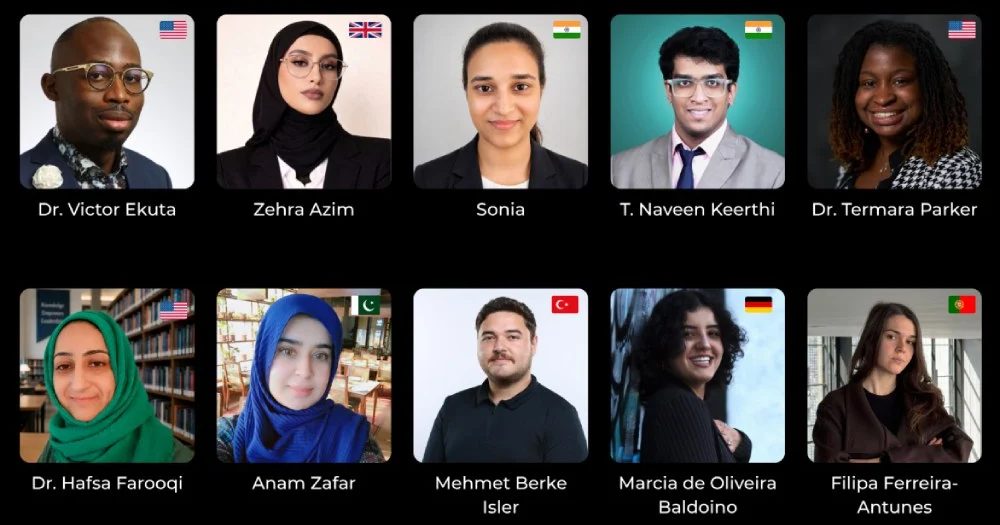
One thousand applications. Fifty countries. Ten spots. That ratio alone says something about the demand for structured, international research pathways in neuroscience and artificial intelligence. Neuratia Labs, a company focused on brain health technology, has announced the researchers who made the cut for its first-ever global fellowship program, and the cohort it has assembled is deliberately small by design.
The Neuratia Research Fellows Program 2026 is a six-month structured initiative bringing together doctoral candidates, postdoctoral researchers, clinicians, and early-career investigators working across neuroscience, neurotechnology, biomedical engineering, AI, and brain health rehabilitation. Fellows will receive mentorship, access to international research networks, and structured guidance on research direction and scientific development. The program also includes progress reviews and concludes with a final research showcase.
The inaugural cohort
The ten selected fellows represent institutions across seven countries:
- Victor Ekuta, MD Resident, Division of Neurology, Morehouse School of Medicine, United States
- Zehra Azim, PhD Candidate, University of Oxford, United Kingdom
- Sonia, PhD Candidate, CSIR-Central Scientific Instruments Organisation, India
- T. Naveen Keerthi, MBBS Student, MIMER Medical College, India
- Dr. Termara Cerene Parker, Early Career Investigator, Howard University College of Medicine, United States
- Hafsa Farooqi, Postdoctoral Researcher, Department of Biomedical Engineering, University of Minnesota, United States
- Anam Zafar, PhD Candidate, Superior University, Pakistan
- Mehmet Berke Isler, PhD Candidate, Istanbul Medipol University, Turkey
- Marcia Lorena de Oliveira Baldoino, MBBS Student, Charite - Universitatsmedizin Berlin, Germany
- Filipa Ferreira-Antunes, PhD Candidate, Life and Health Sciences Research Institute (ICVS), Portugal
Affaan Shaikh, Founder and CEO of Neuratia Labs, was direct about the thinking behind keeping the cohort tight. 'The first cohort is intentionally small,' he said. 'We wanted to focus on building a meaningful experience and understanding what a truly valuable fellowship should look like before expanding.' The program also plans to develop a long-term alumni network so fellows remain connected to Neuratia's broader research community after the six months end.
Why does it matter?
Brain health is one of the most underfunded and under-researched areas of medicine relative to its global burden. Neurological conditions account for a significant share of disability-adjusted life years worldwide, and the pipeline of researchers with cross-disciplinary expertise in both neuroscience and AI remains thin. Programs like this one matter because they attempt to close that gap structurally, not just by funding individual projects, but by connecting researchers across geographies and disciplines who would not otherwise meet.
But the real test of any fellowship is what happens after it ends. Shaikh's stated ambition is not just a six-month program. It is a community. 'We are building a global network of researchers, mentors, institutions, and innovators working across neuroscience, artificial intelligence, and brain health,' he said. 'The inaugural cohort is the first step toward that larger ecosystem.' Whether that network materialises into something durable will depend on execution, but the intent is clear.
The context
Across the Gulf, this kind of initiative is worth watching closely. Saudi Arabia's Vision 2030 has placed significant emphasis on research capacity, knowledge economy development, and attracting scientific talent. The UAE has made similar investments through its national AI strategy and a growing portfolio of health innovation initiatives. So far, the region's representation in global neuroscience fellowship programs has been limited, and that is a gap GCC health ministries and research councils would do well to address.
Neuratia Labs is a private company, not a government body, and its fellowship is modest in scale. Still, the model it is testing, a selective, mentorship-heavy, internationally networked program for early-career brain health researchers, is exactly the kind of infrastructure that regional institutions could adapt or partner with as they work to build local research capacity. The 2026 cohort includes fellows from Pakistan, Turkey, India, and Portugal alongside US and UK institutions. The GCC, notably, is not yet represented. That may be a conversation worth starting.
Latest @
Saudi health minister signs MoU with Portugal in push to build global health partnerships
Neuratia Labs names ten fellows for its first global neuroscience research program
Ultrahuman opens its smart ring data to science, and wants users to join
OpenAI connects Epic EHR and public health data to ChatGPT for Healthcare
GSK moves mRNA flu vaccine into late-stage trial after promising mid-stage results
💡Did you know?
You can take your DHArab experience to the next level with our Premium Membership.👉 Click here to learn more
🛠️Featured tool
 Easy-Peasy
An all-in-one AI tool offering the ability to build no-code AI Bots, create articles & social media posts, convert text into natural speech in 40+ languages, create and edit images, generate videos, and more.
👉 Click here to learn more
