

Ultrahuman opens its smart ring data to science, and wants users to join
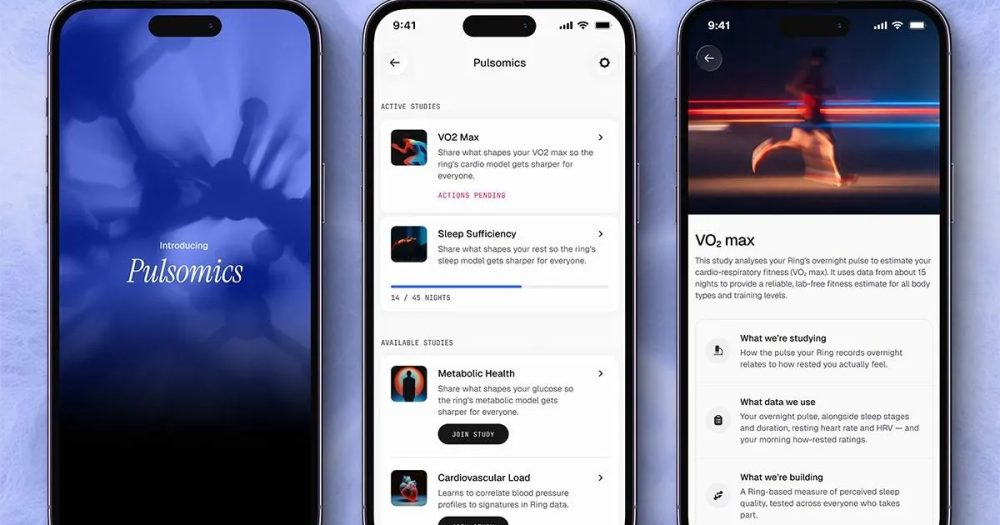
Consumer wearables have long promised to tell us more about our bodies. Ultrahuman is now trying to do something more ambitious: turn that data into actual science. The company has launched Pulsomics, a research platform that allows owners of its smart rings to voluntarily contribute their biometric data to structured health studies. It's a meaningful step beyond publishing the occasional data insight, and it raises real questions about where consumer health technology is heading.
Ultrahuman has participated in health research before, but Pulsomics is designed to make participation more formal, more transparent, and accessible to any ring user. The platform is currently open to owners of the Ring Air and Ring Pro. It does not include the company's Home sleep monitor.
When signing up, users provide more personal information than a standard wearable setup requires. That includes age, sex, height, weight, ethnicity, and skin tone. The skin tone detail is not incidental. Optical heart rate sensors are affected by skin pigmentation, and collecting that data allows Ultrahuman to account for variability across different users, which is a longstanding challenge in wearable health accuracy.
How does it work?
Three studies are available in Pulsomics at launch. The first looks at individual sleep requirements, specifically how much sleep a given person actually needs rather than applying a universal standard. The second focuses on VO2 Max. The third is a glucose metabolism study that connects wearable data to a recent blood test panel, so participants need to have relevant lab results available.
Additional studies are planned, including one on cardiovascular load and a longitudinal sleep study that would track patterns over a longer period.
On privacy, Ultrahuman says data is de-identified before use, never sold, and never shared with advertisers, employers, or insurers. Published findings use aggregated data only. Whether users take that at face value will depend on the trust they have in the company, but the policy is clearly stated.
Vinayak Narasimhan, Ultrahuman's head of science, describes Pulsomics as "the very first at scale, free-living set of studies where we collect longitudinal wearable data from our users alongside extremely valuable user-provided context." That context includes lifestyle and medical history, family history, demographics, and optional day-level journaling. The goal, he says, is to build foundational models trained on labeled, population-level data.
Why does it matter?
Most large-scale health datasets are collected in clinical settings, which limits who gets included and how representative the results are. Wearable-based research in real-world conditions, across a diverse user base, could produce more accurate models for predicting things like individual sleep needs or markers of metabolic health.
Ultrahuman CEO Mohit Kumar puts it plainly: "The mass adoption of powerful consumer wearables enables us to train models on real-world data across body types, ethnicities, and cultures, creating more accurate and fairer health features." That last word matters. Wearable accuracy has historically varied by skin tone and body type, and research that explicitly includes those variables is more likely to produce tools that work equitably.
For the Gulf region, this kind of initiative has particular relevance. GCC countries have some of the highest rates of diabetes and metabolic disorders in the world. Saudi Arabia's Vision 2030 and the UAE's various health strategies both place heavy emphasis on preventive care and data-driven health management. A platform that generates population-scale insights from diverse demographics, including skin tones and ethnicities well-represented in this region, could support exactly the kind of personalised, predictive health tools those strategies are trying to build.
The context
Ultrahuman is not alone in this space. Competitors like Oura have also engaged in research partnerships. But Pulsomics appears to be a more structured, user-facing approach to research participation than most wearable companies have attempted.
The Ring Pro is currently shipping to US customers at $479. Regional availability in the GCC continues to grow as demand for health wearables rises across the Arab world, driven by younger, health-conscious populations and government-backed digital health agendas.
The broader question is whether consumers are ready to contribute their data to science, and whether wearable companies can build enough trust to make that exchange feel worthwhile. Pulsomics is Ultrahuman's answer to that question. It won't be the last attempt, but it may be one of the more serious ones so far.
Latest @
Saudi health minister signs MoU with Portugal in push to build global health partnerships
Neuratia Labs names ten fellows for its first global neuroscience research program
Ultrahuman opens its smart ring data to science, and wants users to join
OpenAI connects Epic EHR and public health data to ChatGPT for Healthcare
GSK moves mRNA flu vaccine into late-stage trial after promising mid-stage results
💡Did you know?
You can take your DHArab experience to the next level with our Premium Membership.👉 Click here to learn more
🛠️Featured tool
 Easy-Peasy
An all-in-one AI tool offering the ability to build no-code AI Bots, create articles & social media posts, convert text into natural speech in 40+ languages, create and edit images, generate videos, and more.
👉 Click here to learn more
