

UAE creates first major brain health dataset for Middle East research
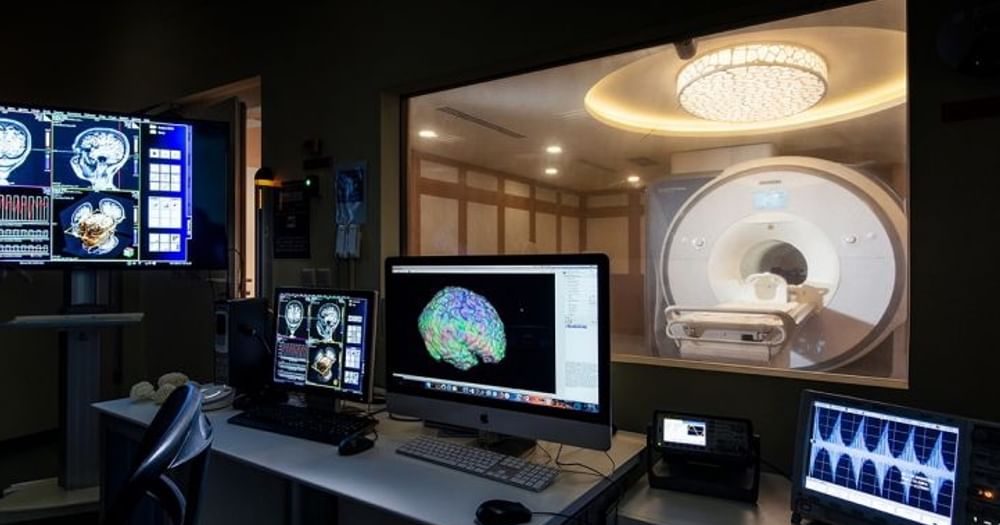
Middle Eastern brain research just got a major boost. Scientists from NYU Abu Dhabi and the United Arab Emirates University have created the region's first large-scale brain health dataset, filling a gap that has limited neuroscience research across the Middle East and North Africa for years.
The ASPIRE Research Institute Brain Health Dataset aims to recruit 2,000 participants over the coming years - split equally between Emirati citizens and non-Emirati residents aged 18 to 60. The team has already published data from the first 41 participants in Nature Scientific Data, making it freely available to researchers worldwide.
How does it work?
The dataset combines detailed brain imaging with behavioral data from each participant. Researchers use advanced neuroimaging techniques to scan participants' brains while also collecting information about their cognitive abilities and health status.
The team has documented their entire process, including how they collect the data and prepare it for analysis. This documentation helps other researchers use the dataset effectively and ensures studies can be repeated - a crucial part of good science.
All data comes with detailed preprocessing workflows, meaning researchers can jump straight into analysis without spending months cleaning and organizing the information first.
Why does it matter?
Most brain research relies heavily on data from Western populations, creating blind spots in our understanding of how brains work across different cultures and regions. This UAE-based dataset helps correct that imbalance.
"This project creates critical research infrastructure for the region," said Bas Rokers, Director of the Centre for Brain and Health at NYU Abu Dhabi. "It provides a foundation for future studies that reflect the UAE's population and contribute meaningfully to global neuroscience research."
The open-access approach means researchers anywhere can use the data, potentially speeding up discoveries about brain health conditions that affect Middle Eastern populations.
The context
Large, controlled neuroimaging datasets are expensive and time-consuming to create, which explains why so few exist for non-Western populations. The most widely-used brain datasets come from North America and Europe, limiting what we know about brain health in other regions.
"This dataset lays the groundwork for understanding brain health in the UAE using high-quality, openly shared data," said Abdalla Mohamed, the study's lead author from UAE University. "By making the data and study methods accessible, we aim to enable collaboration and support reproducible brain health research."
The project represents a significant investment in regional research capacity, potentially positioning the UAE as a hub for Middle Eastern neuroscience research. As the dataset grows to its full 2,000 participants, it should provide enough statistical power for major studies on brain health, aging, and neurological conditions in the region.
Latest @
Scientists 3D print flexible ear cartilage that matches human tissue
Roche builds massive AI factory with 3,500 NVIDIA GPUs to speed up drug development
AI could slash drug discovery times from months to days
Abu Dhabi's Future Health initiative focuses on predictive medicine for 2026
Morocco launches 'AI Made in Morocco' to build local artificial intelligence sector
💡Did you know?
You can take your DHArab experience to the next level with our Premium Membership.👉 Click here to learn more
🛠️Featured tool
 Easy-Peasy
An all-in-one AI tool offering the ability to build no-code AI Bots, create articles & social media posts, convert text into natural speech in 40+ languages, create and edit images, generate videos, and more.
👉 Click here to learn more
