

Saudi surgeons rebuild a breast through tiny incisions, and spare the abdominal wall
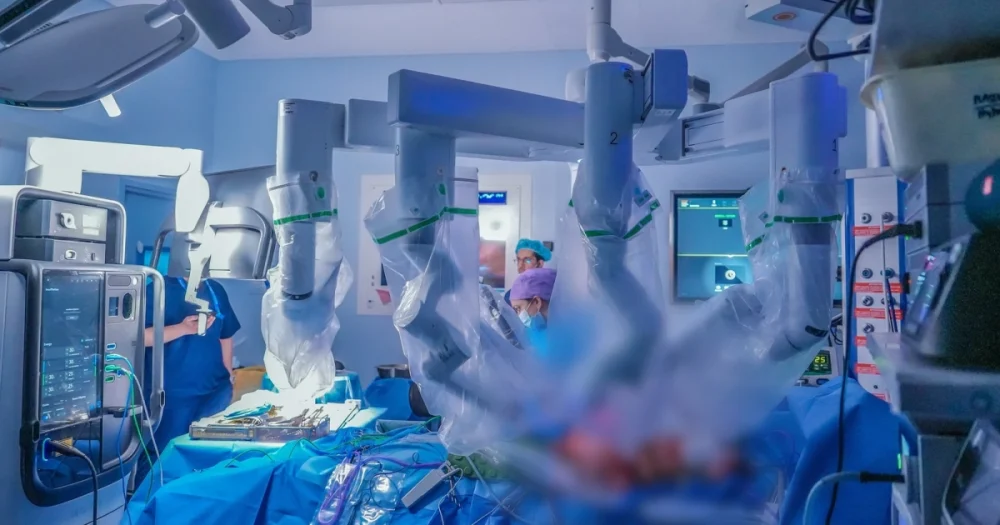
The hardest part of rebuilding a breast is often not the breast. It is the place the tissue comes from. In Riyadh, surgeons have just shown that the donor site can be left far more intact than before, with the help of a robot.
The Ministry of Interior's Medical Services, through Security Forces Hospital in Riyadh, has carried out the first robot-assisted breast reconstruction in Saudi Arabia. The patient is a 43-year-old woman who had already undergone a nipple- and skin-sparing mastectomy after a breast cancer diagnosis. The hospital reports that the operation was successful.
How did it work?
The technique belongs to the family of procedures that rebuild the breast with the patient's own tissue. Surgeons took skin and fat from the abdomen and moved it to the chest using microsurgery, which means joining tiny blood vessels under magnification so the transferred tissue stays alive.
Done conventionally, this is demanding work. It calls for a specialized team and careful planning. The difference here is in how the tissue was harvested. The robotic system let the team work through very small incisions and preserve the integrity of the abdominal wall.
That matters because the abdominal wall is where conventional harvesting tends to cause trouble. Larger incisions raise the risk of hernias and abdominal bulging. A minimally invasive approach cuts that risk, and the hospital says it also improves surgical precision.
Why does it matter?
Reconstruction is not cosmetic polish. For women who have lost a breast to cancer, it affects quality of life, psychological well-being and self-confidence. Those outcomes shape how well a patient recovers, not just how she feels about the result.
So any method that reduces the physical price of reconstruction is worth attention. A patient who avoids a weakened abdominal wall has one fewer long-term problem to manage. That is the practical promise of this approach, though the hospital has so far reported a single case, and larger series will be needed to show how consistently the benefit holds.
The context
Breast cancer is a major concern across the GCC, and it is often diagnosed in younger women than in many Western countries. Surgical care that goes beyond removing the tumor is becoming a more visible part of cancer services in the region.
This operation also fits the direction set by Saudi Vision 2030 and the Health Sector Transformation Program, which push for higher-quality specialized care and wider adoption of advanced technology inside the Kingdom. Robotic surgery is already established in urology and general surgery in the Gulf. Moving it into microsurgical reconstruction is a more delicate test of skill and training.
The Ministry of Interior's Medical Services describes the case as part of its wider effort to adopt the latest surgical innovations and raise the quality of care for beneficiaries. The next questions are practical ones. How many patients will be eligible, how many surgeons will be trained, and whether other major centers in Saudi Arabia and the wider Gulf will follow. If the early result holds, regional breast cancer programs will have a strong reason to invest in the same capability.
Latest @
Qatar builds the Middle East's first atlas of DNA variants that control gene activity
Cleveland Clinic Abu Dhabi lets doctors watch the gut react to food
Reem Hospital and Yas Clinic Khalifa City join forces in Abu Dhabi
The UAE is about to run its first gene-editing trial for a cholesterol disorder
Schneider Electric and PureHealth bet that greener hospitals will also run better
💡Did you know?
You can take your DHArab experience to the next level with our Premium Membership.👉 Click here to learn more
🛠️Featured tool
 Easy-Peasy
An all-in-one AI tool offering the ability to build no-code AI Bots, create articles & social media posts, convert text into natural speech in 40+ languages, create and edit images, generate videos, and more.
👉 Click here to learn more
