

Saudi hospital shows why user training makes or breaks health tech upgrades
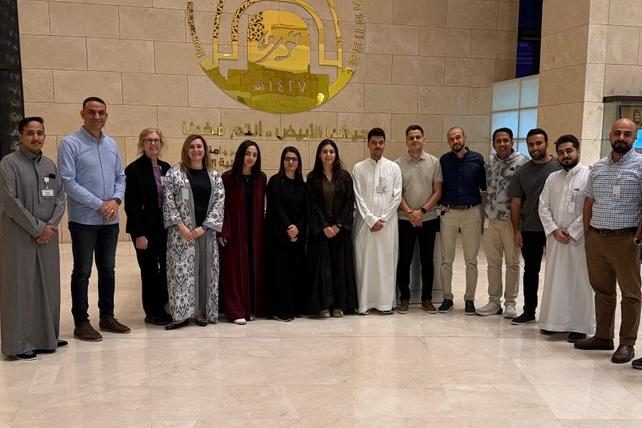
Digital health projects fail when hospitals skip the human element. King Abdullah bin Abdulaziz University Hospital (KAAUH) in Riyadh just proved the opposite - their successful upgrade to InterSystems TrakCare's latest electronic medical record system worked because they put user adoption first.
The 406-bed teaching hospital, located at Princess Nourah Bint Abdulrahman University, specializes in women's health and pediatric care. With JCI and CBAHI accreditation, KAAUH operates at about 65% capacity and integrates clinical care, research, and education.
How does it work?
The new TrakCare system runs on any web browser from secure devices, anywhere and anytime. The mobile-enabled interface works on smartphones and tablets with touch-optimized screens that simplify data entry and access.
Staff can access unified workflows across all specialty services from a single system. This eliminates data silos that previously forced clinicians to jump between different platforms. The system also connects with third-party solutions and integrates with Saudi Arabia's National Platform for Health and Insurance Exchange Services (NPHIES).
Mobile-first design means doctors and nurses can update patient records, review test results, and make clinical decisions from any location within the hospital. The interface adapts to different screen sizes while maintaining consistent views across all devices.
Why does it matter?
Hospital EMR upgrades fail at alarming rates, often because staff resist new systems or receive inadequate training. KAAUH avoided this trap through what Dr. Mohammed Awad AlHarbi, the hospital's CEO, calls "strong collaboration" and comprehensive training programs.
"The TrakCare mobile-enabled user interface upgrade improves workflow efficiency, strengthens clinical decision-making, and supports our mission to provide safe and compassionate care for every patient," AlHarbi said.
The upgrade creates a foundation for future AI-driven features and advanced analytics. More immediately, it reduces errors through better data quality and speeds up clinical decision-making by giving doctors instant access to complete patient information.
The context
Saudi Arabia's Vision 2030 plan calls for major healthcare sector transformation using digital technologies. The NPHIES platform, launched by the Cooperative Health Insurance Council and National Center for Health Information, aims to standardize electronic health services across the kingdom.
InterSystems was among the first international health tech companies to gain NPHIES compliance certification in Saudi Arabia. This allows hospitals like KAAUH to connect seamlessly with national insurance and health data systems.
"This upgrade establishes a modern digital foundation for the hospital to adopt advanced capabilities including AI-driven innovations," said Ali Abi Raad, InterSystems' managing director for the Middle East, India, and South Africa.
The project shows how successful health tech implementation requires equal focus on technology capabilities and human factors. KAAUH's approach - engaging stakeholders early, aligning staff with institutional vision, and providing thorough training - offers a template for other hospitals attempting similar upgrades.
Latest @
Microsoft launches Copilot Health to make sense of your medical data
Egypt launches nationwide digital pathology network to speed up cancer diagnosis
Verily and Samsung team up to use Galaxy Watch data for clinical trials
Eight Sleep hits $1.5 billion valuation with new funding round
WHOOP launches specialized blood testing and cycle prediction for women
💡Did you know?
You can take your DHArab experience to the next level with our Premium Membership.👉 Click here to learn more
🛠️Featured tool
 Easy-Peasy
An all-in-one AI tool offering the ability to build no-code AI Bots, create articles & social media posts, convert text into natural speech in 40+ languages, create and edit images, generate videos, and more.
👉 Click here to learn more
