

Doctors are learning to code, and Abu Dhabi wants to lead the lesson
The stethoscope is no longer the only tool a doctor needs. Increasingly, the question in a clinic is whether a physician can read a data dashboard, question an algorithm and spot when a digital tool is wrong. Few medical schools teach that well. A new UAE partnership is trying to change it.
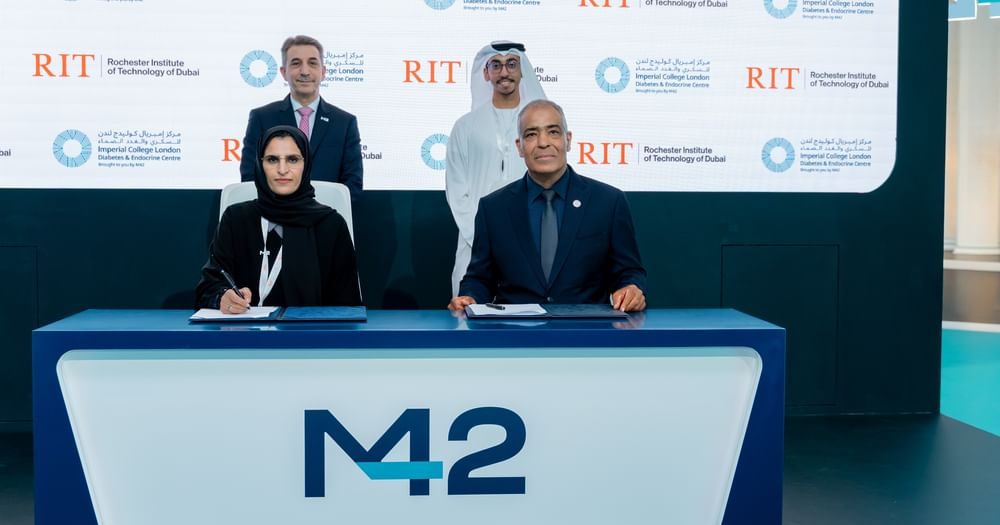
Imperial College London Diabetes & Endocrine Centre (ICLDEC), part of M42, and Rochester Institute of Technology Dubai (RIT Dubai) have signed a Memorandum of Understanding (MoU). The goal is to equip healthcare professionals with the data and technology skills that clinical practice and research now require.
How will it work?
The MoU is a framework, not yet a finished curriculum, so details will emerge as the two institutions begin working together. The logic is clear, though. ICLDEC brings clinical and research depth in diabetes and endocrinology, along with access to the patient realities that M42's network sees every day. RIT Dubai brings technical teaching strength in computing, data science and applied technology.
Together, they are expected to build training that links the two worlds. That could include:
- Short courses in data analysis and digital tools for working clinicians
- Joint research projects that pair medical and technical expertise
- Academic exchange between teams at both institutions
The practical aim is simple. A clinician should leave with skills they can use on Monday morning, not just theory.
Why does it matter?
Diabetes is the obvious test case. The UAE has one of the higher diabetes burdens in the world, and the condition generates enormous amounts of data, from glucose monitors to genomic records. That information only helps patients if clinicians can interpret it with confidence.
But there is a wider issue. Hospitals across the Gulf are buying artificial intelligence tools, building digital records and launching remote monitoring programs. Technology is arriving faster than the workforce is being prepared to use it. And a tool in the hands of an untrained user is a risk, not an asset.
So the real value here is human capital. Investing in people who can work at the point where medicine and technology meet is arguably a better bet than another software purchase.
The context
This fits a clear regional pattern. Abu Dhabi has made genomics, precision medicine and digital health central to its health strategy, and M42 is one of the main vehicles for that ambition. Dubai, meanwhile, has pushed hard on digital health records and smart services, and RIT Dubai sits within that technology-minded academic scene.
Across the GCC, national plans including Saudi Vision 2030 share the same priorities: preventive care, digital transformation and a skilled local workforce. Each depends on clinicians who are comfortable with data. Policy documents can set the direction, but training programs decide whether anyone arrives.
Still, an MoU is a starting point. The test will come in the months ahead: how many professionals are trained, how quickly programs launch and whether the skills change daily practice. If the partnership delivers, it could become a template for other health systems in the region. If it stays on paper, it will be one more agreement among many.
Latest @
Qatar builds the Middle East's first atlas of DNA variants that control gene activity
Cleveland Clinic Abu Dhabi lets doctors watch the gut react to food
Reem Hospital and Yas Clinic Khalifa City join forces in Abu Dhabi
The UAE is about to run its first gene-editing trial for a cholesterol disorder
Schneider Electric and PureHealth bet that greener hospitals will also run better
💡Did you know?
You can take your DHArab experience to the next level with our Premium Membership.👉 Click here to learn more
🛠️Featured tool
 Easy-Peasy
An all-in-one AI tool offering the ability to build no-code AI Bots, create articles & social media posts, convert text into natural speech in 40+ languages, create and edit images, generate videos, and more.
👉 Click here to learn more
