

Digital Health in 2026, according to ChatGPT
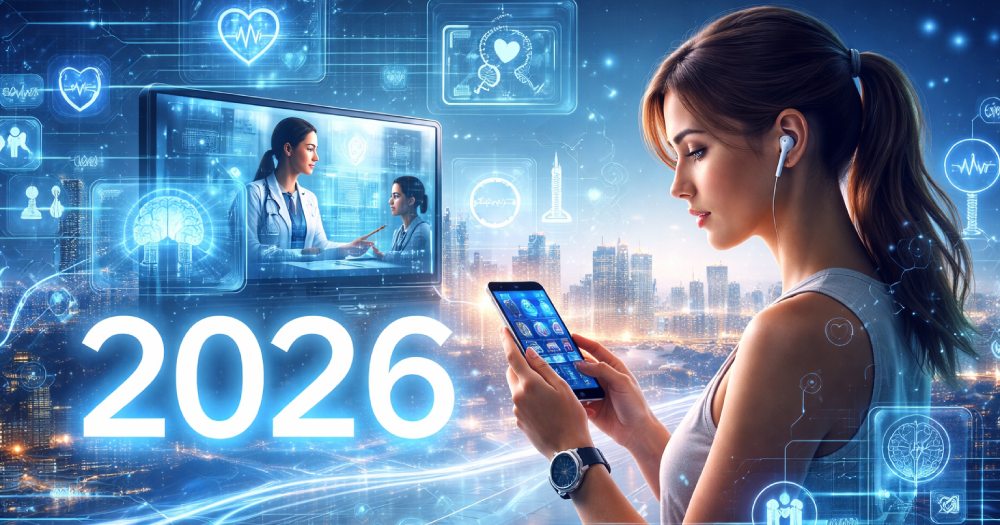
Picture this. It's 2026. You wake up, glance at your phone, and before your coffee finishes brewing, your health dashboard already knows you slept badly, moved too little, and probably shouldn't skip breakfast again. It nudges you—politely, but firmly—toward better decisions. Not with guilt. With data. With context. With uncanny accuracy.
Digital health in 2026 doesn't feel like science fiction anymore. It feels… obvious. Almost boring in the best way. The flashy stuff fades into the background, and what remains is something far more powerful: tools that quietly work, reliably, and at scale. I think that's the real shift. We stop talking about "innovation" and start talking about outcomes.
This is not a hype parade. This is a grounded, slightly opinionated look at where digital health stands in 2026—what sticks, what matures, and what finally stops pretending to be revolutionary. Buckle up. Or don't. Your wearable already knows your heart rate either way. 😏
From Gadgets to Guardrails: Digital Health Grows Up
For years, digital health acts like a teenager with a credit card. Too many apps. Too many dashboards. Too many promises. By 2026, the sector finally grows into its adult body.
The big change? Integration beats invention. Health tools no longer live in silos. Your wearable, your electronic health record, your pharmacy app, and your insurer now talk to each other. Not perfectly. But well enough to matter. This quiet interoperability—powered by APIs, standards, and regulatory nudges—does more for patient care than a thousand shiny pilots.
And clinicians notice. Instead of drowning in alerts, they receive fewer, smarter signals. Instead of data overload, they get decision support that actually supports decisions. Imagine that. Doctors trust digital tools again—not because they're flashy, but because they save time and reduce risk. That trust is everything. Without it, no tech survives in healthcare. Period.
What fades away in 2026 is the novelty. What remains is infrastructure. And infrastructure, while unsexy, changes lives.
What matures by 2026:
- 📉 Fewer "wellness-only" apps with vague value
- 🔗 More real-world integration into care pathways
- 🧠 Clinical-grade AI replacing generic algorithms
- ⏱️ Tools that respect clinicians' time (finally)
If you build in health tech, this moment matters. Are you solving a real problem—or just demoing one?
AI Stops Showing Off—and Starts Delivering
Artificial intelligence in healthcare goes through a much-needed personality shift. In 2026, AI stops bragging about being "disruptive" and starts being useful. Refreshing, right?
Instead of black-box predictions, AI systems explain themselves. They flag uncertainty. They show their work. Regulators demand it. Clinicians insist on it. Patients expect it. Transparency becomes a feature, not a nice-to-have.
Clinical AI focuses on narrow, high-impact use cases:
- Radiology triage that reduces wait times
- Predictive models that identify patient deterioration early
- Administrative automation that slashes paperwork
No sentient robots. No dramatic replacements. Just quiet efficiency. AI becomes the world's best assistant—never the star of the show.
And here's the interesting part: patients start trusting AI more when it stays humble. When it says, "I might be wrong," confidence actually goes up. Strange, but true. Healthcare thrives on honesty, not hype.
By 2026, the winning AI products do three things exceptionally well:
- They improve outcomes
- They explain their reasoning
- They know their limits
Everything else? Probably a pitch deck in disguise. 🤷♂️
The Patient Becomes the Platform
This is the big philosophical shift. Digital health in 2026 orbits around the patient—not the provider, not the payer, not the startup.
People own their health data. Or at least, they control access to it. Data portability becomes less theoretical and more practical. You switch providers, and your health history moves with you. No fax machines. No begging. No drama.
Remote care becomes default, not exceptional. Follow-ups, chronic disease management, mental health check-ins—all happen where patients already live: on their phones, at home, in real life. Hospitals remain critical, but they stop being the center of gravity.
And patients expect personalization. Not creepy personalization. Useful personalization. They want tools that understand context:
- Their age
- Their habits
- Their risks
- Their preferences
A 25-year-old marathon runner doesn't get the same nudges as a 70-year-old managing diabetes. Obvious? Yes. Implemented well? Only now.
By 2026, the best digital health experiences feel less like software and more like a good coach. Supportive. Firm. Occasionally annoying. Always helpful.
Quick question for you: if your health app disappeared tomorrow, would you miss it? If the answer is no, that product probably doesn't survive 2026.
Regulation, Trust, and the New Health Tech Social Contract
Let's talk about the boring-but-crucial stuff. Regulation. Privacy. Trust. The grown-up table.
In 2026, regulators finally catch up—not by slowing innovation, but by shaping it. Clearer rules around AI validation, data security, and clinical accountability reduce uncertainty for everyone. Startups complain less. Investors sleep better. Patients feel safer.
Trust becomes the currency of digital health. Not downloads. Not valuations. Trust.
Companies that win are painfully clear about:
- What data they collect
- Why they collect it
- Who can access it
- How long they keep it
Dark patterns fade. Consent becomes real. Not perfect—but real enough to matter.
And here's the kicker: brands that behave ethically actually outperform. People choose them. Recommend them. Stick with them. In healthcare, reputation isn't marketing fluff—it's survival.
By 2026, digital health finally internalizes a simple truth: you're not just building tech. You're entering people's lives. Their bodies. Their fears. That demands humility.
So… Are We Healthier Yet?
This is the uncomfortable question. After all the innovation, are outcomes better?
The answer is… cautiously yes. Not everywhere. Not for everyone. But progress shows up in measurable ways:
- 📉 Fewer hospital readmissions
- 🧘 Better mental health access
- 🩸 Earlier detection of chronic conditions
- 🌍 Broader reach in underserved areas
Digital health doesn't fix healthcare. It supports it. And that distinction matters.
If you're a founder, operator, or investor reading this, here's the takeaway: the era of "because we can" is over. The era of "because it works" is here.
And if you're a user? Stay curious. Stay skeptical. Demand better. These tools shape your future health. That's worth paying attention to.
👉 CTA: Which digital health tool do you actually trust today—and why? That answer tells you a lot about where the industry is heading.
Latest @
Abu Dhabi launches first UAE clinical trial for gene therapy treating inherited blindness
Mental health platform reaches 600 users in one day across Middle East
Perplexity Health connects all your medical data in one place
Perplexity partners with b.well to give AI health answers using your real medical records
Fitbit's AI coach gets smarter with medical records and sleep tracking
💡Did you know?
You can take your DHArab experience to the next level with our Premium Membership.👉 Click here to learn more
🛠️Featured tool
 Easy-Peasy
An all-in-one AI tool offering the ability to build no-code AI Bots, create articles & social media posts, convert text into natural speech in 40+ languages, create and edit images, generate videos, and more.
👉 Click here to learn more
