

Abu Dhabi’s biobank teams up with AstraZeneca to predict disease before it starts
Most health systems still wait for people to get sick. Abu Dhabi is betting it can do better, and its latest partner in that bet is one of the world's largest pharmaceutical companies.
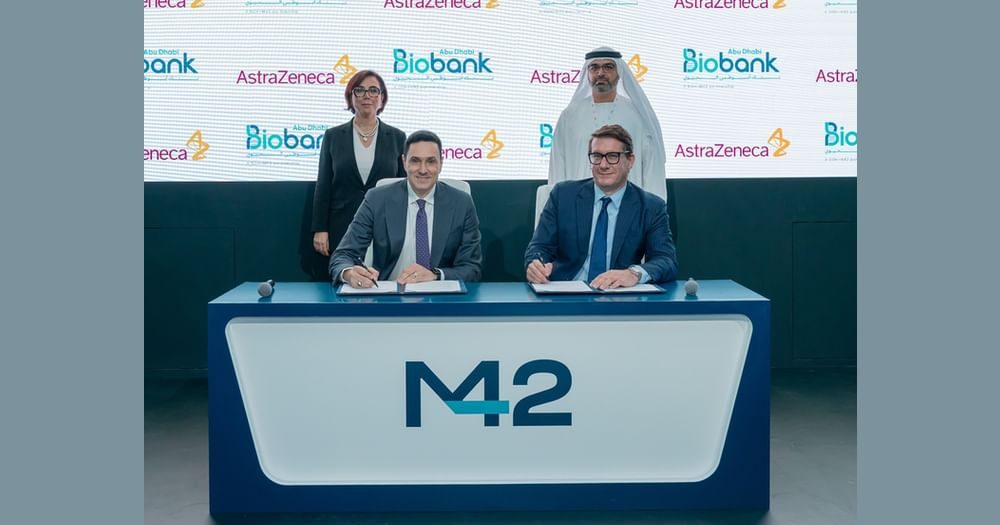
Abu Dhabi Biobank, a strategic initiative between the Department of Health – Abu Dhabi (DoH) and M42, has entered a collaboration with AstraZeneca to advance predictive healthcare. The agreement was announced at the Abu Dhabi Future Health Summit 2026. It will bring together biological samples, genomic data and health information in a single research effort.
The full commercial terms have not been made public. But the direction is clear: use local data to spot risk early and shape treatment around the patient, not the average.
How will it work?
The collaboration rests on three types of information. Biological samples held by the biobank supply the raw material. Genomic sequencing reads what those samples reveal about inherited risk. Clinical data from the health system shows what actually happened to patients over time.
Linked together, these sources let researchers look for patterns that precede illness. A genetic variant on its own says little. A variant that repeatedly appears before a particular cardiometabolic condition, in a defined population, says a great deal. AstraZeneca brings drug discovery expertise, while M42 and the DoH bring the data infrastructure and the regulatory framework that governs its use.
Expect the work to focus on conditions that weigh heavily on the region, such as diabetes, heart disease and certain cancers. That is the logical starting point, though specific programs will determine how quickly results arrive.
Why does it matter?
Global genomic research has a well-known blind spot. Most of the data comes from people of European ancestry. Arab populations are badly underrepresented, which means risk scores and drug responses are often calibrated on people who look genetically different from patients in Abu Dhabi, Riyadh or Doha.
Regional data corrects that. It also gives clinicians something practical: earlier screening for high-risk groups, and treatment choices based on evidence from similar patients. For payers and policymakers, prevention is cheaper than managing advanced chronic disease. That arithmetic is hard to ignore in a region with high rates of diabetes and obesity.
And there is a commercial angle. A pharmaceutical company with access to well-governed regional data is more likely to run trials and invest locally.
The context
This fits a clear pattern. The UAE's Emirati Genome Programme has already sequenced hundreds of thousands of genomes, and M42 has built much of its identity around genomics and precision medicine. Saudi Arabia is pursuing similar goals through its own genome programme, in line with Vision 2030's emphasis on prevention and a stronger life sciences sector.
Across the GCC, governments are treating health data as a strategic asset. The harder questions come next. Who controls access? How is consent managed? How are patient privacy and commercial interest balanced? Abu Dhabi's regulators have been among the more active in setting rules, and this partnership will be a test of them.
Still, the ambition is sound. If the collaboration delivers, it could show other Gulf systems how to turn population data into earlier care.
Latest @
Neuratia Labs picks CliniDataCue to solve the data problem facing its first research fellows
Robotics comes to the IVF lab as Abu Dhabi's fertility sector eyes automation
American Hospital Dubai to help build an AI billing platform, not just buy one
Mubadala and Khalifa University bet on lab-stage science with new life sciences programme
Abu Dhabi's biobank teams up with AstraZeneca to predict disease before it starts
💡Did you know?
You can take your DHArab experience to the next level with our Premium Membership.👉 Click here to learn more
🛠️Featured tool
 Easy-Peasy
An all-in-one AI tool offering the ability to build no-code AI Bots, create articles & social media posts, convert text into natural speech in 40+ languages, create and edit images, generate videos, and more.
👉 Click here to learn more
