

Abu Dhabi to test a fruit fly-based AI tool for hard-to-treat colorectal cancer
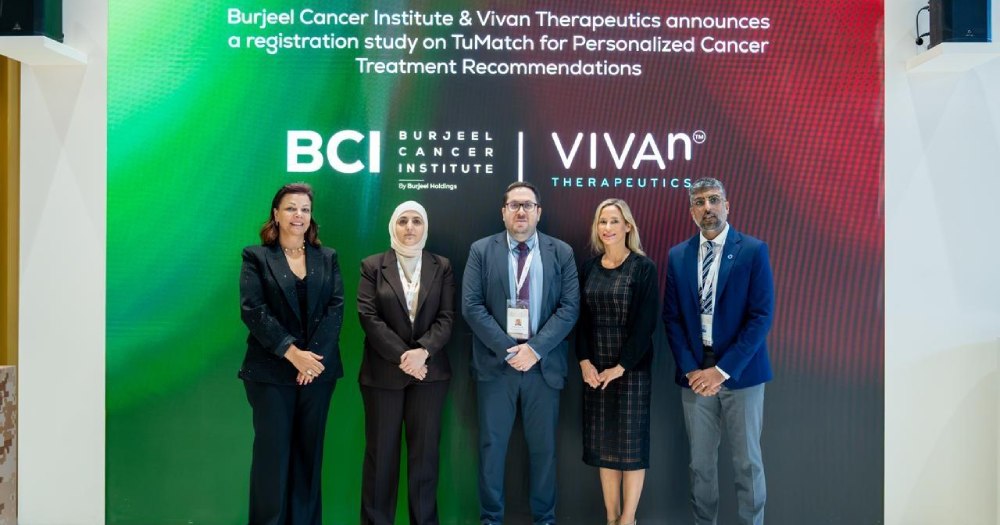
Most cancer AI stories end with an algorithm and a promise. This one starts with a fruit fly. Vivan Therapeutics, a Hub71 startup, has received all regulatory approvals to begin a clinical registration study of TuMatch, a decision support tool that ranks treatment options for cancer patients, at Burjeel Cancer Institute in Abu Dhabi.
The study is small. It will enrol at least 10 colorectal cancer patients at the Abu Dhabi site, under the lead of Prof. Humaid Al Shamsi. But the approval matters more than the headcount. It is described as one of the first regulatory clearances in the Emirate for a study of this type of software in oncology.
How will it work?
TuMatch reads a patient's tumour genomic profile and compares it with Vivan's own drug-response dataset. That dataset comes from an in vivo Drosophila "avatar" screening platform, developed with Mount Sinai Medical Center, and is combined with published clinical evidence. The output is a ranked list of therapeutic options for the treating oncologist.
The target group is specific: patients who have run out of standard-of-care options, or are unlikely to benefit from them. That includes people with activating KRAS mutations, which Vivan's Chief Scientific Officer, Dr Nahuel Villegas, says often leave patients with no effective standard treatment.
The study will also collect health economics and value-based care data. That evidence is meant to support reimbursement talks with payers and to inform how AI decision support is adopted across the UAE health system.
Why does it matter?
Because evidence, not enthusiasm, decides whether a tool like this reaches routine care. Hospitals and insurers across the GCC are being pitched AI products constantly. Few arrive with local outcomes and cost data. Vivan is trying to produce both in the UAE, which gives payers something concrete to assess.
The disease burden gives the work real urgency. Colorectal cancer is among the most commonly diagnosed cancers in the UAE, and it often appears at a younger age or later stage than in Western populations. Better treatment selection in advanced disease is a clear clinical need.
Laura Towart, Vivan's Founder and CEO, said the approval moves TuMatch from a validated platform to a tool used in live clinical decision-making. She added that the evidence will underpin the company's regulatory and reimbursement pathway well beyond the UAE.
The context
The Abu Dhabi study is one part of a wider clinical programme. Vivan also plans a multicentre study in pancreatic and other GI cancers, with sites in Europe and the GCC. Data from these studies will support CE mark and FDA submissions.
It also fits a pattern. Hub71 recently marked the first year of its Life Sciences programme, and another Hub71 startup, BioSapien, opened its first global clinical site for MediChip in October. Abu Dhabi is positioning itself as a place where health technology is tested on patients, not only pitched in boardrooms. That aligns with the wider GCC push to build local clinical evidence and diversify economies toward knowledge-based sectors, a goal shared by Vision 2030 in Saudi Arabia and the UAE's own health and digital strategies.
Still, caution is fair. Ten patients cannot prove that TuMatch improves survival. What the study can show is whether the tool works in a real clinic, how oncologists use its rankings, and what it costs. For a region that wants precision oncology without waiting years for it to arrive from elsewhere, those answers are worth having.
Latest @
Patients are warmer to AI in care than doctors think
Ambient AI cut 277,000 clicks for nurses in 90 days. Now comes the hard part
DawaDose closes its seed round to build the pharmacy platform Saudi Arabia has been missing
Philips wants radiologists to stop juggling AI apps
UTOPIA backs Mentix, putting surgical mentoring on Qatar's startup map
💡Did you know?
You can take your DHArab experience to the next level with our Premium Membership.👉 Click here to learn more
🛠️Featured tool
 Easy-Peasy
An all-in-one AI tool offering the ability to build no-code AI Bots, create articles & social media posts, convert text into natural speech in 40+ languages, create and edit images, generate videos, and more.
👉 Click here to learn more
