

Brazilian scientists use ultrasound to make viruses ‘pop like popcorn’
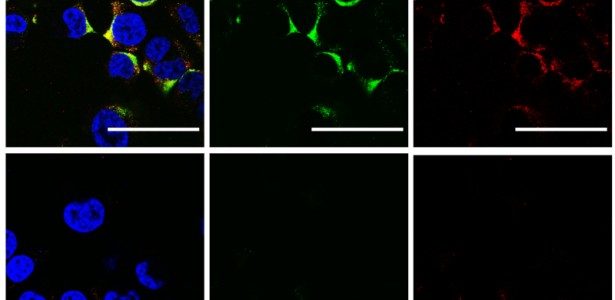
Scientists in Brazil have found a way to destroy viruses using nothing more than sound waves. Their technique uses high-frequency ultrasound - similar to what doctors use for medical scans - to make viruses literally explode like popcorn.
The University of São Paulo researchers tested their method on SARS-CoV-2 and H1N1 flu viruses. The sound waves cause the protective outer shell of viruses to rupture and collapse, while leaving human cells completely unharmed. They published their findings in Scientific Reports.
"It's kind of like fighting the virus with a shout," says Odemir Martinez Bruno, the physics professor who led the study. "The energy of sound waves causes morphological changes in viral particles until they explode, a phenomenon comparable to what happens with popcorn."
How does it work?
The process relies on a physics phenomenon called acoustic resonance. When ultrasound waves hit spherical viruses, the particles absorb energy and start vibrating internally. This energy builds up until the virus's protective envelope bursts and deforms.
The technique works specifically because of viral geometry:
- Spherical particles like many viruses absorb ultrasound energy very effectively
- The accumulated energy causes structural changes in the viral envelope
- Eventually the envelope ruptures completely
- Non-spherical particles wouldn't experience the same effect
The discovery surprised researchers because it contradicts classical physics. Ultrasound wavelengths are much longer than viruses, which should prevent interaction according to traditional theory.
The team uses frequencies between 3-20 MHz - much higher than the low-frequency ultrasound used to sterilize medical equipment. This higher frequency creates acoustic resonance instead of cavitation, which destroys everything in its path.
Why does it matter?
This could represent a major breakthrough in antiviral treatment. Developing effective antiviral drugs is notoriously difficult and expensive. Many viruses also develop resistance to chemical treatments over time.
The sound-based approach offers several advantages:
- Works against multiple virus types without modification
- Doesn't damage human cells or tissues
- Produces no waste or environmental impact
- Viruses can't develop resistance since it targets physical structure, not genetics
- Effective against virus variants like Omicron and Delta
The team is already testing the technique against dengue, Chikungunya, and Zika viruses. "This is a promising strategy against enveloped viruses in general," says Flávio Protásio Veras, a professor involved in the research.
The method could be particularly valuable in regions where these mosquito-borne diseases are common and treatment options are limited.
The context
This research comes at a time when scientists are urgently seeking new approaches to fight viral diseases. The COVID-19 pandemic highlighted how quickly viruses can spread and how limited our treatment options often are.
The Brazilian study brought together experts from multiple fields - physicists, virologists, and medical researchers from several universities. They even collaborated with Charles Rice, the 2020 Nobel Prize winner in medicine from Rockefeller University, who provided special fluorescent viruses for testing.
While the technique is still years away from clinical use, it represents a completely new direction in antiviral research. Unlike chemical drugs that target specific viral proteins, this physical approach works against the fundamental structure that all enveloped viruses share.
The research was funded by São Paulo Research Foundation (FAPESP) through multiple grants. The team has also published the theoretical basis for their "viral popcorn" effect in the Brazilian Journal of Physics.
Latest @
Apple Vision Pro used in live hip surgery for the first time
75,000 samples in: inside Abu Dhabi's AI wastewater early-warning system
Dubai-founded Enhance raises $18.2 million to push deeper into US gym market
Saudi health minister signs MoU with Portugal in push to build global health partnerships
💡Did you know?
You can take your DHArab experience to the next level with our Premium Membership.👉 Click here to learn more
🛠️Featured tool
 Easy-Peasy
An all-in-one AI tool offering the ability to build no-code AI Bots, create articles & social media posts, convert text into natural speech in 40+ languages, create and edit images, generate videos, and more.
👉 Click here to learn more
