

A 20-minute VR training session boosts healthcare workers’ confidence in handling aggressive patients
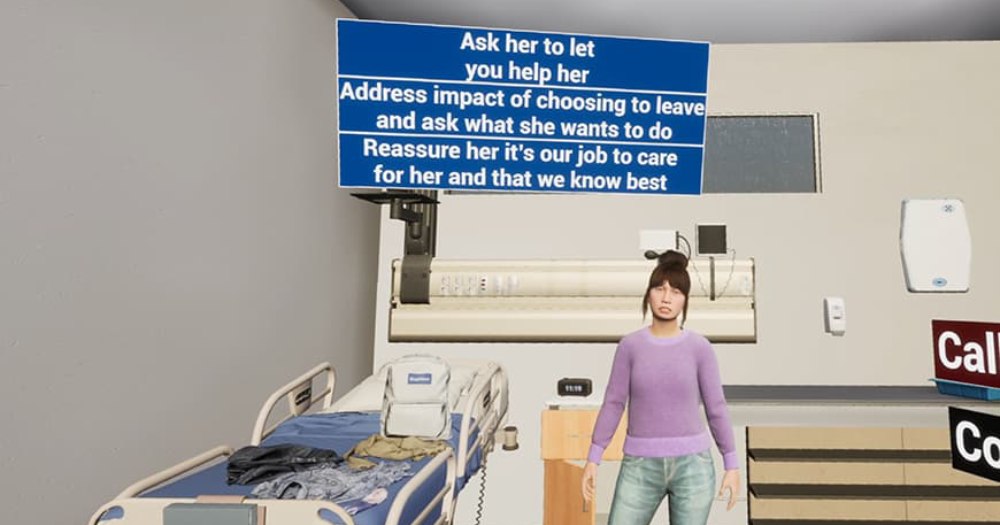
Healthcare workers in Australia face a growing threat from aggressive patients. New research from Edith Cowan University shows that just 20 minutes of virtual reality training can significantly boost medical professionals' confidence in handling these dangerous situations.
The findings come at a critical time. Hospital assaults have skyrocketed across Australia, with increases of 48% in Queensland, 44% in New South Wales, and 60% in Victoria between 2015 and 2018. A survey of over 3,000 nursing and midwifery staff found that 79% had experienced workplace violence in just six months.
How does it work?
The VR training program, called I-VADE, puts healthcare workers through realistic scenarios where they practice de-escalating aggressive patients. The system was developed by ECU's Simulation and Immersive Digital Technology Group working with hospital safety managers and experienced frontline staff.
In the study, 221 undergraduate nursing students completed the training in groups of 20. Each student wore individual VR headsets while just two facilitators guided the entire session. The setup is simple but effective:
- Students experience realistic patient aggression scenarios
- They practice de-escalation techniques in a safe environment
- Facilitators provide guidance and debrief the experience
- The entire session takes just 20 minutes
"We had an overwhelmingly positive response from the students that took part in the study. We found a statistically significant improvement in their confidence to manage patient aggression," said PhD candidate Joshua Johnson, who led the research.
Why does it matter?
The consequences of workplace violence in healthcare go far beyond individual incidents. Johnson noted that exposure to aggressive patients leads to severe problems including:
- Staff burnout and early career exits
- Workplace injuries and absenteeism
- Reduced ability to treat and manage patients effectively
- Overall deterioration in patient care quality
Many healthcare workers currently feel unprepared for violent situations when they start their careers. Traditional training programs exist but aren't widely implemented across Australian medical education.
Associate Professor Brennen Mills, who led the development of I-VADE, emphasized that preparing healthcare workers for aggression is now essential rather than optional. "Frontline workers walk into unpredictable, high-pressure situations every day, and too often they're expected to learn how to manage aggression on the job," he said.
The context
The research proves that VR training can work at scale in real-world settings. While ECU initially ran the program directly in Western Australia, this study saw I-VADE administered across the country by people who had no role in developing it. The results matched those from the original implementations.
"What is really encouraging is the results from this research echoed those found from cohorts we helped facilitate here in WA, proving the scalable efficacy of this technology," Mills said.
I-VADE is now available commercially through Alpha Immersion, with trials planned for later this year. The program is already being used in multiple locations across Australia to train frontline healthcare workers.
The technology offers a standardized solution to a problem that varies widely across different healthcare settings. By allowing workers to practice in realistic scenarios before facing real situations, VR training could help reduce harm to both staff and patients while creating safer healthcare environments overall.
Latest @
Blueprint lands in the UAE as longevity moves from policy to product
M42 launches 10,000-patient wearable pilot in Abu Dhabi to reshape chronic disease care
Unilabs Middle East and Takalam link diagnostics to mental health in one app
Al Ghurair enters healthcare with Trellis Health launch in Dubai
💡Did you know?
You can take your DHArab experience to the next level with our Premium Membership.👉 Click here to learn more
🛠️Featured tool
 Easy-Peasy
An all-in-one AI tool offering the ability to build no-code AI Bots, create articles & social media posts, convert text into natural speech in 40+ languages, create and edit images, generate videos, and more.
👉 Click here to learn more
