

KFSHRC performs the world’s first fully robotic living-donor liver transplant
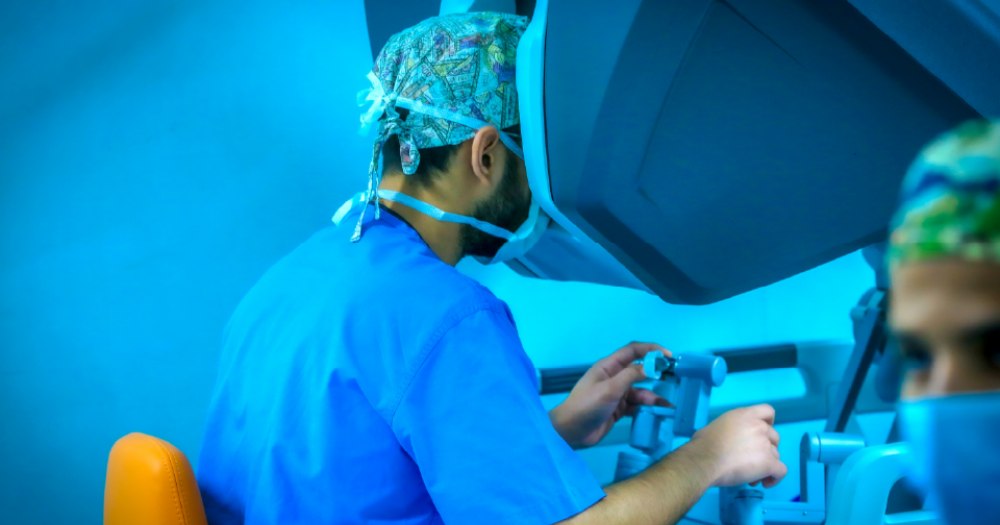
In the realm of modern medicine, a quiet revolution has been underway. Surgeons and engineers have been inching toward a future where human hands are guided by robotic precision. But this story from the King Faisal Specialist Hospital and Research Centre (KFSHRC) in Saudi Arabia isn't about inching. It's about leaping.
In early 2026, KFSHRC announced what many thought was still years away: the world's first fully robotic living donor liver transplant that used advanced robotics from start to finish. That means robotics was used to remove the liver tissue from donors and then to perform the transplant itself. This isn't just a single operation. It marks an evolution in how complex surgeries might be done in the decades ahead.
How did it work?
At its core, this isn't sci-fi. It's surgical innovation built on robotics that extends a surgeon's reach and accuracy.
- The entire surgical pathway is controlled via robotic systems that translate a surgeon's movements into micro-precise actions inside the human body.
- For the first time in the world, two living donors provided left liver lobes. Robotic tools removed the liver tissue safely while preserving the health of the donors.
- Those same robots then helped implant the tissue into the recipient with exacting precision.
- Advanced imaging and robotic control aim to reduce human tremor, improve visualization, and allow for surgical finesse that is hard to match by hand alone.
The result? No reported complications for the donors or the recipient. Both donors were out of the hospital on day three, and the patient moved out of intensive care after seven days.
Why does it matter?
This is big for more than one reason:
- This isn't just another surgical first. It's proof that a fully robotic organ transplant isn't a theoretical concept. It's real.
- Donors benefit from smaller incisions, potentially faster healing, and reduced risk of complications.
- Patients may experience shorter hospital stays and quicker returns to daily life.
- "Advanced technologies are used to enhance surgical safety, accelerate recovery, and improve long-term quality of life," said Professor Dieter Broering, Executive Director of Organ Transplantation at KFSHRC.
- The technique expands what's possible in living-donor transplants, especially in complex cases requiring meticulous surgical planning.
Put simply, it's a milestone that pushes the boundaries of transplant medicine and reshapes expectations around what precision surgery can achieve.
The context
This breakthrough didn't happen in a vacuum. KFSHRC's transplant program has performed hundreds of robotic liver procedures, a testament to its deep experience and patient volume. This latest surgery is part of a larger strategy that now includes more than 100 robotic liver transplants.
Globally, robotic liver transplants are still rare. Other centers have performed robotic liver procedures and hybrid approaches, but the all-robot pathway used here is unprecedented in its completeness. Earlier robotic transplant milestones include the first fully robotic liver transplant and even a fully robotic heart transplant.
KFSHRC's excellence is reflected in international rankings. It is rated top in the Middle East and Africa and among the top academic medical centers worldwide. The hospital appears on multiple global lists of elite and smart hospitals, reinforcing its reputation as a hub of innovation and advanced care.
This achievement isn't just about one surgery. It's a signal of where surgery is headed. And it's a reminder that the future of medicine doesn't just belong to talented surgeons. It belongs to the teams that dare to rethink what's possible.
Latest @
Alameda Healthcare and RoboMasters sign EGP 70 million robotic surgery deal in Egypt
UAE researchers use AI to identify new drug class for blood cancer treatment
Tawam Hospital performs complex colorectal cancer surgery on 81-year-old high-risk patient
Saudi Arabia's Global Health Exhibition returns in 2026 with record ambitions
💡Did you know?
You can take your DHArab experience to the next level with our Premium Membership.👉 Click here to learn more
🛠️Featured tool
 Easy-Peasy
An all-in-one AI tool offering the ability to build no-code AI Bots, create articles & social media posts, convert text into natural speech in 40+ languages, create and edit images, generate videos, and more.
👉 Click here to learn more
