

NVIDIA, Lilly unveil co-innovation AI lab to reinvent drug discovery
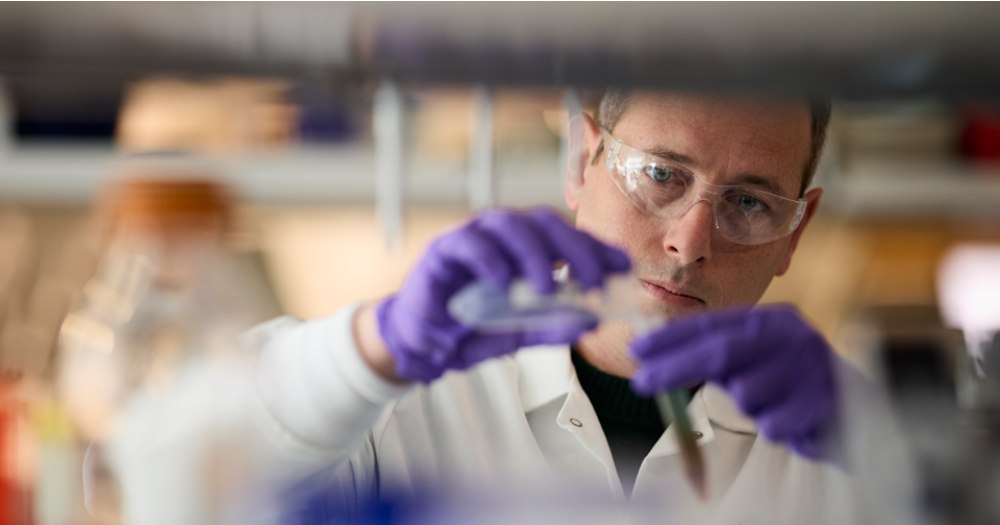
In a move that reads like sci-fi but has very real implications, NVIDIA and Eli Lilly are pouring up to $1 billion into a brand new AI co-innovation lab aimed at rewriting the drug discovery playbook. The Bay Area facility will unite NVIDIA's cutting-edge computing firepower with Lilly's deep scientific expertise. The goal is simple in theory and gargantuan in practice: harness artificial intelligence and massive data to compress years off how new medicines are discovered and developed.
It's a bold moment in biotech and tech alike. NVIDIA's founder and CEO, Jensen Huang, put it bluntly: "AI is transforming every industry, and its most profound impact will be in life sciences." That's no fluff line. This collaboration is designed to change not just how drugs are found, but how medicine itself evolves.
How does it work?
At the heart of this initiative is a shared lab where biologists, chemists, engineers, and AI researchers work shoulder to shoulder. The idea is to build what the companies call a continuous learning system that marries what happens in the real world of the lab with what happens inside algorithms.
Here's the anatomy of how it's meant to function:
- AI models meet real science: AI engines like NVIDIA's BioNeMo platform will digest vast amounts of biological and chemical data generated in the lab, then refine models that predict promising drug candidates.
- Data loops learn and improve: Insights from live experiments will feed back into the AI system in near real time, allowing models to evolve quickly and inform scientists on what to try next.
- Robotics and automation: Robotics, physical AI, and lab automation will help scale experiments so scientists and the models learn faster than ever before.
- Talent under one roof: By co-locating teams from both companies, the lab breaks down traditional silos between computational predictions and hands-on research.
It's not just computation happening in a server farm. The plan is to literally tighten the loop between idea and experiment, so AI helps guide breakthroughs instead of just crunching numbers in isolation.
Why does it matter?
Put simply, drug discovery today is slow, expensive, and full of false starts. It can take more than a decade and billions of dollars to take a promising molecule from concept to clinic. NVIDIA and Lilly are betting AI can flip that script.
This matters for several reasons:
- Speed: Bringing new therapies to patients faster isn't just a slogan. It matters in real lives. Getting effective drugs to market more quickly can transform outcomes for diseases that currently take years to tackle.
- Cost: The price tag for new medicines is astronomical. If AI can narrow the search space for viable compounds, the industry could save billions.
- Scale: With AI, we can explore biological possibilities that were invisible to human researchers alone. As Huang said, scientists might "explore vast biological and chemical spaces in silico before a single molecule is made."
- Cross-industry innovation: When a tech company known for GPUs and AI software teams up with a pharmaceutical powerhouse, it signals how interconnected innovation has become. Progress won't come from isolated silos anymore.
All of this adds up to more than just another lab. It's a test case for how AI can reshape entire industries.
The context
This announcement comes at a pivotal moment for both AI and biotech. NVIDIA has already seen massive demand for its AI hardware and software from tech players. Partnering with a pharma leader pushes its reach into health and life sciences. And Eli Lilly isn't new to AI either; last year it unveiled plans for a supercomputer built on NVIDIA systems to help speed drug discovery.
Industry watchers see this as part of a broader shift. Other companies are investing in AI to speed drug development, from generating new molecular ideas to predicting how drugs behave in the body. And regulators are more open than ever to data-driven methods that can reduce reliance on traditional testing.
At the same time, this lab sits in a competitive landscape where every edge matters. Biotech startups, legacy pharma, and big tech are all pouring resources into AI research. But not many partnerships marry elite AI engineers with deep pharmaceutical know-how under one roof. This is one of them.
So while $1 billion is a lot of money, it might just be the cost of entry into the next era of medicine — one where artificial intelligence isn't an add-on, it's part of the lab coat itself.
Latest @
Apple Vision Pro used in live hip surgery for the first time
75,000 samples in: inside Abu Dhabi's AI wastewater early-warning system
Dubai-founded Enhance raises $18.2 million to push deeper into US gym market
Saudi health minister signs MoU with Portugal in push to build global health partnerships
💡Did you know?
You can take your DHArab experience to the next level with our Premium Membership.👉 Click here to learn more
🛠️Featured tool
 Easy-Peasy
An all-in-one AI tool offering the ability to build no-code AI Bots, create articles & social media posts, convert text into natural speech in 40+ languages, create and edit images, generate videos, and more.
👉 Click here to learn more
