

ChatGPT Health offers a dedicated experience for health and wellness
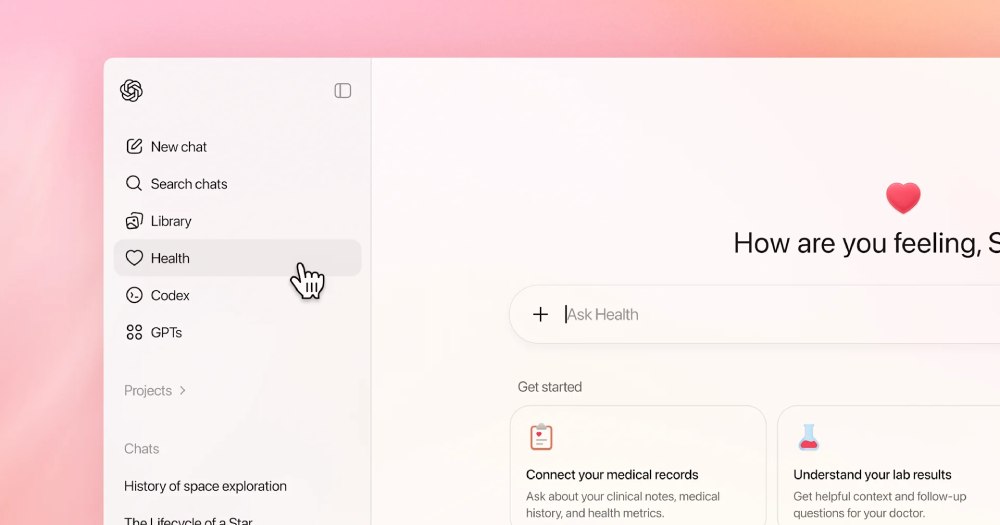
OpenAI just flipped a major page in the story of how artificial intelligence meets everyday life. It's unveiled ChatGPT Health, a dedicated health and wellness experience inside ChatGPT that aims to bring your health information and AI smarts into the same room. Health questions already rank among the top ways people use ChatGPT, with hundreds of millions of users asking about symptoms, wellness tips, and lab results every week. This new feature takes that natural behavior and gives it a proper home with added privacy, better context, and tighter controls.
Right from the start, OpenAI makes it clear this is not about replacing your doctor. This is about making health conversations easier to navigate and grounded in your own health story.
How does it work?
ChatGPT Health isn't just a label slapped on a tab. It's a separate space within ChatGPT where your health chats live apart from your regular chats. That separation isn't cosmetic. It comes with purpose-built encryption and isolation so that sensitive health details stay locked down and separate. Conversations in this space won't be used to train OpenAI's main models.
Here's what it lets you do:
- Connect medical records securely.
- Sync wellness apps like Apple Health, Function, and MyFitnessPal.
- Ask about recent test results, not in abstract, but in the context of your own data.
- Get practical help preparing for doctor visits or understanding insurance tradeoffs based on your patterns.
- Upload files or let ChatGPT pull in data from tools you already use.
In the words of OpenAI, it's meant to help you feel "more informed, prepared, and confident navigating your health." That's a big promise, and it stacks neatly on what users already do intuitively with AI.
Why does it matter?
Let's cut to the heart of it. Right now, people are already turning to AI for health help in huge numbers. OpenAI's own data shows over 230 million weekly wellness and health queries, which is a tidal wave of demand.
That's striking for a few reasons:
- Accessibility: People can use the tool to make sense of medical jargon after clinic hours when professionals aren't around.
- Clarity: Instead of scouring forums or search results, users can ask direct questions in plain language.
- Preparation: It helps you organize your thoughts ahead of a doctor visit.
- Context and personalization: With your own records linked, the advice and interpretation are grounded in your information, not generic.
OpenAI isn't shy about not calling this a diagnostic engine. It's designed to support your health journey, not replace trained clinicians. But the real value lies in how it can help people understand patterns and ask better questions of their healthcare providers.
The context
This launch didn't happen in a vacuum. People turning to AI for health isn't new; it's accelerating. Estimates suggest 40 million people use ChatGPT daily for health-related questions, and health prompts make up a significant slice of overall usage.
At the same time, regulators and industry watchers are sorting out how to handle AI in the medical space. In the U.S., the FDA has signaled a lighter hand on tools meant for healthy lifestyles while urging attention to safety.
The privacy angle looms large, too. ChatGPT Health is not covered by HIPAA by default, but OpenAI insists it uses layered protections and excludes health chats from model training to reassure users that personal data stays yours.
Behind the scenes, OpenAI worked with hundreds of physicians to shape how the model responds in health conversations, emphasizing safety, escalation when needed, and clarity without oversimplifying.
This push also sits amid broader shifts. Tech giants and startups alike are trying to be the digital front door for consumer health. Connecting health data to AI is a strategic play, not just a product feature.
Latest @
Blueprint lands in the UAE as longevity moves from policy to product
M42 launches 10,000-patient wearable pilot in Abu Dhabi to reshape chronic disease care
Unilabs Middle East and Takalam link diagnostics to mental health in one app
Al Ghurair enters healthcare with Trellis Health launch in Dubai
💡Did you know?
You can take your DHArab experience to the next level with our Premium Membership.👉 Click here to learn more
🛠️Featured tool
 Easy-Peasy
An all-in-one AI tool offering the ability to build no-code AI Bots, create articles & social media posts, convert text into natural speech in 40+ languages, create and edit images, generate videos, and more.
👉 Click here to learn more
