

The first AI-driven solution for managing hospital patient flow at scale unveiled
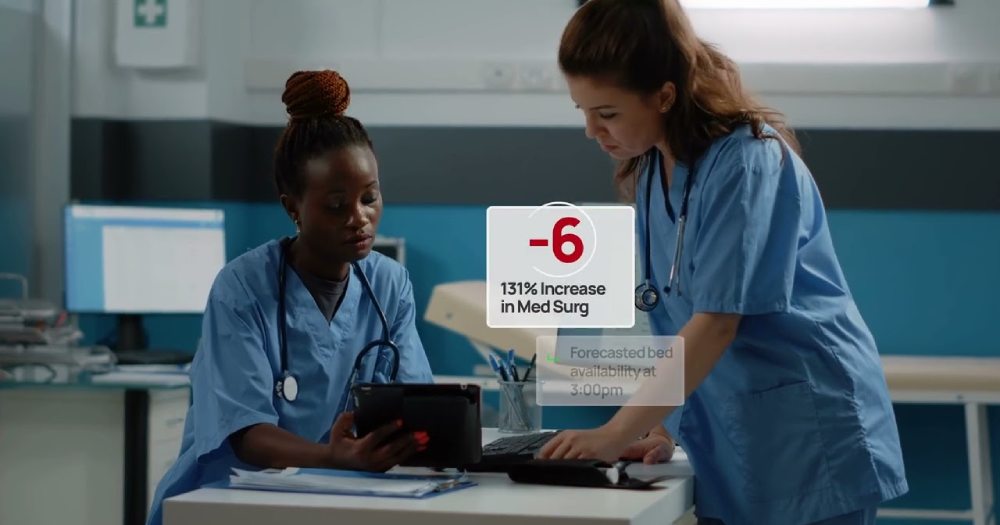
Hospitals often feel like cities that never sleep. People move in and out. Pressures build. Space tightens. And leaders try to keep everything flowing with yesterday's data. That old juggling act may finally be changing. TeleTracking has unveiled Decision IQ, an AI-powered patient throughput tool that gives hospitals something they have long needed: a clear view of what is about to happen, not just what has already happened. University of Louisville Health is the first to put it through its paces, leaning on it to navigate rising demand and stubborn capacity constraints.
As one leader put it, Decision IQ is about turning "throughput data" into something hospitals can act on.
How does it work?
Decision IQ behaves like a living, breathing model of a health system. It pulls data from every corner of the hospital and turns it into a unified picture of patient movement. It works in a few key ways.
- It acts as an AI computational twin that mirrors real activity across departments
- It simulates discharge priorities so teams know what comes next
- It forecasts future capacity needs instead of making leaders guess
- It feeds insights directly into workflows where teams already operate
The magic lies in its timing. Instead of looking backward, the tool surfaces issues before they flare. Christopher Johnson, Co CEO of TeleTracking, framed it simply. Decision IQ gives leaders "the foresight to mitigate bottlenecks in advance." With clear prompts and fewer manual handoffs, clinicians can stay focused on patients rather than chasing paperwork.
Why does it matter?
Hospitals sit at the center of a delicate equation. They must admit people safely, move them efficiently, and keep quality intact even when demand surges. Most systems strain under that weight. Delays pile up. Staff burnout. Patients wait longer than they should.
Decision IQ steps into that fragile space. A tool that predicts where pressure will rise gives hospitals the chance to act early. It can smooth transfers. It can clear bottlenecks. It can reduce the guesswork that so often fuels stress. And in a world where every minute counts, a forward-looking view of operations feels like a lifeline. Deanna Parker of UofL put it plainly. The new tool helps her teams "anticipate where throughput challenges will occur" and prepare before they affect patient care.
The context
Patient flow has been a stubborn pain point for decades. Health systems try to balance growing demand with finite beds, limited staff, and complex workflows. They rely on reports that describe yesterday rather than predict tomorrow. The result is a cycle of reaction instead of readiness.
UofL Health saw that pattern play out as capacity pressures increased. The organization had already partnered with TeleTracking for transfer operations, so expanding that relationship toward AI-powered flow management felt like a natural next step. For UofL, Decision IQ offered a way to break out of reactive habits and build a system that stays one step ahead.
Hospitals everywhere face the same pressures. That is why Decision IQ arrives at an important moment. It signals how AI can support the operational backbone of healthcare, not by replacing human judgment but by giving teams the clarity they need to protect safety, speed, and access.
Latest @
Blueprint lands in the UAE as longevity moves from policy to product
M42 launches 10,000-patient wearable pilot in Abu Dhabi to reshape chronic disease care
Unilabs Middle East and Takalam link diagnostics to mental health in one app
Al Ghurair enters healthcare with Trellis Health launch in Dubai
💡Did you know?
You can take your DHArab experience to the next level with our Premium Membership.👉 Click here to learn more
🛠️Featured tool
 Easy-Peasy
An all-in-one AI tool offering the ability to build no-code AI Bots, create articles & social media posts, convert text into natural speech in 40+ languages, create and edit images, generate videos, and more.
👉 Click here to learn more
