

Weight Watchers and Google Health join forces to bring AI-powered weight management to employers
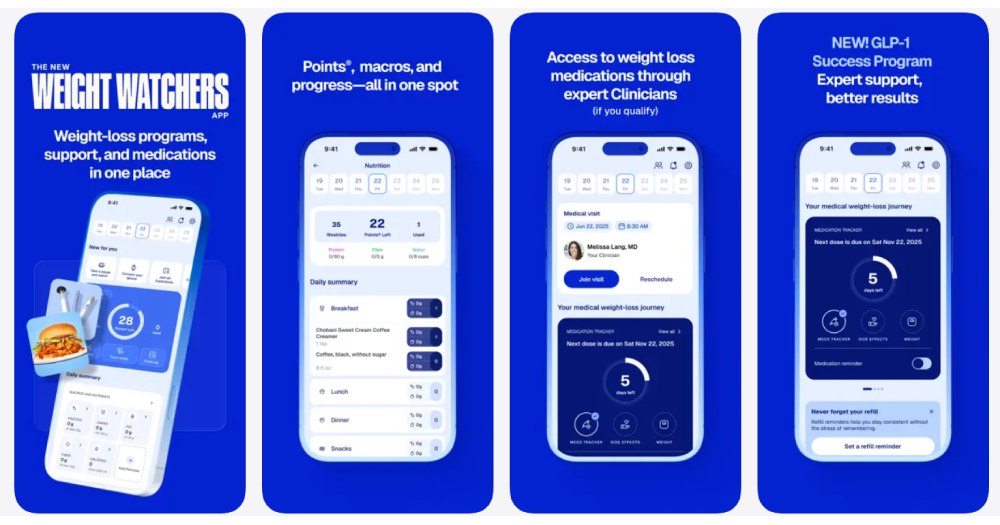
Obesity-related healthcare costs are rising across every major market, and employers are running out of patience with benefits that don't move the needle. Weight Watchers thinks it has part of the answer, and it's brought Google in to help make the case.
WW International, listed on NASDAQ as WW, has announced a collaboration with Google Health Enterprise that links Google Fitbit Air wearables and Google's AI-powered health insights platform directly into Weight Watchers' clinical weight management program. The integration is live now through select Weight Watchers for Business client programs, targeting employers and health plans that want more from their weight health benefits than a discounted app subscription.
The logic is straightforward. Weight management programs work best when they reflect what people actually do day to day, not just what they report during a weekly check-in. Connecting a wearable to a structured clinical program closes that gap. Members get a more responsive experience; employers get data that shows whether their investment is changing behavior.
How does it work?
Eligible Weight Watchers members enrolled through employer-sponsored programs will receive access to Google Fitbit Air, Google's latest wearable, alongside the Google Health Enterprise platform. The Fitbit device tracks daily activity, sleep, and other biometric signals, which feed into the Weight Watchers program to give members and their coaches a more complete picture of their health behaviors.
Google Health Enterprise adds an AI layer, surfacing personalized insights that can prompt members to act, whether that's adjusting activity goals, improving sleep patterns, or staying consistent with nutrition tracking. All of this sits within Weight Watchers' existing science-backed framework, which includes behavioral coaching, food tracking, and where available, access to weight loss medication support.
The collaboration is structured around the employer and payer market first. Companies that already offer Weight Watchers for Business can now activate this integrated experience as part of their benefits package. Pricing and broader availability details were not disclosed at launch.
Why does it matter?
Employers globally are grappling with the same problem: obesity-related conditions are among the largest drivers of healthcare spend, and the traditional toolkit, gym memberships, basic wellness apps, and one-size-fits-all programs, has not kept pace with the scale of the challenge. Across the GCC, where governments are actively working to reduce non-communicable disease rates through national programs tied to Saudi Vision 2030 and the UAE's National Agenda, this is equally pressing. Corporate wellness is no longer a soft benefit; it's a strategic cost issue.
What makes this partnership notable is the combination of a clinically grounded program with real-time behavioral data. Most wearable integrations stop at step counts. This one is designed to connect daily biometric signals to a structured intervention, giving both members and plan administrators more to work with. For health plans in particular, that kind of visibility into member engagement is valuable when justifying the cost of weight health benefits to CFOs and boards.
And for Weight Watchers, the Google partnership addresses a credibility gap the company has been working to close. Associating its program with Google's health infrastructure signals that this is a data-serious, medically oriented offering, not just a legacy diet brand trying to stay relevant.
The context
WW International has spent the past several years repositioning itself from a consumer weight-loss brand into a clinical weight health company, adding GLP-1 medication support and expanding its employer and payer business. The Google collaboration is the latest step in that shift.
Google Health, meanwhile, has been building out its enterprise health strategy steadily, with Fitbit forming the consumer and employer-facing hardware layer. Bringing the two together in a structured employer program makes sense for both sides. Still, execution will matter. Integrations like this can look compelling on paper and underdeliver in practice if the member experience isn't smooth or if employers don't actively promote the benefit. How many employers activate it, and whether engagement data shows real outcomes, will determine whether this becomes a meaningful part of both companies' health business or an announcement that fades quietly.
Latest @
Sidra Medicine becomes first in GCC to administer new neuroblastoma therapy for children
Weight Watchers and Google Health join forces to bring AI-powered weight management to employers
The technology to replace animal testing is ready. The harder problem is changing minds
AI-powered breast cancer risk tool reaches U.S. women through Everlywell partnership
Utah approves AI system to prescribe acne treatments without prior doctor sign-off
💡Did you know?
You can take your DHArab experience to the next level with our Premium Membership.👉 Click here to learn more
🛠️Featured tool
 Easy-Peasy
An all-in-one AI tool offering the ability to build no-code AI Bots, create articles & social media posts, convert text into natural speech in 40+ languages, create and edit images, generate videos, and more.
👉 Click here to learn more
